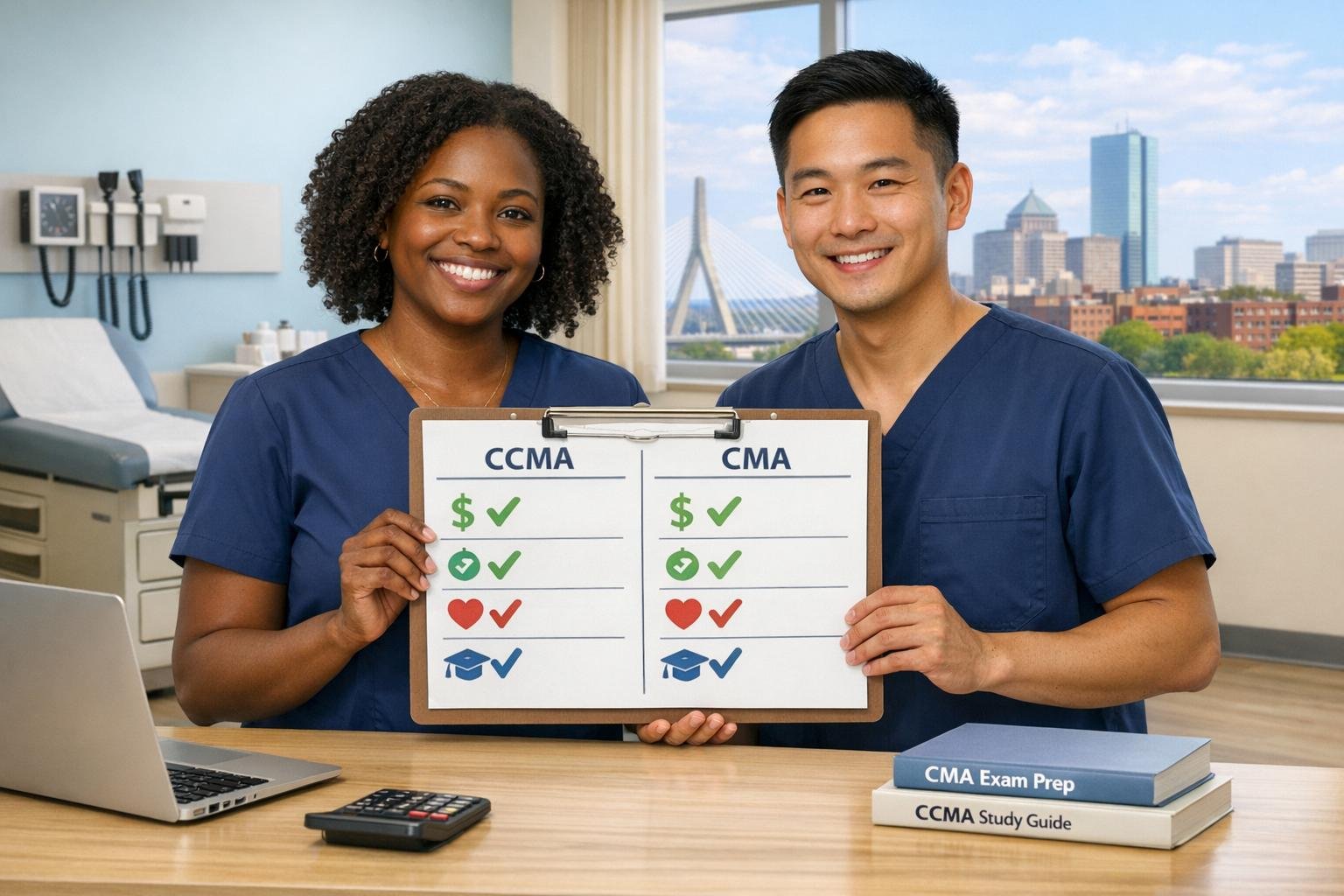
Certifications like CCMA (Certified Clinical Medical Assistant) and CPT (Certified Phlebotomy Technician) are game-changers for healthcare careers. They lead to better jobs, higher pay, and increased job security. Here’s why they matter:
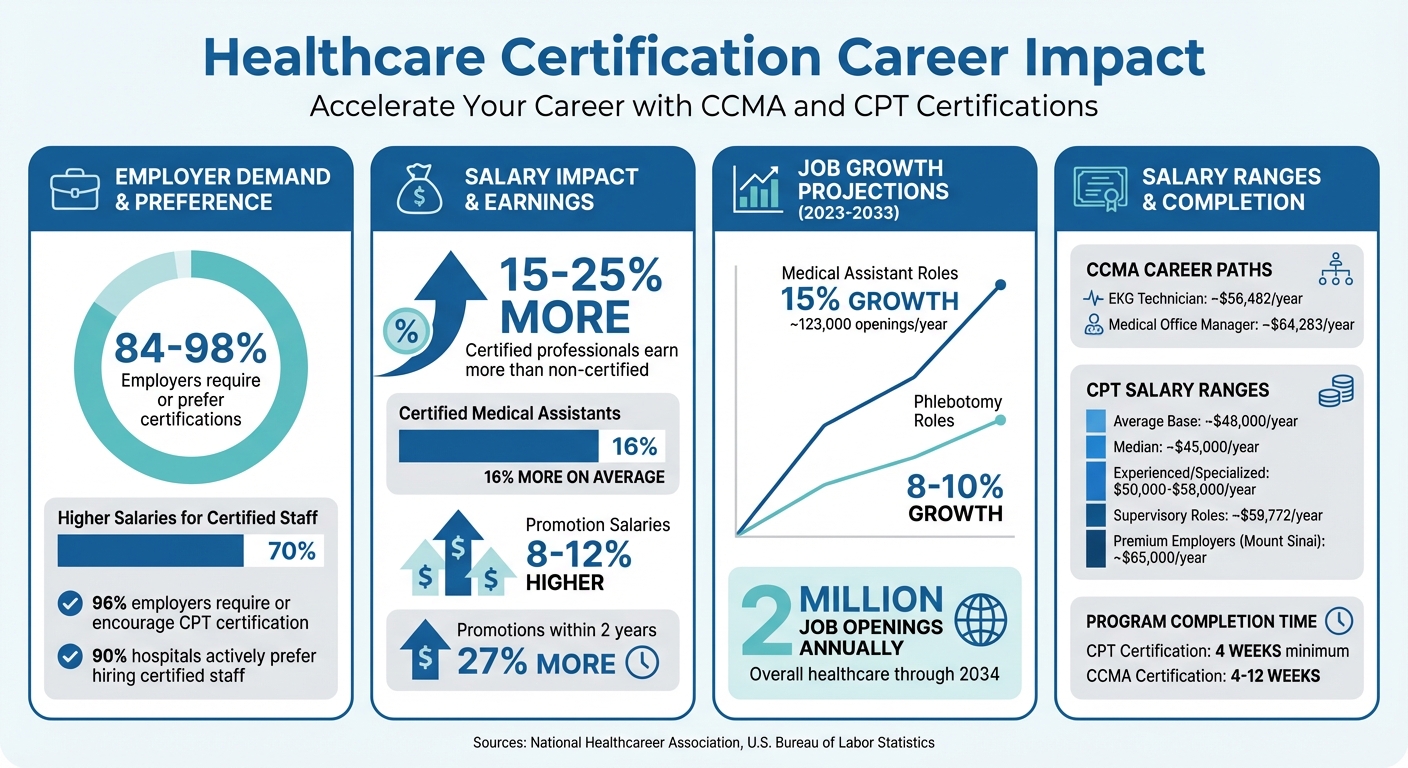
- 84%-98% of healthcare employers now require or prefer certifications.
- 70% of employers offer higher salaries to certified staff.
- Job growth is strong: Medical Assistant roles are projected to grow 15% and Phlebotomist roles by 8% from 2023 to 2033.
Programs like HealthCareer Certs make earning these credentials easier with online training, externship placements, and a 100% tuition refund guarantee if you don’t land a job. These certifications not only help you get hired but also open doors to promotions and leadership roles. Whether you’re starting your career or looking to advance, certification is a smart investment.
Healthcare Certification Career Impact: Salary, Job Growth & Employer Demand Statistics
Are Medical Certifications Worth It? Do They Matter?
sbb-itb-7a67ffa
Why Healthcare Certifications Advance Your Career
Healthcare certifications show that you’ve met national standards for clinical safety and competence, making them a powerful asset for career growth. Employers value certifications because they confirm you can handle essential tasks like venipuncture, EKG administration, and managing electronic health records (EHR) with minimal supervision. This assurance simplifies hiring decisions and builds trust in your abilities.
What Employers Look for in Certified Professionals
When employers review résumés, certifications immediately stand out. They signal professionalism, formal training, and the ability to pass rigorous exams – qualities that informal, on-the-job learning can’t guarantee. Many Applicant Tracking Systems (ATS) are even programmed to filter for credentials like "CCMA" or "CPT." Without these, your application might not even make it to a recruiter’s desk.
Certifications also reduce liability risks for healthcare organizations by confirming compliance with state regulations, insurance requirements, and accreditation standards from entities like the Joint Commission. Additionally, certified professionals often require less onboarding time since they’ve already mastered core clinical skills. This means they can start contributing effectively within weeks, not months.
"Certification is a reassurance for both the people you work with and the patients you care for, that you have the education and skills necessary to perform your duties." – Jennifer Hartman, Content Marketing Specialist, ProTrain
Growing Demand for Certified Healthcare Workers
The U.S. healthcare system is expanding at a rapid pace, with nearly 2 million job openings projected annually through 2034. Medical assistant roles, in particular, are growing 15% through 2033 – significantly faster than the national average – with about 123,000 openings expected each year through 2031. Similarly, phlebotomy roles are set to grow by 8% by 2033.
This growth is fueled by factors like an aging population, a shift toward outpatient and preventive care, and value-based reimbursement systems that prioritize quality outcomes over volume. These same trends influence not just hiring but also opportunities for advancement within the industry.
How CCMA and CPT Certifications Help You Move Up
Certifications don’t just help you land a job – they can also accelerate your career progression. Certified professionals see promotions 27% more often within two years compared to their non-certified peers. When promotions happen, certified employees often secure salaries that are 8% to 12% higher than those of non-certified colleagues in the same roles.
Adding multiple certifications, like pairing a CPT with a CCMA, is a smart way to expand your skill set and increase your value. This approach makes you more versatile, which is essential in today’s evolving healthcare landscape. It can also open doors to leadership positions, specialized roles, or higher-paying opportunities in settings like specialty clinics and surgical centers.
Career Opportunities with CCMA Certification
Skills Covered by CCMA Certification
Earning a CCMA certification through the National Healthcareer Association (NHA) demonstrates your ability to handle both clinical and administrative tasks essential for the smooth operation of healthcare facilities. On the clinical side, you’ll master skills like taking vital signs (blood pressure, pulse, temperature), performing EKGs, drawing blood through phlebotomy, administering medications and vaccines under supervision, and assisting with minor surgical procedures. On the administrative side, you’ll gain expertise in managing electronic health records, medical coding, patient scheduling, intake processes, and insurance coordination.
The certification exam focuses heavily on clinical patient care but also includes topics like foundational science, communication, patient coordination, anatomy, administrative tasks, and medical ethics. This ensures you graduate with a balanced set of skills to meet the demands of the healthcare field.
Job Roles and Career Paths After CCMA
With the core skills gained through CCMA certification, a variety of career paths become available. This credential opens doors to roles ranging from specialized clinical positions to leadership and administrative opportunities. For example, certified professionals often take on roles such as EKG Technician, earning an average salary of around $56,482 annually, or Phlebotomy Technician, focusing on specific clinical procedures.
Some CCMAs move into leadership roles, like Lead Medical Assistant, where they oversee clinical staff and improve office efficiency. Others become Care Coordinators, managing patient populations and ensuring follow-up care. Specialty clinics in fields like cardiology, dermatology, and orthopedics also seek CCMAs for their advanced clinical expertise.
For those interested in administrative growth, the certification can lead to positions like Medical Office Manager, with an average annual salary of about $64,283. Additionally, CCMA experience can serve as a stepping stone for further education in nursing or becoming a Physician Assistant, expanding your career potential even further.
Finding Jobs That Require or Prefer CCMA
Healthcare employers increasingly prefer certified professionals, making your CCMA qualification a valuable tool in job searches. To find positions that align with your certification, use targeted keywords like "CCMA" when searching online job boards. The National Healthcareer Association even offers a dedicated job board featuring roles where CCMA credentials are highly sought after.
Focus your search on high-demand environments like urgent care centers and outpatient facilities, where your dual expertise in clinical and administrative tasks is especially valuable. On your résumé, emphasize the specific clinical skills your certification confirms, such as EKG administration and phlebotomy. Highlighting these abilities ensures your CCMA credential stands out, giving you a competitive edge in today’s healthcare job market.
Career Benefits of CPT Certification
Skills Covered by CPT Certification
Earning a CPT certification demonstrates mastery of essential phlebotomy techniques crucial for accurate diagnostic results. It confirms your ability to perform venipuncture, capillary, and arterial punctures, as well as your expertise in handling specimens, proper labeling, and safely transporting samples – all critical steps in ensuring reliable test outcomes.
The certification also includes training in infection control, OSHA protocols, and patient identification practices. Additionally, you’ll gain point-of-care testing skills, like bedside blood glucose monitoring, which increases your value in clinical settings. Beyond technical know-how, the certification helps you develop patient care skills, such as managing anxiety, explaining procedures clearly, and using precise medical terminology. These abilities foster trust and confidence among patients and healthcare teams alike.
Higher Earnings and Better Negotiating Power with CPT
CPT certification can significantly improve your earning potential and give you an edge in salary negotiations. As of early 2026, Certified Phlebotomy Technicians earn an average base salary of approximately $48,000 per year, with a nationwide median salary of about $45,000 in 2024. Experienced professionals or those with specialized skills often earn between $50,000 and $58,000 annually, while supervisory roles can offer average salaries of around $59,772.
Location also impacts earnings. For instance, certified phlebotomists in California typically earn between $45,000 and $60,000, while salaries in New York range from $42,000 to $58,000. In Texas, earnings are usually between $36,000 and $48,000. Some major medical centers offer premium pay: January 2026 Payscale data shows Mount Sinai Hospital averaging $65,000, Lexington Medical Center and Orlando Health, Inc. around $61,000, and Banner Health approximately $55,000.
With 96% of employers now requiring or encouraging certification, CPT credentials provide tangible leverage during salary discussions, opening doors to higher earnings across various healthcare environments.
Where CPT-Certified Professionals Work
CPT-certified professionals enjoy diverse career opportunities across multiple healthcare settings. Hospitals often employ certified phlebotomists in busy emergency rooms, where quick and accurate blood draws are essential. Diagnostic laboratories rely on certified technicians to ensure precision in specimen handling and labeling for accurate test results.
Blood donation centers count on certified phlebotomists to maintain donor safety during high-volume collections, while outpatient clinics and doctors’ offices value their expertise for routine patient care. The growing field of mobile phlebotomy offers additional flexibility, allowing technicians to collect samples at patients’ homes, corporate offices, or long-term care facilities. Home healthcare agencies are also increasingly hiring certified phlebotomists to assist patients who face challenges visiting medical facilities.
Specialized roles offer even more career paths. Pediatric phlebotomists work in children’s hospitals or clinics, while geriatric specialists focus on elderly patients in nursing homes or assisted living facilities. With projected job growth of 8% to 10% through 2033–2034 – outpacing the average for most occupations – CPT certification ensures a stable career amid rising demand for diagnostic testing and an aging population.
Using Certifications to Increase Your Salary and Advance
Highlighting Certifications on Résumés and in Interviews
When it comes to your résumé, your CCMA or CPT credential should stand out. List these credentials right after your name (e.g., "Jane Doe, CCMA, CPT") to instantly communicate your qualifications. Include a "Certifications" section that details the full name of the certification, the issuing organization, and the date it was awarded. You can also use your professional summary as a quick, attention-grabbing introduction – think of it as your elevator pitch to impress hiring managers in under eight seconds.
In the work experience section, use a results-driven approach like the "Action Verb + Task + Quantifiable Result" formula. For example, you might highlight how you reduced patient wait times by 30% by implementing a new electronic health record system. This method makes your contributions clear and impactful.
For interviews, bring copies of your certification documents to show you’re prepared. Be ready to discuss the eligibility requirements and the tasks covered in your CCMA or CPT exam. Mention your commitment to staying current by earning continuing education credits to maintain your certification. These strategies not only showcase your professionalism but also set the tone for successful salary negotiations.
Negotiating Better Pay with Your Certification
Your certification is a key advantage in salary discussions. Before negotiating, use resources like Glassdoor, Payscale, or LinkedIn Salary to research pay ranges for CCMA or CPT positions in your area. On average, certified healthcare technicians earn 15% to 25% more than their noncertified counterparts, and 70% of employers report offering higher pay to employees with professional certifications.
"Your IT certification is more than a line on your resume; it’s a powerful negotiation tool that proves your value in a quantifiable way." – Abel Personnel
When it’s time to negotiate, emphasize that your certification demonstrates readiness for greater responsibilities. Use STAR examples (Situation, Task, Action, Result) to illustrate your impact, such as increasing virtual appointment use by 40% within six months. If a salary bump isn’t possible due to budget limitations, consider requesting additional professional development funding to pursue further training or certifications. Your certification is not just a résumé booster – it’s a solid foundation for making a strong case during salary discussions and advancing your career.
Keeping Your Certification Current for Career Growth
Maintaining your CCMA or CPT certification is critical for staying competitive and advancing in the healthcare field. NHA certifications typically need to be renewed every two years by completing continuing education credits. Between 84% and 98% of employers in allied health professions either require or strongly encourage active certifications, especially for specialized roles like clinical supervision or department management.
"Healthcare institutions are experiencing a strong need for employees with validated, nationally recognized certifications. An NHA credential shows that you are dedicated to your chosen field, demonstrating not only a proven level of knowledge, but also a desire for excellence." – National Healthcareer Association
Recertification not only demonstrates your commitment to providing quality care but also highlights your professional discipline – qualities that employers value in leadership positions. Keeping your credentials current builds trust with employers and opens doors to new opportunities. Plus, active certifications often provide greater job security, as certified professionals are harder to replace without affecting patient care.
Choosing Your Certification Program with Online Learning
Selecting the Right Certification for Your Goals
Make sure the certification program you’re considering is NCCA-accredited. This ensures the exam is designed to reliably assess your skills and knowledge.
Next, think about your career goals. If you’re drawn to hands-on patient care, certifications like CCMA (Certified Clinical Medical Assistant) or CPT (Certified Phlebotomy Technician) might be the best fit. On the other hand, if you prefer administrative responsibilities, consider CMAA (Certified Medical Administrative Assistant) or CBCS (Certified Billing and Coding Specialist). Look for programs that offer guaranteed externship placements, as gaining practical clinical experience is essential for passing certification exams and being prepared for the workforce.
Once you’ve pinpointed the right certification path, the way you approach your training can make a big difference in your journey.
Advantages of Online, Self-Paced Certification Programs
After choosing your certification, the next step is finding a learning format that works for you. Online, self-paced programs are ideal for people juggling work, school, or other commitments. These programs let you access course materials anytime – whether it’s early morning, late at night, or on weekends – so you can learn at your own speed.
Programs like HealthCareer Certs combine the flexibility of online learning with guaranteed local externship placements, giving you the hands-on experience employers value. This blend of convenience, accreditation, and practical training can set you up for success in certification exams and your future career.
How HealthCareer Certs Helps You Succeed
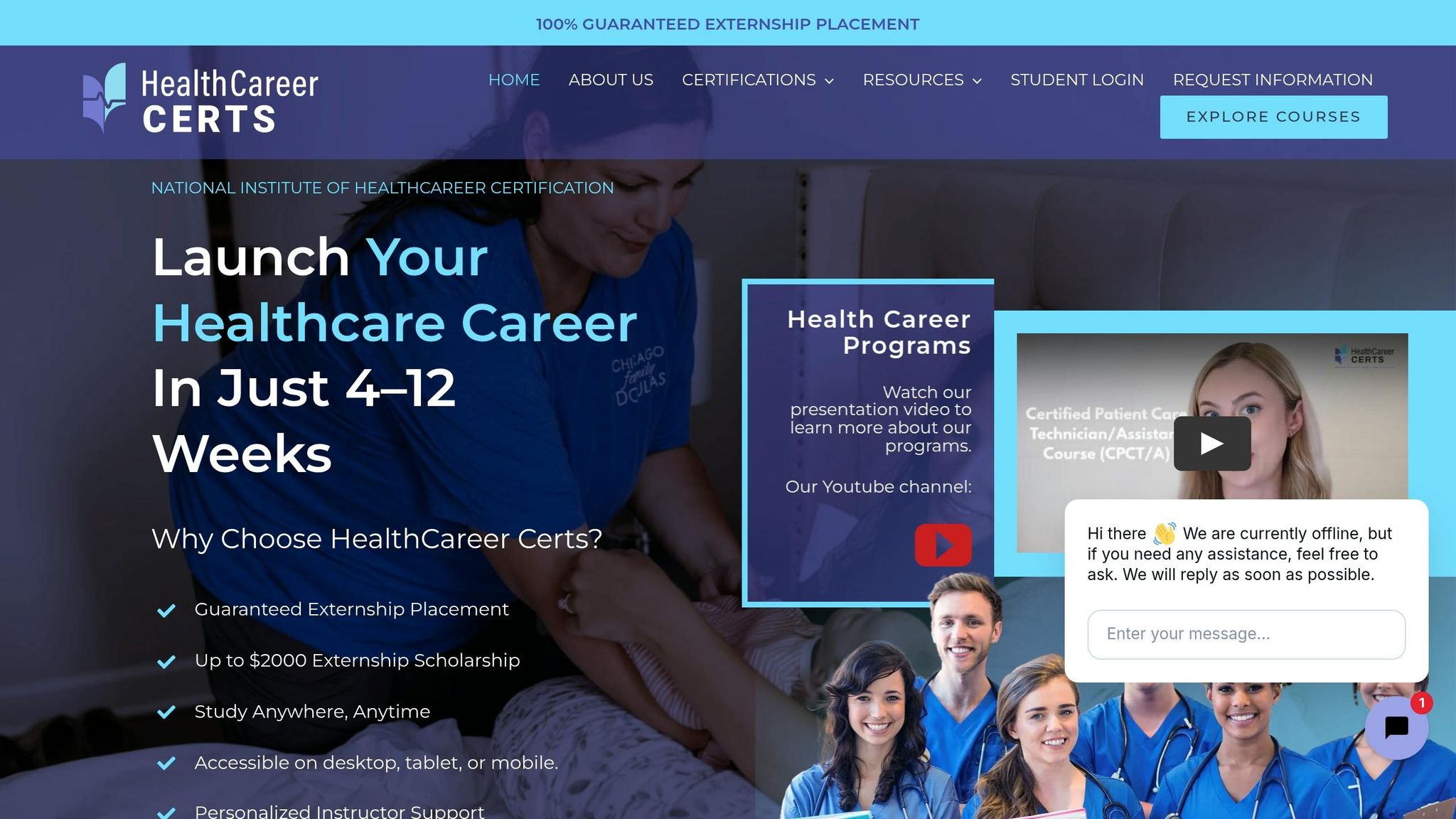
HealthCareer Certs takes student success seriously. They guarantee externship placements for all qualified students, ensuring you complete the clinical hours required for national certification exams. The program is licensed by the New Hampshire Department of Education and works in partnership with the National Healthcareer Association (NHA). Since NHA certifications are NCCA-accredited and widely recognized, you’ll be earning credentials that employers trust.
The program offers a variety of tools to help you prepare, including one-on-one instructor sessions, interactive learning tools, and extensive practice questions. Its self-paced structure allows you to complete certifications like CPT in as little as 4 weeks or CCMA in 4 to 12 weeks, depending on your schedule. To make hands-on training more affordable, HealthCareer Certs also provides an Externship Scholarship worth up to $2,000.
What really sets HealthCareer Certs apart is its 100% tuition refund guarantee. If you don’t land a healthcare job after earning your certification, they’ll refund your tuition – eliminating financial risk and showing their confidence in your success.
"Achieving NHA certification and having those trusted, credible credentials shows employers that you are a candidate who is serious about their career." – National Healthcareer Association
Conclusion
Certifications like CCMA and CPT can be game-changers for your career, offering access to higher-paying roles, increased job security, and long-term growth. Certified Medical Assistants, for example, earn about 16% more than their non-certified counterparts, and 90% of hospitals actively prefer hiring certified staff.
The good news? Flexible training options make certification more accessible than ever. Online, self-paced programs let you balance learning with work or family commitments. Programs such as HealthCareer Certs provide personalized instruction and guaranteed externship placements, ensuring you gain the clinical experience employers value. With completion times as short as 4 weeks for CPT and 4 to 12 weeks for CCMA, you can quickly be ready to step into the workforce.
"Certification is no longer a nice-to-have; it’s a must-have in today’s healthcare labor market." – Dr. Jennifer Smith, HR Director, National Healthcare Association
Healthcare is one of the fastest-growing industries, with medical assistant roles expected to grow by 15% by 2033 and phlebotomy jobs increasing by 8%. Choosing a nationally recognized certification program with strong support – like a $2,000 Externship Scholarship or 100% tuition refund guarantee – can set you up for a stable, rewarding career while also contributing to better patient care.
Your journey starts with the right certification. Why wait? Take that first step today.
FAQs
Which certification should I get first, CCMA or CPT?
Choosing between CCMA (Certified Clinical Medical Assistant) and CPT (Certified Phlebotomy Technician) depends on what you want out of your career.
A CCMA certification equips you with a broad range of skills, including patient care, medical office procedures, and EKG monitoring. This versatility opens doors to various roles and potential career growth in healthcare. On the other hand, a CPT certification focuses specifically on phlebotomy. It’s a quicker path to certification, making it a great option if you’re looking to enter the workforce sooner with a specialized skill set.
If you’re aiming for flexibility and long-term opportunities, CCMA may be the better choice. But if speed and specialization appeal to you, CPT could be the way to go.
Do I need an externship to get hired after certification?
Gaining an externship isn’t mandatory to land a job after certification, but it can give you a noticeable edge in the job market. By providing real-world clinical experience, an externship highlights your practical skills and shows employers that you’re prepared to thrive in a healthcare role.
How can I use my certification to negotiate higher pay?
Certifications like CCMA (Certified Clinical Medical Assistant) or CPT (Certified Phlebotomy Technician) can be powerful tools when negotiating higher pay. These credentials validate your skills and dedication to your field, proving to employers that you’re a qualified professional committed to excellence. They not only emphasize your expertise but also strengthen your case for better compensation, enhanced benefits, or expanded responsibilities by underscoring the value you bring to the workplace.