Earning a Certified Clinical Medical Assistant (CCMA) certification in Indiana can significantly boost your career prospects, salary, and job stability in the healthcare field. While certification isn’t legally required in the state, 89% of employers prefer or mandate it. Here’s why pursuing certification is a smart move:
- Higher Pay: Certified medical assistants earn an average of $45,061 annually, nearly $7,000 more than non-certified counterparts.
- Job Growth: Medical assisting roles are expected to grow by 14% nationally between 2022 and 2032.
- Training Options: Programs like IU Health’s tuition-free 9-week course and online options (e.g., HealthCareer Certs) make certification accessible and affordable.
- Career Opportunities: Certification opens doors to specialized roles, higher pay, and leadership positions in Indiana’s healthcare sector.
To get certified, you’ll need to complete a training program, meet eligibility requirements (e.g., high school diploma, 18+ years old), and pass the CCMA exam. Training programs in Indiana range from in-person hybrid courses to self-paced online options, catering to various schedules and budgets.
Whether you’re starting your career or looking to advance, certification is a clear path to success in Indiana’s healthcare industry.
CCMA Certification and Eligibility Requirements
What is CCMA Certification?
The Certified Clinical Medical Assistant (CCMA) credential, offered by the National Healthcareer Association (NHA) [[2]](https://southbend.iu.edu/professional-development/certified-clinical-medical-assistant .html), demonstrates that you’ve completed rigorous training and assessments to ensure the delivery of safe and high-quality patient care.
In Indiana, CCMAs take on a variety of responsibilities. On the clinical side, tasks may include drawing blood (phlebotomy), performing EKGs, administering medications and injections, and assisting with minor surgical procedures. Beyond direct patient care, CCMAs are often responsible for patient intake, maintaining electronic health records (EHR), and educating patients about their treatment plans [[2]](https://southbend.iu.edu/professional-development/certified-clinical-medical-assistant .html).
Healthcare employers across Indiana highly regard this certification. For instance, IU Health integrates the CCMA exam into their training programs, ensuring that certified assistants are prepared to deliver competent and reliable care from the start.
Eligibility Requirements for CCMA Certification
Once you understand what the CCMA credential entails, it’s important to know the steps to qualify.
To be eligible, you must be at least 18 years old and have a high school diploma or GED.
Additionally, completing a formal medical assistant training program is required. In Indiana, these programs typically include 140 hours of classroom instruction and a clinical externship. For example, Vincennes University mandates 80 clinical hours, while IU Health requires at least 160. This hands-on experience is critical for building the skills necessary for the role.
Before starting clinical training, candidates must pass a background check and drug screening. Some programs, such as IU Health’s tuition-free option, also require U.S. citizenship (or permanent residency) and a one-year work commitment after certification.
sbb-itb-7a67ffa
Pursue Medical Assisting at Ivy Tech Madison!
Training Programs Available to Indiana Residents
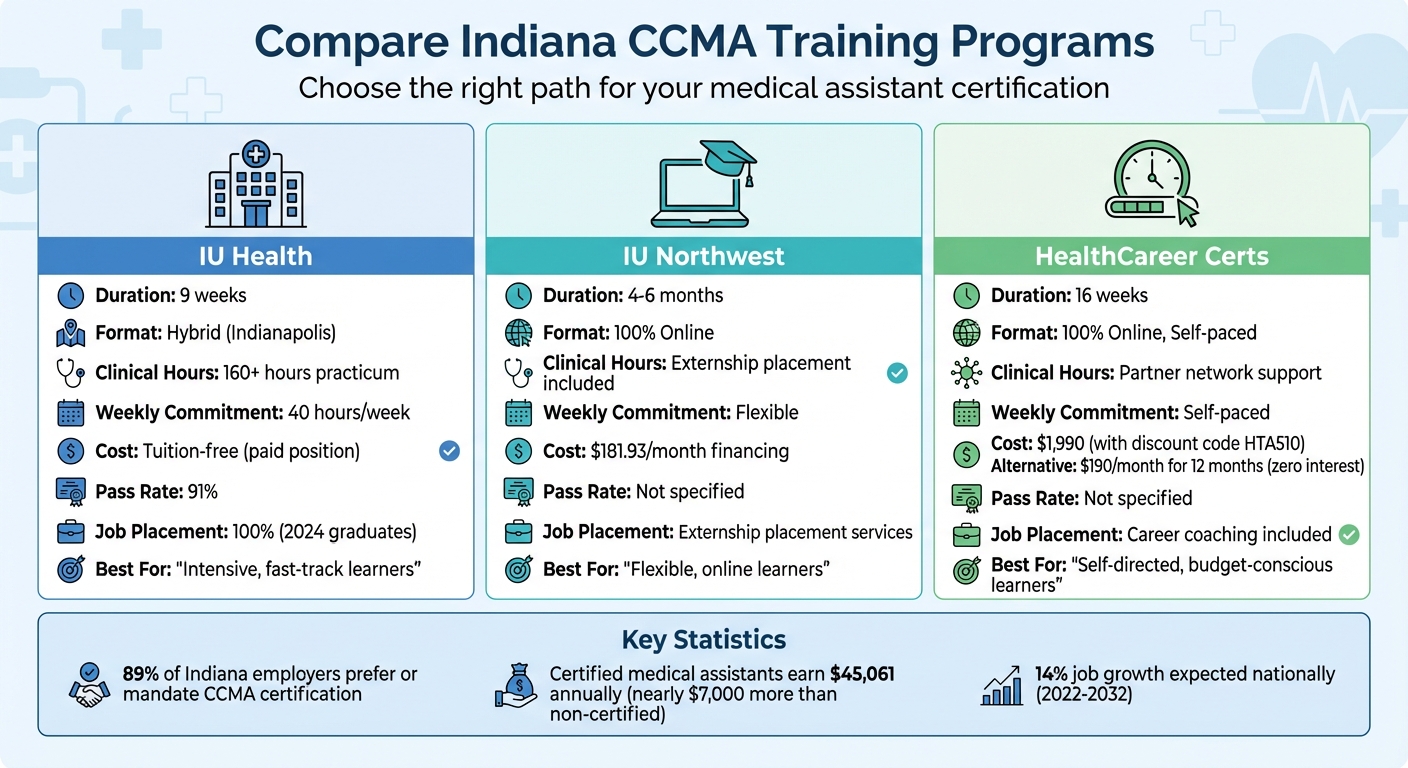
Indiana CCMA Training Programs Comparison: Duration, Cost, and Format
Training Program Comparison
Indiana residents looking to earn their CCMA certification have several training options, each tailored to different schedules and budgets. IU Health offers a tuition-free, intensive 9-week program with over 160 clinical hours. Meanwhile, IU Northwest provides a more flexible 4–6 month online program, complete with externship placement services and financing options starting at $181.93 per month. Lastly, HealthCareer Certs delivers a 16-week, self-paced online course supported by a partner network.
IU Health’s program is particularly rigorous, requiring a 40-hour weekly commitment, with clinical practicums starting in the second week. It boasts impressive outcomes, including a 91% exam pass rate and a 100% job placement rate for 2024 graduates.
| Program | Duration | Format | Clinical Hours | Cost |
|---|---|---|---|---|
| IU Health | 9 weeks | Hybrid (Indianapolis) | 160+ hours practicum | Tuition-free (paid position) |
| IU Northwest | 4–6 months | 100% Online | Externship placement | $181.93/month financing |
| HealthCareer Certs | 16 weeks | 100% Online, Self-paced | Partner network support | $1,990 (with discount code) |
These programs cater to different needs, offering a mix of duration, cost, and clinical experience to align with various career goals. Below, we dive into the specifics of the HealthCareer Certs CCMA Program.
HealthCareer Certs CCMA Program
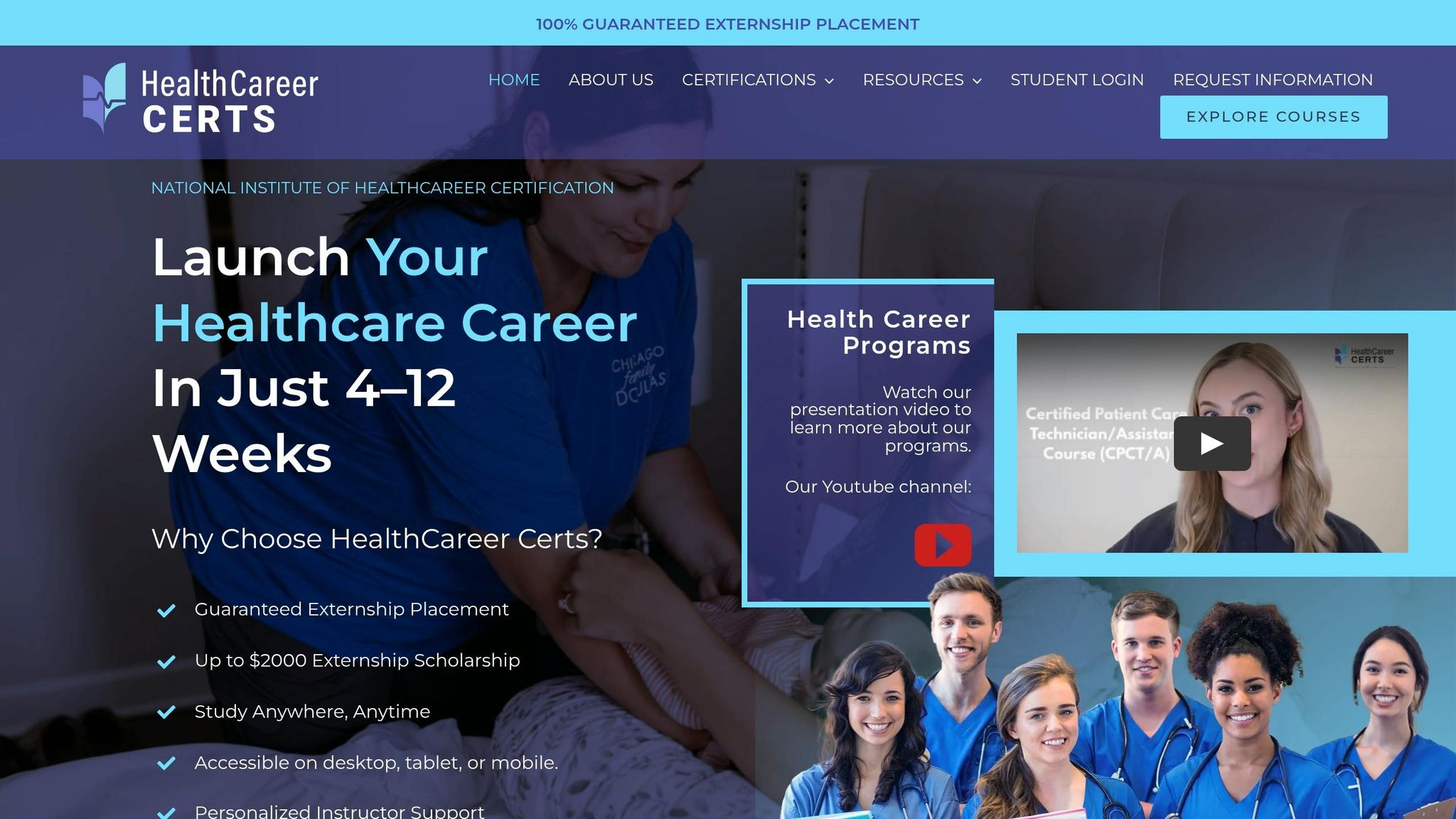
The The HealthCareer Certs Medical Assistant Bootcamp provides a 16-week, self-paced online program designed to fit into busy schedules. The course includes interactive lessons, virtual simulations, and personalized mentor coaching. To ensure exam readiness, students get access to over 1,400 practice questions and 700 self-checks, making it a robust preparation for the NHA CCMA exam.
"HealthCareer Certs’ CCMA Program is well designed to support full-time working mothers!" – Christina Rodriguez, Medical Assistant
The program also offers flexible payment plans, such as a zero-interest installment option of $190 per month for 12 months, with no credit check required. By applying the discount code "HTA510", students can lower the cost of the Medical Assistant Max plan from $2,500 to $1,990. This plan not only includes the NHA exam voucher but also provides six months of career coaching after program completion. While externships aren’t guaranteed, HealthCareer Certs assists students in finding clinical placements through its partner network.
How to Prepare for the CCMA Exam
Creating a Study Plan
To succeed on the CCMA exam, it’s crucial to create a structured study schedule that covers both administrative and clinical topics. Make sure to balance areas like medical law, ethics, HIPAA compliance, and therapeutic communication with hands-on skills such as phlebotomy and EKG administration [[2]](https://southbend.iu.edu/professional-development/certified-clinical-medical-assistant .html).
If you’re juggling work alongside studying, break your plan into manageable sections. Dedicate specific days to focus on different areas, ensuring you cover everything from medical terminology to anatomy. A consistent schedule will help you stay on track and avoid last-minute cramming.
Once your plan is in place, focus on using resources that target key areas of the exam.
Study Resources and Tools
Understanding the structure of the CCMA exam can make your preparation more efficient. The test includes 180 multiple-choice questions (with 150 scored), and you’ll have three hours to complete it. To pass, you’ll need a score of 390 or higher, and the national pass rate sits around 77%.
The exam is divided into sections with varying weights:
- Clinical Patient Care: 54% (about 81 questions)
- Administrative Assisting: 13% (roughly 20 questions)
- Foundational Knowledge & Basic Science: 10% (approximately 15 questions)
- Anatomy & Physiology: 8% (around 12 questions)
Resources like the HealthCareer Certs Medical Assistant Bootcamp can help you prepare, offering over 1,400 practice questions and 700 self-checks to reinforce your understanding.
Don’t overlook hands-on practice. If your training program includes skills labs, take full advantage of them to repeatedly practice tasks like taking vital signs, performing injections, and conducting EKGs. This kind of repetition builds confidence and competency.
Exam Day Strategies
Once you’ve reviewed your materials thoroughly, shift your focus to exam day preparation. The exam runs for three hours straight with no scheduled breaks, so plan to address personal needs beforehand. You can take the test at a PSI testing center, an accredited school, or via remote proctoring, with a fee of $160. If you require accommodations (like extended time or breaks), submit your ADA request to the NHA well in advance.
In the week leading up to the exam, take full-length practice tests to build your stamina and identify weak areas. Many candidates find Anatomy & Physiology especially tough, even though it only accounts for 8% of the exam, so dedicate extra time to reviewing body systems.
If you don’t pass the exam on your first try, don’t worry – you can retake it after a 30-day waiting period. However, failing three times requires a one-year wait before trying again.
Career Opportunities for Certified Medical Assistants in Indiana
Indiana Job Market Overview
The healthcare industry in Indiana presents a wealth of opportunities for certified medical assistants, with 23,170 job openings expected by 2032. Salaries for medical assistants in the state range from $36,600 to $45,380 annually, depending on experience. Entry-level positions typically start at $29,130, while seasoned professionals can earn up to $46,890. In metropolitan areas like Indianapolis, average salaries often hover around $46,802.
Leading employers like IU Health, UnitedHealth Group, and regional hospitals offer roles in specialized clinical areas and leadership tracks, such as office management or instructorship. IU Health, the largest healthcare system in Indiana with nearly 40,000 employees across 15 hospitals, frequently hires for Medical Assistant II roles in specialties like cardiology, pediatrics, and dermatology. Most positions require current certification and Basic Life Support (BLS) credentials.
Career Advancement Options
Certification serves as a crucial stepping stone, qualifying medical assistants for entry-level roles while also paving the way for advancement into specialized and leadership positions within Indiana’s healthcare landscape.
Certified medical assistants can move beyond entry-level tasks into specialized administrative roles such as medical coding, insurance claims processing, or medical records auditing. Leadership positions, like medical office or practice manager, allow professionals to oversee recruitment, training, and daily operations. For those interested in education, experienced medical assistants can transition into roles as instructors, training future healthcare workers.
IU Health demonstrates a strong commitment to career growth through its Medical Assistant Education Program, which achieved a 100% graduate job placement rate, a 91% pass rate on credentialing exams in 2024, and a 98% trainee retention rate. Brandi Burgin from Indiana University Health highlights the program’s success:
"NHA has been an incredible collaborator with us on this program every step of the way. They’re… successful in terms of helping us train and certify talented medical assistants who care, do great work, and want to stay with us for the long term."
Many healthcare systems in Indiana further support career development by offering benefits like tuition reimbursement, eligibility for student loan forgiveness, and wellness financial incentives. With around 89% of employers requiring or strongly encouraging certification, maintaining credentials is essential for accessing higher-paying specialized roles and management opportunities.
These pathways highlight the potential for growth and advancement in the medical assisting field across Indiana.
Next Steps for Your Medical Assistant Career
If you’re looking to become a certified medical assistant in Indiana, the first steps are straightforward: meet eligibility requirements, complete an approved training program, and pass the CCMA exam. To qualify, you’ll need a high school diploma or GED, be at least 18 years old, and successfully pass background and drug screenings. Once these prerequisites are met, you can explore the training options available in Indiana.
Indiana provides both tuition-free and paid training programs through major health systems like IU Health. One standout option is the Medical Assistant Education Program, which offers a 9-week accelerated track. This program combines 140 hours of classroom instruction with 160 hours of clinical training. Participants work 40 hours a week and are paid during the program, with minimal costs for equipment – around $140 for scrubs, a stethoscope, and textbooks. Impressively, the program boasts a 91% pass rate on credentialing exams and a 100% job placement rate for its graduates.
Timing is key when applying. For example, if you’re aiming for the October 2026 cohort, applications open from June 17–22, 2026. Selection and interviews will follow from July 6–31, 2026, with the program officially beginning on October 5, 2026. To get started, search for "Medical Assistant Trainee" positions on major healthcare system job boards – these roles often include certification preparation as part of the job.
For those needing more flexibility, HealthCareer Certs offers a 100% online CCMA program. This self-paced option includes one-on-one Zoom sessions with instructors, interactive tools like over 1,400 practice questions, and guaranteed externship placements. The program can be completed in as little as 4 weeks or stretched to 12 weeks, making it perfect for individuals balancing other responsibilities.
Your choice of training program will shape your career path in Indiana’s healthcare industry. Whether you opt for an in-person, structured program or an online, flexible alternative, completing your certification is the key to unlocking opportunities in this growing field.
FAQs
Which Indiana CCMA program fits my schedule?
The Indiana University Northwest Clinical Medical Assistant Online Certification Course offers a convenient way to advance your career. This program is fully online and designed to fit into your busy life. You can complete it in approximately 4-6 months, giving you the flexibility to study at your own pace while managing your personal and work responsibilities.
Do online CCMA programs include a required externship?
Online CCMA programs generally don’t include an externship since the focus is on completing coursework and training online. That said, some programs might include practical elements like labs or clinical skills training, which you’ll need to complete separately. It’s important to review the specific requirements of the program you’re considering.
What’s the fastest way to raise my CCMA exam score?
The fastest way to boost your CCMA exam score is by creating a structured study plan and steering clear of last-minute cramming. Stick to a consistent schedule that allows you to cover all exam topics in depth. Incorporate practice exams and sample quizzes into your routine to pinpoint areas where you need extra focus and to build confidence. Prioritizing active review and regular practice will help you improve effectively and efficiently.