Phlebotomy isn’t just about drawing blood – it’s about creating a better experience for patients while ensuring safety and accuracy. Key practices focus on communication, comfort, and professionalism to reduce anxiety, prevent complications, and improve cooperation. Here’s what you need to know:
- Communication: Explain procedures in simple terms, address concerns, and engage patients to ease their worries. Always verify identity with two unique identifiers.
- Comfort: Position patients correctly, use tools like warm compresses or butterfly needles for sensitive veins, and create a calm, clean environment.
- Professionalism: Follow strict protocols for infection control, patient confidentiality, and technical accuracy. Stay updated with certifications and training.
Advanced methods, like topical anesthetics or guided breathing exercises, further enhance patient care but may require additional time or resources. Balancing basic and advanced techniques ensures better outcomes for both patients and practitioners.
1. Basic Patient Care Methods
Communication
When entering the room, start by introducing yourself and explaining your role to create a sense of ease. Always verify the patient’s identity using two unique identifiers, such as their full legal name and date of birth, to avoid any potential errors.
Use simple, clear language to explain the procedure, steering clear of medical jargon. Ask if they’ve had prior experiences with blood draws – this can help you adjust your approach, particularly if they mention issues like fainting or needle anxiety.
"Clear and compassionate communication can transform this stressful experience into a more manageable one." – MedLabTech Academy
During the procedure, keep your tone calm and light. Engage in casual conversation to distract the patient and pay attention to both their words and body language for signs of discomfort or concern. Afterward, remind them to apply pressure to the site to help minimize bruising.
Good communication not only reduces stress but also lays the groundwork for ensuring the patient feels comfortable throughout the process.
Comfort Measures
Physical comfort plays a big part in making the procedure go smoothly. Proper positioning of the patient’s arm helps relax muscles, stabilize veins, and make them easier to locate. For individuals prone to fainting, placing them in a reclining or supine position can prevent accidents. Tools like wedges or adjustable armrests can also help secure the arm and reduce the risk of movement during the draw.
Distraction techniques are particularly helpful for patients who feel anxious. Casual conversations about unrelated topics can redirect their attention from the needle. For children, offering stress balls or toys provides a simple way to keep them engaged and calm. Applying a warm compress before the draw can also help by dilating veins, making them easier to access and lowering the chance of multiple needle attempts.
The environment matters too. A clean, quiet, and private space can make patients feel more at ease. When performing the draw, follow proper techniques: clean the venipuncture site with 70% alcohol for 30 seconds, let it air dry, and insert the needle at an angle between 15 and 30 degrees to minimize discomfort. Limit the use of the tourniquet to under one minute to avoid complications.
Professionalism
Professionalism ties everything together, ensuring both safety and trust. Alongside communication and comfort measures, maintaining a professional demeanor is essential for ethical and effective care. Follow strict infection control practices, such as washing your hands before and after each procedure and disposing of sharps immediately in designated containers, to protect both yourself and the patient.
"A phlebotomist must maintain professionalism by following ethical guidelines, maintaining confidentiality, and providing compassionate care to patients." – Jessica Turner, BS, CPT
Respect patient confidentiality by adhering to HIPAA guidelines and safeguarding their sensitive information. Technically, proficiency is key – anchor the vein with your thumb below the puncture site to prevent rolling and reduce pain during insertion. Avoid drawing blood from areas with visible issues like hematomas or scars, and never draw from the same side as a mastectomy to ensure the patient’s safety and the integrity of the sample.
Stay up to date with your skills by pursuing continuing education and maintaining certifications through organizations like the National Healthcareer Association (NHA) or the American Society for Clinical Pathology (ASCP). For those looking to expand their expertise, online programs like those offered by HealthCareer Certs (https://healthcareercerts.org) provide convenient options to learn the latest techniques and safety protocols.
sbb-itb-7a67ffa
How to Anchor Veins | Venipuncture, IV Therapy, Blood Draw, Phlebotomy Rolling Veins
2. Advanced Patient Care Methods
Building on basic techniques, advanced approaches elevate how phlebotomists communicate, ensure comfort, and uphold professionalism, creating a better overall experience for patients.
Communication
Active listening is a cornerstone of building trust with patients. By paying close attention to what they say and addressing their concerns, you can foster a stronger connection. Empathy also plays a big role, especially when interpreting non-verbal cues. For instance, about 20% of people deal with trypanophobia – a clinical fear of needles. Signs like clenched fists, rapid breathing, or avoiding eye contact can indicate anxiety. Adjusting your approach to match their emotional state can make a big difference. Explaining each step of the blood draw in simple, clear terms can further ease their worries, helping them stay calm and reducing potential complications like hematomas.
"While technical skills are vital, strong communication is what truly sets a successful phlebotomist apart." – Layla Sudais, MedLabTech Academy
Effective communication is just the start. Advanced comfort measures can also go a long way in reducing patient stress.
Comfort Measures
Beyond basic positioning, advanced methods use specialized tools and techniques to enhance patient comfort. For instance, butterfly needles are a good option for patients with fragile or sensitive veins. Additionally, topical anesthetics like EMLA cream or lidocaine can numb the area if applied 30 to 60 minutes before the procedure.
Relaxation exercises, like guided breathing, can also help. A simple breathing pattern – inhale for four counts, hold for four counts, exhale for four counts – can relax muscles and prevent vein constriction. Pairing these exercises with distractions, such as calming music, can further help patients shift their focus away from the needle.
These physical and emotional comfort measures are most effective when paired with a high level of professionalism.
Professionalism
Advanced professionalism includes respecting patient diversity and ensuring clear, informed consent. Walking patients through each step and explaining any risks allows them to feel more in control of the process.
Maintaining strict infection control is equally crucial. Research shows that up to 25% of tourniquets can carry methicillin-resistant Staphylococcus aureus (MRSA) due to poor hygiene practices or reuse. To minimize risks, use single-use tourniquets whenever possible, and perform hand hygiene both before putting on gloves and after taking them off. Staying updated on the latest best practices ensures you’re providing the safest care possible.
"By showing kindness and understanding, phlebotomists can create a trusting relationship with their patients and ensure their well-being." – Jessica Turner, BS, CPT
Advantages and Disadvantages
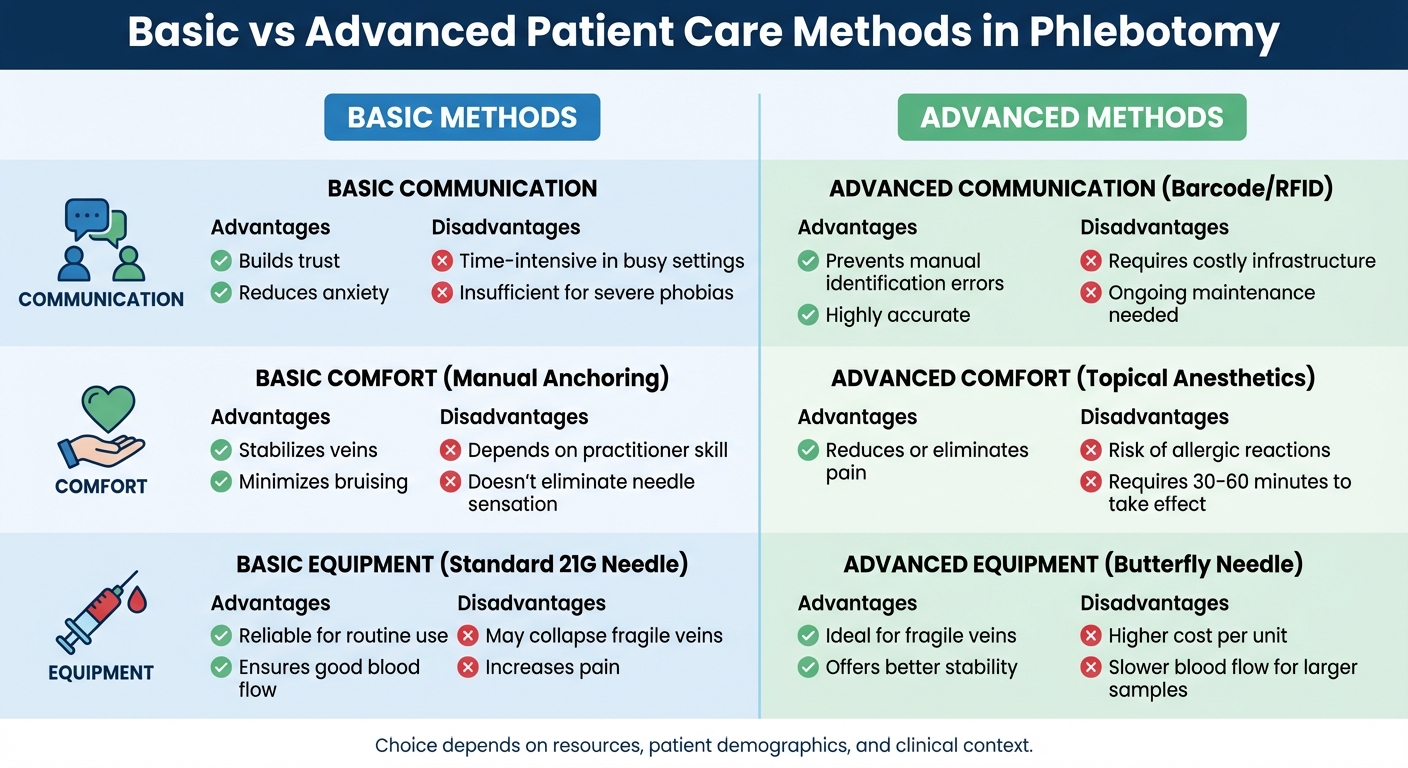
Basic vs Advanced Phlebotomy Patient Care Methods Comparison
Basic and advanced methods cater to different environments and patient needs, each with its own set of trade-offs. These choices highlight the core elements of communication, comfort, and professionalism mentioned earlier.
Basic methods, like standard communication techniques and manual vein anchoring, are budget-friendly and practical in settings with high patient volumes. They help build trust and ease general anxiety without requiring costly tools or technology. However, their effectiveness depends heavily on the practitioner’s expertise. They may fall short for patients with extreme needle fears or delicate veins and can pose risks like infection.
Advanced methods enhance safety and patient comfort but come with higher costs, the need for specialized training, and infrastructure upgrades. For example, safety devices reduce the risk of needlestick injuries but demand proper staff training and investment. Topical anesthetics, such as EMLA cream, can eliminate pain at the puncture site, but they require 30–60 minutes to take effect and may cause allergic reactions. Barcode systems ensure accurate specimen identification, minimizing mix-ups, but they require significant initial investment and ongoing maintenance.
"One of the essential markers of quality of care in phlebotomy is the involvement and cooperation of the patient; this is mutually beneficial to both the health worker and the patient." – World Health Organization (WHO)
The table below highlights the key advantages and drawbacks of these methods, offering a clear comparison across communication, comfort, and equipment categories:
| Method Category | Advantages | Disadvantages |
|---|---|---|
| Basic Communication | Builds trust; reduces anxiety. | Time-intensive in busy settings; insufficient for severe phobias. |
| Advanced Communication (Barcode/RFID) | Prevents manual identification errors; highly accurate. | Requires costly infrastructure and ongoing maintenance. |
| Basic Comfort (Manual Anchoring) | Stabilizes veins; minimizes bruising. | Depends on practitioner skill; doesn’t eliminate needle sensation. |
| Advanced Comfort (Topical Anesthetics) | Reduces or eliminates pain. | Risk of allergic reactions; requires 30–60 minutes to take effect. |
| Basic Equipment (Standard 21G Needle) | Reliable for routine use; ensures good blood flow. | May collapse fragile veins; increases pain. |
| Advanced Equipment (Butterfly Needle) | Ideal for fragile veins; offers better stability. | Higher cost per unit; slower blood flow for larger samples. |
Deciding between basic and advanced options depends on available resources, patient demographics, and the specific clinical context. Both approaches have their place when applied thoughtfully.
Conclusion
Providing effective patient care in phlebotomy hinges on a blend of technical accuracy and genuine human connection. Core practices such as clear communication, accurate patient identification, and maintaining sterile techniques lay the groundwork for safe blood draws. But it’s the addition of empathy and understanding that transforms the experience, ensuring patients feel respected, informed, and at ease. Together, these elements highlight the importance of comprehensive and well-rounded training.
Training programs are essential in shaping skilled and compassionate phlebotomists. By combining hands-on simulations with empathy-building exercises, these programs help students refine both their technical and interpersonal skills. For example, peer simulations allow trainees to practice procedures while honing professional communication and patient interaction skills. This dual focus on technique and empathy ensures well-prepared professionals who can handle the demands of the field.
Beyond initial certification, maintaining professionalism requires ongoing education. Regular updates on safety protocols, infection control measures, and patient-focused care are crucial for long-term success. Even small adjustments, like keeping workspaces organized, offering comfortable seating, or incorporating calming decor, can make a big difference in reducing patient anxiety. Following standardized guidelines from organizations like the WHO also ensures both patient safety and the integrity of collected specimens.
For newcomers, certifications such as the Certified Phlebotomy Technician (CPT) from HealthCareer Certs validate essential skills and demonstrate a commitment to high-quality care. These programs combine flexible online learning with guaranteed externship placements, giving students invaluable hands-on experience in clinical settings. Certification through respected organizations like the National Healthcareer Association (NHA) confirms their readiness to meet industry standards.
Ultimately, success in phlebotomy depends on more than just technical skill. It’s about fostering patient trust and satisfaction – making every blood draw not just a task but a meaningful interaction.
FAQs
What should I do if a patient is about to faint?
If a patient begins to show symptoms of fainting during a blood draw, it’s crucial to act quickly. Stop the procedure right away, release the tourniquet, and assist the patient to either sit down or lie flat to avoid potential falls. If they are seated, encourage them to lower their head between their knees. Adding a cold compress to the back of their neck can also provide relief. Stay by their side for at least 15 minutes after they regain consciousness to ensure they have fully recovered.
When should I use a butterfly needle instead of a standard needle?
A butterfly needle is often the go-to tool for patients with veins that are small, fragile, or tricky to access. This includes groups like infants, children, the elderly, or individuals with particularly delicate veins. Its design helps make the process more comfortable while lowering the chances of complications during blood draws.
How can I improve patient care skills after certification?
To improve patient care skills after earning certification, prioritize strong communication, building trust, and ensuring patient comfort. Focus on active listening, use simple and clear language, and express genuine empathy during every interaction. Make patients feel at ease by creating a warm and welcoming atmosphere, and consider techniques like distraction to help reduce their anxiety. Always uphold professionalism by adhering to established protocols and staying informed about the latest practices through ongoing education. Combining compassion with professionalism can significantly enhance the overall patient experience.