If you’re aiming to become a certified medical assistant in Florida, here’s what you need to know:
- Certification isn’t mandatory in Florida, but most employers prefer or require it for better job prospects.
- Top certifications: Certified Clinical Medical Assistant (CCMA), Certified Medical Assistant (CMA), and Registered Medical Assistant (RMA).
- Training requirements: Complete an accredited program, gain clinical experience, and meet basic criteria like being 18+, having a high school diploma or GED, and passing a background check.
- Costs: Certification exams range from $120 to $160, while training programs can cost $1,400 to $6,700.
- Job outlook: Medical assistant jobs in Florida are expected to grow by 30% from 2020 to 2030, with an average salary of $42,970.
This guide breaks down the steps to certification, training options, and tips for entering Florida’s healthcare job market.
How to pass the CCMA exam and become a medical assistant
sbb-itb-7a67ffa
Florida’s Medical Assistant Certification Requirements
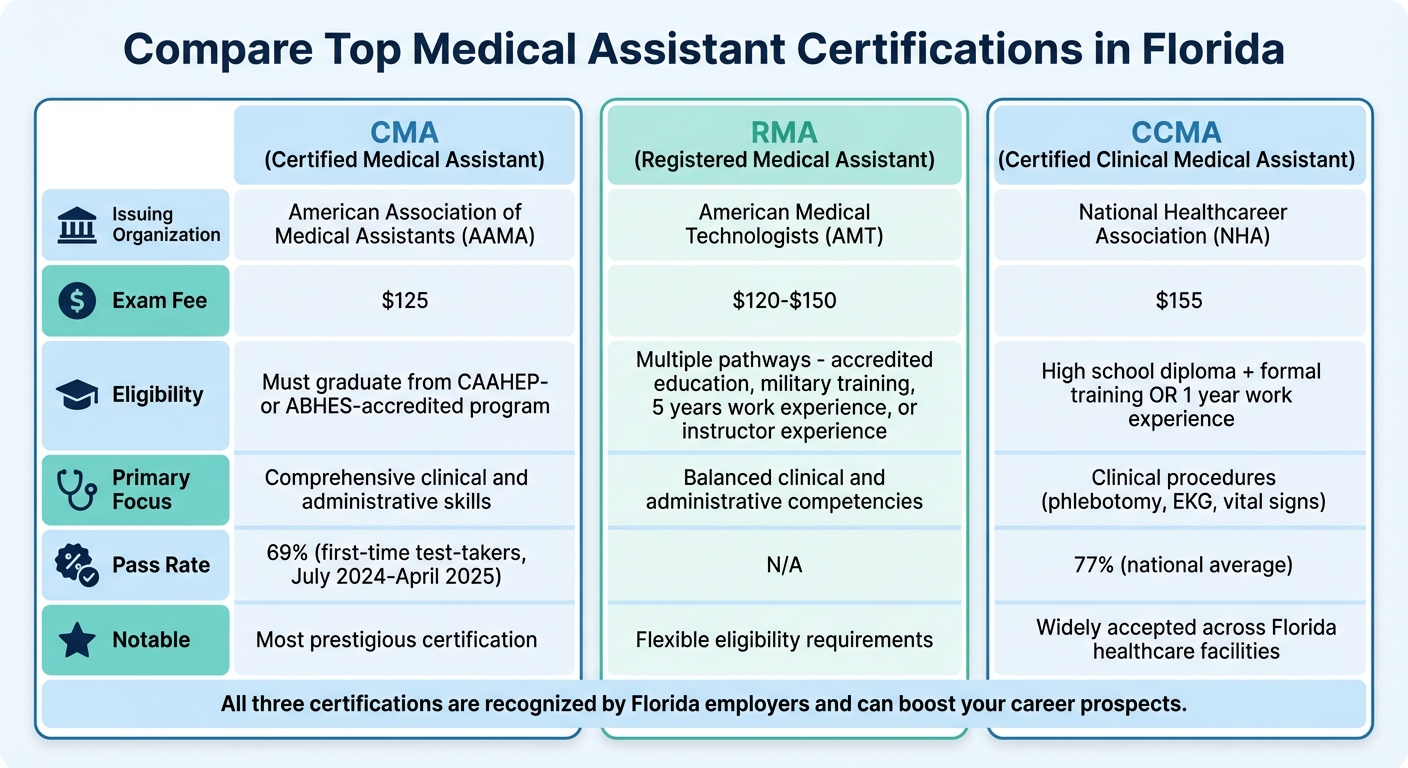
Florida Medical Assistant Certification Comparison: CMA vs RMA vs CCMA
State Requirements for Medical Assistants in Florida
In Florida, medical assistants don’t need a state-issued license or certification as long as they’ve completed a training program approved by the state or their employer. However, Florida Statute 458.3485 mandates that all medical assistants must operate under the direct supervision of a licensed physician. The statute defines a medical assistant as:
"Medical assistant means a professional multiskilled person dedicated to assisting in all aspects of medical practice under the direct supervision and responsibility of a physician."
To officially use the title "certified medical assistant" in Florida, you’ll need to earn certification through an NCCA-accredited program, a recognized medical association, or an entity approved by the Board of Medicine.
Candidates must meet several basic requirements: they must be at least 18 years old, hold a high school diploma or GED, pass a background check, and often provide proof of BLS certification and required vaccinations like MMR and Hepatitis B.
For further credentialing, consider pursuing national certifications recognized by Florida employers.
National Certifications Accepted in Florida
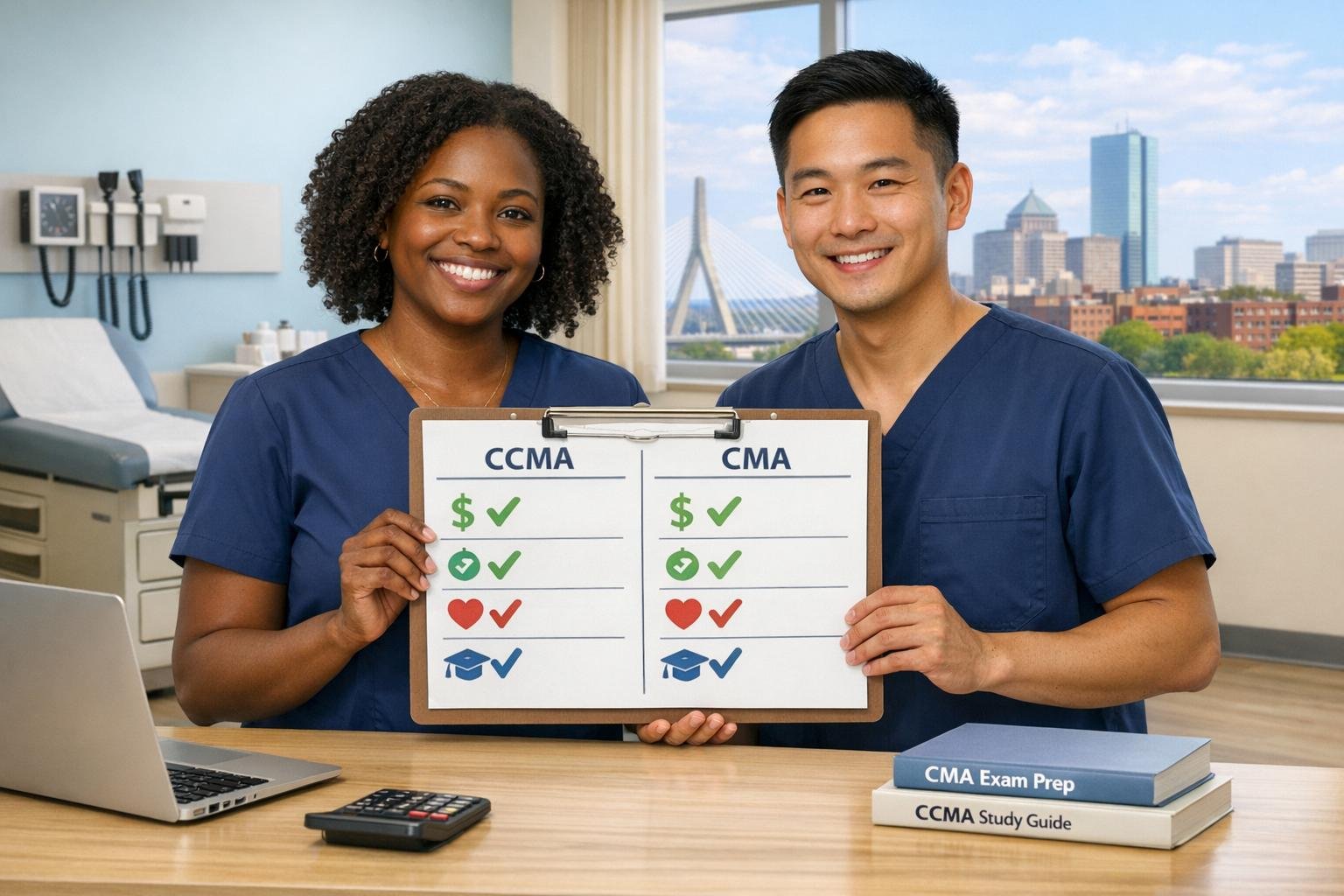
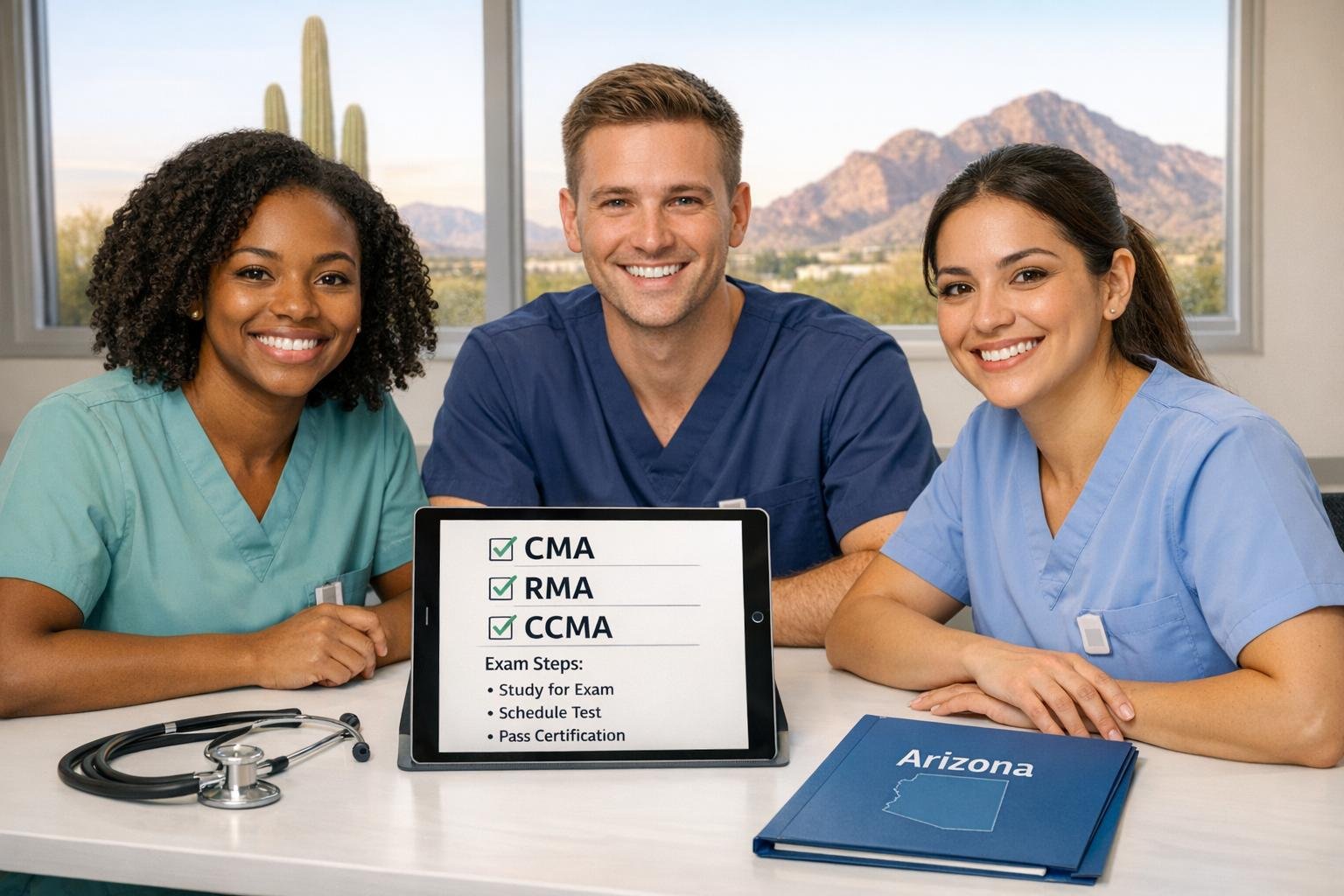
While Florida’s state requirements are minimal, national certifications can boost your credentials and help you stand out in the job market. Three key certifications widely recognized in Florida are the Certified Clinical Medical Assistant (CCMA), Certified Medical Assistant (CMA), and Registered Medical Assistant (RMA). Each certification validates your skills, though their eligibility criteria and focus areas vary.
- Certified Medical Assistant (CMA): Issued by the American Association of Medical Assistants (AAMA), the CMA is often seen as the most prestigious certification. To qualify, you must graduate from a CAAHEP– or ABHES-accredited program. The exam costs $125, and between July 2024 and April 2025, 4,171 candidates took the exam, with a 69% pass rate for first-time test-takers.
- Registered Medical Assistant (RMA): Offered by American Medical Technologists (AMT), this certification provides multiple pathways to eligibility, including accredited education, military training, five years of work experience, or instructor experience. Exam fees range from $120 to $150.
- Certified Clinical Medical Assistant (CCMA): Administered by the National Healthcareer Association (NHA), the CCMA focuses heavily on clinical skills like phlebotomy, EKG administration, and vital signs. Candidates need a high school diploma paired with formal training or one year of work experience. The exam fee is roughly $155, and this certification is widely accepted across Florida healthcare facilities.
| Certification | Issuing Organization | Exam Fee | Eligibility Highlights | Primary Focus |
|---|---|---|---|---|
| CMA | American Association of Medical Assistants (AAMA) | $125 | Graduation from a CAAHEP- or ABHES-accredited program | Comprehensive clinical and administrative skills |
| RMA | American Medical Technologists (AMT) | $120–$150 | Accredited education, military training, or work experience | Balanced clinical and administrative competencies |
| CCMA | National Healthcareer Association (NHA) | $155 | High school diploma with training or one year of work experience | Emphasis on clinical procedures |
When planning to take your certification exam, keep in mind that most Florida testing centers require at least a 10-day wait between registration and the test date.
How to Complete Medical Assistant Training in Florida
Enrolling in an Accredited Medical Assistant Program
Starting your journey toward becoming a medical assistant in Florida begins with a few basic requirements. You’ll need a high school diploma or GED, be at least 18 years old, and have some essential documents ready, like a valid photo ID and your Social Security number.
Florida offers a variety of program formats to suit different learning styles. Options range from fully online, self-paced courses to hybrid programs that combine online learning with in-person labs, as well as traditional campus-based instruction. For instance, HealthCareer Certs provides fully online training that includes self-paced modules, interactive tools, and live instructor sessions.
Applying is usually straightforward, especially for private programs that often feature quick online applications. Public institutions like Miami Dade College might require entrance exams, such as the T.A.B.E. or PERT, unless you qualify for an exemption. If your program includes a clinical externship, expect to complete a background check, drug screening, and provide proof of vaccinations like MMR and Hepatitis B.
Tuition costs can range significantly, from around $1,400 to more than $6,700, so it’s wise to apply early as spots fill up fast. Once enrolled, your focus will shift to mastering the coursework and completing clinical training hours.
Completing Curriculum and Hands-On Training
After enrollment, your training will progress from classroom-based learning to hands-on practice. Medical assistant programs in Florida cover a mix of clinical and administrative skills that are essential for healthcare roles. You’ll learn to measure vital signs, perform EKGs, draw blood (phlebotomy), manage patient intake, understand medical terminology, handle electronic health records, and gain a foundational understanding of pharmacology. Some programs even provide at-home clinical kits with tools like venipuncture trainer arms, stethoscopes, and blood pressure cuffs to help you practice before starting your externship.
Externships are a key part of medical assistant training, allowing you to apply what you’ve learned in real healthcare settings. These placements typically include 80 to 204 hours of supervised clinical experience in local medical offices, clinics, or hospitals. If you choose an online program, you may receive support from an externship coach to secure a local placement.
The time it takes to complete a program depends on its format. Accelerated certificate programs can be finished in as little as four to seven months, while traditional campus-based options may take 12 to 24 weeks or longer. For example, Miami Dade College boasts a 97% retention rate and a 99% licensure pass rate, highlighting the success of its structured training approach.
Preparing for Certification Exams
Once you’ve completed your training and externship, the next step is preparing for certification exams. HealthCareer Certs offers tools like practice questions, interactive flashcards, self-check exercises, and mobile-friendly study materials. They even provide one-on-one Zoom sessions with instructors to help you tackle challenging topics and boost your confidence.
Many Florida programs include the cost of certification exams – typically between $155 and $259 – in their tuition, saving you from extra expenses. Preparing thoroughly for these exams is essential, as certification is often the final step before starting your career. Make sure your program is accredited by recognized organizations like DEAC, CAAHEP, or ABHES, so you’ll be eligible to take national certification exams such as the CCMA.
Preparing for and Passing the CCMA Exam
Exam Content and Format
The Certified Clinical Medical Assistant (CCMA) exam, administered by the National Healthcareer Association (NHA), includes 180 multiple-choice questions to be completed within a 3-hour time limit. To pass, you’ll need a score of 390 out of 500, with a national pass rate of approximately 77%.
The exam is divided into five domains, with Clinical Patient Care taking up the largest portion at 56%. This section tests your skills in areas such as taking vital signs, administering injections, performing EKGs and phlebotomy, and assisting with exams and minor surgeries. The other domains include foundational knowledge and basic science (10%), patient care coordination and education (8%), administrative assisting tasks like EHR maintenance and scheduling (8%), and communication and customer service (8%).
For Florida candidates, the exam can be taken at your training school, a PSI testing center, or even at home through live remote proctoring. If you take the exam online, results are usually available in your NHA account within two days. The cost to take the exam is $160. Knowing the content areas and logistics of the exam can help you focus your preparation where it matters most.
Study Resources and Exam Preparation Tips
Understanding the exam’s structure is key to creating an effective study plan. There are several resources available to help you prepare, including an online study guide for $69, bundled practice tests for $49 (or both for $94), a mobile app with flashcards, and a remediation tool to address weaker areas. Each practice test offers two attempts, giving you a chance to get comfortable with the format and pacing.
Since Clinical Patient Care makes up the majority of the exam, prioritize studying clinical procedures like injections, EKGs, phlebotomy, and vital signs. Develop a structured study schedule that covers all five domains, dedicating more time to areas with higher weight on the exam. Many accredited programs in Florida offer additional support, including mock exams, instructor-led study sessions, and access to study spaces during business hours.
"My NHA certification has helped me financially advance my career. Most importantly it has given me opportunity to get a job that allows me to be a better mom by being home in the evenings and on the weekends." – Jessica Aponte, CCMA
Starting Your Career as a Certified Medical Assistant in Florida
With your certification in hand and practical training completed, it’s time to dive into Florida’s vibrant healthcare job market.
Finding Medical Assistant Jobs in Florida
Florida’s healthcare sector is bustling, with an estimated 9,300 medical assistant job openings each year. While certification isn’t a legal requirement in the state, many employers favor candidates with credentials like the CCMA. This certification highlights your expertise in both clinical and administrative tasks.
Your clinical externship is a valuable asset – make it the star of your resume and a key talking point in interviews. Highlight practical skills like taking vital signs, managing electronic health records (EHR), and performing phlebotomy. Focus your job search on high-demand settings such as outpatient facilities, primary care offices, urgent care centers, and specialty clinics in fields like dermatology or cardiology.
In Orlando, some of the top employers include Orlando Regional Medical Center, United Health Group, Mid Florida Dermatology, Orlando Health, and Florida Hospital. Look for roles on job boards, hospital career pages, or at healthcare job fairs in major cities like Orlando, Miami, and Tampa. The average annual salary for medical assistants in Florida is $42,970, with the top 10% earning $45,460 or more. Additionally, 83% of graduates from training programs find jobs shortly after completing their education.
Once you land your first position, you’ll have the chance to explore advanced roles and specializations.
Career Advancement Opportunities
Medical assistants in Florida often move into leadership roles like Lead Medical Assistant or Office Coordinator within one to three years. Specializing in areas such as pediatrics, cardiology, or ophthalmology is another popular path.
Earning extra certifications, such as those in Phlebotomy (CPT) or EKG technology, can open even more doors. Some medical assistants choose to further their careers by pursuing programs for Licensed Practical Nursing (LPN) or Registered Nursing (RN). Others transition into roles in healthcare administration, medical office management, or medical billing and coding.
Conclusion
Becoming a certified medical assistant in Florida opens doors in a thriving job market, with over 55,000 active positions and a projected 30% growth by 2030. While certification isn’t legally required in the state, most employers prioritize candidates with national credentials like the CCMA, CMA, or RMA. These certifications demonstrate your expertise and align with federal EHR requirements.
"Certification gives you a competitive edge in Florida’s healthcare job market. Employers prefer certified medical assistants because they trust your skills and know you’ve completed formal training." – Florida Health Care Academy
The key to success lies in choosing the right training program. Look for one that combines hands-on clinical experience with robust exam preparation. For instance, HealthCareer Certs offers a 100% online, self-paced program, complete with guaranteed externships. You could earn your certification in just 12 weeks and join the 83% of graduates who quickly secure employment.
Once certified, you’ll be ready to excel in Florida’s fast-paced healthcare industry. Your training and credentials will help you land roles in leading healthcare facilities, setting you on a path to a rewarding career. With competitive pay and opportunities for growth, medical assisting in Florida offers both stability and advancement. Staying committed to continuing education will further enhance your career prospects in one of the nation’s most dynamic healthcare markets.
Take the next step today. Enroll in a certification program that prepares you thoroughly for the exam and connects you with top employers in Florida. Your journey toward a fulfilling and impactful career starts now.
FAQs
Which certification (CCMA, CMA, or RMA) is best for my goals in Florida?
In Florida, you don’t need certification to work as a medical assistant, but having one can improve your job opportunities and salary potential. The CMA (Certified Medical Assistant) and RMA (Registered Medical Assistant) are highly regarded by employers, while the CCMA (Certified Clinical Medical Assistant) focuses on clinical skills. Your choice should depend on your career goals, but CMA and RMA certifications tend to carry more weight and open doors in Florida’s healthcare industry.
Can I become a medical assistant in Florida with an online program and local externship?
Yes, you can train to become a medical assistant in Florida by enrolling in accredited online programs that offer local externship opportunities. These programs blend online coursework with hands-on clinical hours, which are essential for gaining practical experience and meeting certification requirements. After completing the program, most students take the Certified Clinical Medical Assistant (CCMA) exam and complete their externships to align with Florida’s guidelines and boost their chances of landing a job.
What happens if I fail the CCMA exam, and how soon can I retake it?
If you don’t pass the CCMA exam, you’ll need to wait 30 days before you can try again. While there’s no limit to how many times you can retake it, the 30-day waiting period applies to each attempt. Use this time wisely to study and improve your chances of success on your next try.