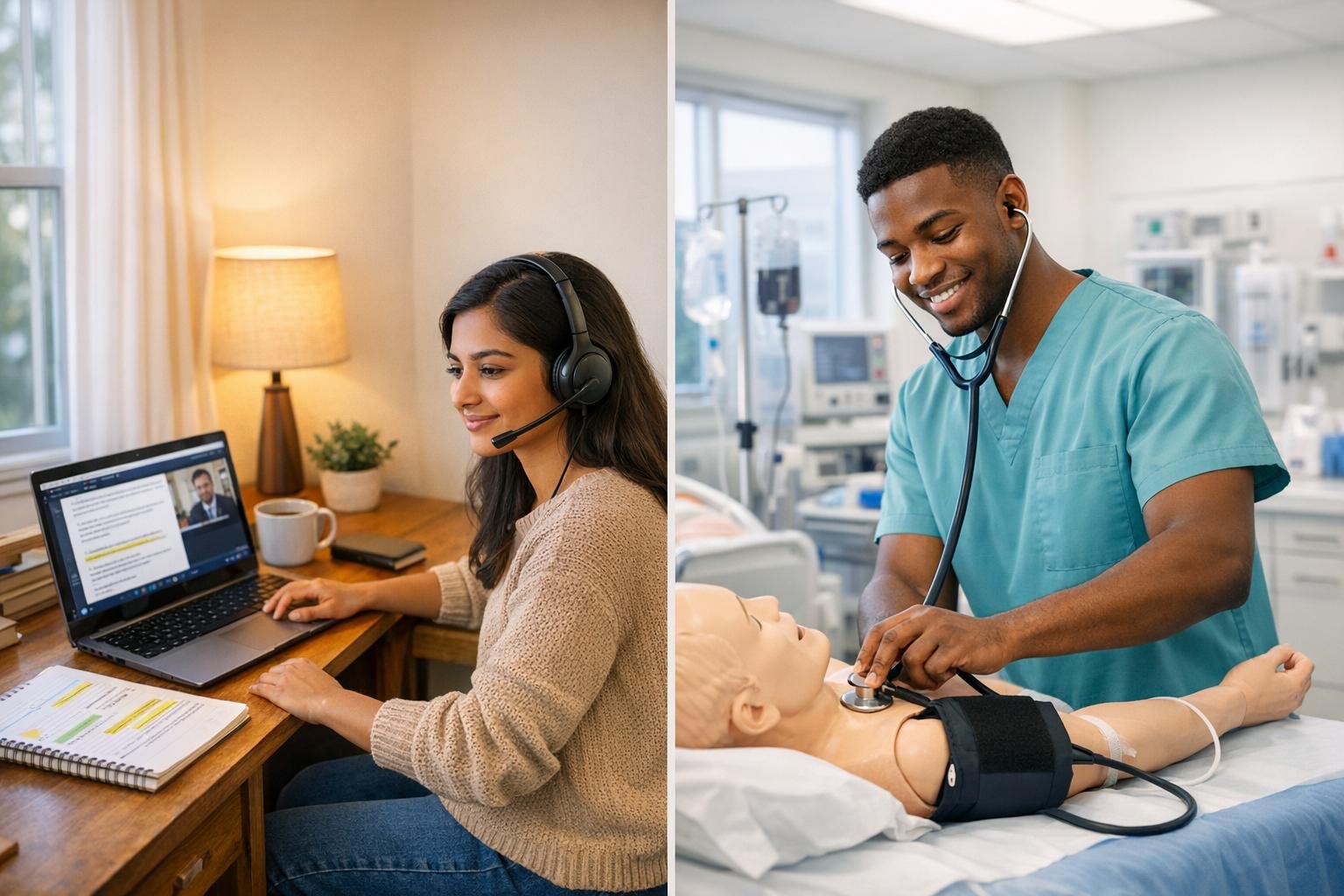
When starting a healthcare career, choosing between clinics and hospitals is a key decision. Each offers unique work environments, schedules, and responsibilities. Here’s a quick breakdown:
- Clinics: Focus on outpatient and preventative care. Expect a steady 9-to-5 schedule, fewer patients daily (20–50), and a calm, personal atmosphere. You’ll handle routine cases and build long-term patient relationships.
- Hospitals: Handle acute, critical care. Work is fast-paced with 12-hour rotating shifts, including nights and weekends. Patient volume is much higher (hundreds daily), and you’ll face varied, high-pressure situations.
Quick Comparison:
| Feature | Clinics | Hospitals |
|---|---|---|
| Work Pace | Steady and predictable | Fast-paced and unpredictable |
| Schedule | Mon–Fri, 9 AM–5 PM | 12-hour shifts, nights/weekends |
| Patient Volume | 20–50/day | Hundreds to thousands/day |
| Atmosphere | Calm and personal | High-energy and demanding |
| Patient Focus | Routine, preventative care | Acute, critical cases |
Your choice depends on your preferences for pace, work-life balance, and patient care style. Both settings offer valuable opportunities for growth.
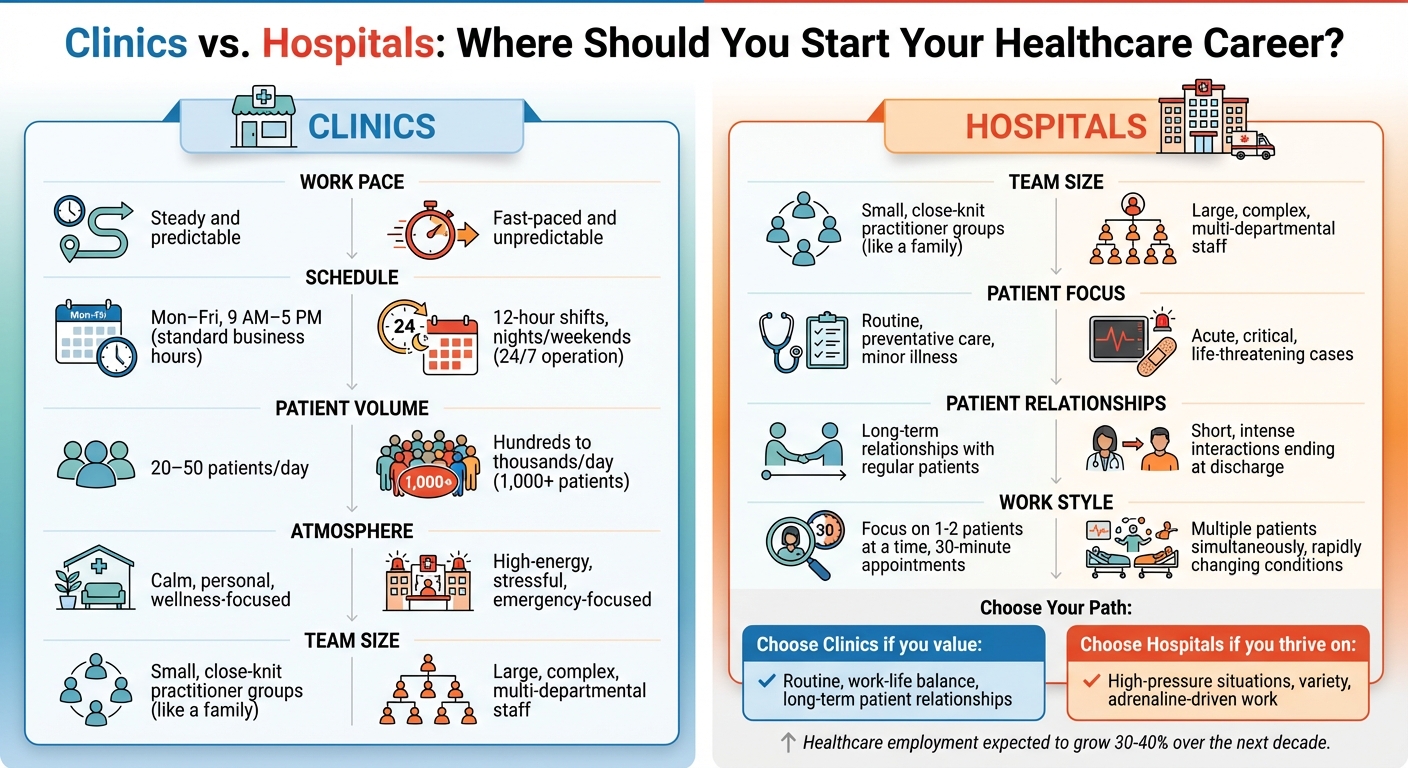
Clinics vs Hospitals: Work Environment Comparison for Healthcare Careers
Work Environment Differences
Clinic Work Environment
Clinics are smaller, more personal spaces, usually featuring a few exam rooms and a central waiting area. They often focus on one specialty or primary care, making the layout simple and easy to navigate. Working in a clinic means being part of a close-knit team, as Chaye McIntosh, Clinical Director at ChoicePoint Health, puts it:
"There’s limited staff at the clinic, and they tend to stay longer… We’re like a family".
In clinics, entry-level roles typically involve a mix of clinical and administrative responsibilities. You might take vitals, prepare exam rooms, schedule appointments, manage patient records, and keep track of inventory. Since clinics operate on appointments, the work pace is steady and predictable. On average, a small clinic sees between 20 to 50 patients a day, giving you the chance to form long-term connections with patients over time.
Hospitals, however, offer a vastly different work environment.
Hospital Work Environment
Hospitals are large, multifaceted systems equipped to handle a wide range of medical situations – from emergency care to surgeries and intensive treatments. Unlike clinics, hospitals can treat more than 1,000 patients in a single day.
You’ll be part of a larger, interdisciplinary team that includes doctors, nurses, specialists, and technicians, often working across multiple departments to care for a single patient. This setup exposes entry-level workers to a variety of complex cases and cutting-edge medical technologies, but it also comes with stricter organizational policies and a more formal hierarchy. The environment is fast-paced and constantly moving, as staff respond to emergencies and acute medical needs. Unlike the ongoing relationships you might develop in a clinic, hospital interactions are usually short-lived, ending once the patient is discharged.
The contrast in scale, pace, and team dynamics makes these two work settings uniquely suited to different career goals and preferences.
sbb-itb-7a67ffa
Pace and Scheduling Differences
The rhythm of your workday can vary significantly between clinics and hospitals, each offering a distinct experience.
Clinics generally follow a predictable schedule, often running Monday through Friday, 9:00 AM to 5:00 PM. This setup comes with structured breaks, a regular lunch hour, and free evenings and weekends. As veteran nurse Shanna Shafer shares:
"There is time to sit between patients, a scheduled lunch break and a flow to the day that… is usually consistent over weeks and months".
Hospitals, on the other hand, operate around the clock, requiring rotating 12- to 16-hour shifts, including nights, weekends, and holidays. While this schedule demands flexibility, it also provides longer stretches of time off during the week. Thomas N. Uzuegbunem, RN, highlights this balance:
"In the hospital setting, you have more days off during the week. There are ample opportunities to work a 12- or 16-hour workday".
The pace of work also sets these environments apart. Clinics typically maintain a steady flow, with appointments lasting around 30 minutes each. This allows for routine care and building ongoing patient relationships. In contrast, hospitals are fast-paced and unpredictable, with rapidly changing patient conditions and frequent emergencies requiring immediate action. Hospital interactions are often intense but brief, usually ending when the patient is discharged.
Comparison Table: Clinics vs. Hospitals
| Feature | Clinics | Hospitals |
|---|---|---|
| Work Pace | Steady, predictable, and routine | Fast-paced, hectic, and unpredictable |
| Work Hours | Standard (Mon–Fri, 9 AM – 5 PM) | Irregular (12-hour shifts, nights, weekends) |
| Patient Volume | 20–50 patients/day | Hundreds to thousands/day |
| Atmosphere | Calm, personal, and wellness-focused | High-energy, stressful, and emergency-focused |
| Team Size | Small, closely-knit practitioner groups | Large, complex, multi-departmental staff |
| Patient Cases | Routine, preventative, and minor illness | Acute, critical, and life-threatening |
For those juggling school, family, or a need for routine, clinic schedules provide a consistent structure. However, if you thrive in high-energy environments and prefer trading regular hours for more days off, the hospital setting might be a better fit.
Next, we’ll see how these scheduling dynamics affect job responsibilities for entry-level healthcare workers.
Job Responsibilities for Entry-Level Workers
These roles prepare you for specific job expectations, depending on the setting.
Entry-Level Work in Clinics
Working in a clinic often blends clinical and administrative duties. As Carrie Mesrobian explains:
"A medical assistant in a clinic may have a larger share of administrative tasks like appointment scheduling, data entry, medical scribing and upkeep of the reception desk area".
On the clinical side, you might handle tasks like administering injections, taking vital signs, conducting health screenings, and assisting with low-risk procedures. The slower pace in clinics allows you to focus on one or two patients at a time, which can lead to building long-term relationships with regular patients.
Administrative responsibilities in clinics often include greeting and checking in patients, managing supply inventories, and maintaining accurate medical records. If you work in a specialized clinic – such as dermatology or pediatrics – you’ll have the chance to develop expertise in a specific field.
In contrast, hospital roles require juggling multiple patients and adapting to a faster pace.
Entry-Level Work in Hospitals
Hospitals are dynamic environments where the workload is fast-paced and varied. Here, you might record vital signs, update treatment plans, assist in both minor and major procedures (including surgeries), handle dressing changes, and manage patient admissions and discharges. Unlike clinics, hospital roles often involve caring for several patients at once, as their conditions can shift quickly.
EBI Career College describes the role as follows:
"Medical assistants are typically on the forefront of patient interaction… bridging the gap between patients and physicians/nurses".
In hospitals, you’ll also act as a crucial link between patients and specialized staff. This could involve guiding patients through large facilities, managing complex medical records, and coordinating with insurance companies. You’ll likely use advanced equipment and handle high-volume lab testing, often for critical cases. Patient interactions in hospitals are usually short but intense, ending with discharge. This environment requires quick thinking and the ability to manage multiple priorities at once.
Both clinics and hospitals offer valuable learning opportunities: clinics help you refine administrative skills and build lasting relationships with patients, while hospitals enhance your technical abilities and prepare you for high-pressure situations.
Pace and Stress: Which Fits Your Personality?
Your personality and ability to handle stress play a big role in determining the work environment that’s right for you. We’ve already touched on how scheduling and work pace differ, but now let’s dive into how these factors shape stress levels and align with different personality types.
Clinics provide a structured, routine-driven environment, making them ideal for those who value predictability and enjoy fostering long-term relationships with patients. If you thrive on steady patient interactions and a consistent workflow, a clinic might feel like home.
On the flip side, hospitals are a better fit for individuals who excel under pressure and enjoy fast-paced, ever-changing scenarios. As Eisenhower Health aptly puts it:
Boredom has no place in hospital nursing careers. Adrenaline junkies are more likely to find job satisfaction in the acute care setting.
Hospitals require quick decision-making and adaptability, as patient conditions can shift rapidly. These contrasting environments highlight how your personal work style can directly impact your job satisfaction.
Stress levels also vary significantly between these settings. Hospital stress often stems from high-stakes situations, like emergencies, critical conditions, or dealing with the emotional weight of patient loss. In clinics, while the intensity of stress may be lower, challenges such as managing high patient volumes and handling administrative tasks – like phone triage – can still be demanding. Veteran nurse Shanna Shafer sheds light on the hospital experience:
In the hospital, an RN is responsible for several patients at the same time… on a busy shift, nurses may become overwhelmed with the number of patients they have to care for.
If you’re unsure which environment suits you best, consider working as a PRN (Per Diem) healthcare worker. This approach allows you to gain hands-on experience in both settings without making a long-term commitment. Think about whether you remain composed in high-pressure, life-or-death situations or if you prefer a quieter atmosphere focused on preventive care. Registered nurse Shenese Stewart offers this wise advice:
It’s important to find the path you love, or you will be miserable and ineffective.
Making Your Decision
When deciding between clinic and hospital settings, think about your personal comfort and work preferences. Do you feel at ease in a fast-paced environment, or do you prefer a more predictable routine? How will the schedule align with your lifestyle? These questions can help you identify the setting that fits your career goals and daily life best.
If you value a steady Monday-to-Friday, 9-to-5 schedule that works well with family or school commitments, clinics offer that stability. On the other hand, hospitals often provide 12- to 16-hour shifts, giving you more days off each week. Consider whether you want to focus on building long-term relationships with patients in a wellness-driven environment or if you’re more drawn to the dynamic and high-pressure world of acute care. To get a better sense of what suits you, try gaining hands-on experience through volunteer work, internships, or PRN (as-needed) roles.
Once you’ve clarified your priorities, think about the certifications that can help you succeed. Both clinic and hospital settings require proper credentials. Certifications like the Certified Clinical Medical Assistant (CCMA) or Certified Phlebotomy Technician (CPT) can boost your value in any healthcare role. Programs like those offered by HealthCareer Certs are 100% online, self-paced, and include guaranteed externship placements. They even offer a 100% tuition refund if you don’t secure a healthcare job. Approved by the National Healthcareer Association (NHA), these programs can be completed in as little as 4 weeks to 6 months, helping you enter the field quickly.
With healthcare employment expected to grow by 30%-40% over the next decade, and many entry-level roles available without the need for a bachelor’s degree, both clinics and hospitals present solid opportunities for career growth. Choosing between these settings is a strategic step toward building a rewarding career in healthcare.
FAQs
What should I think about when deciding between working in a clinic or a hospital?
When weighing the choice between working in a clinic or a hospital, it’s important to think about factors like work environment, pace, and job expectations. Hospitals are larger facilities that deal with a broad spectrum of medical conditions, including emergencies and complex cases. The environment is fast-paced, and shifts can often be irregular or overnight – perfect for those who thrive on variety and want exposure to multiple specialties.
Clinics, by contrast, concentrate on outpatient care, such as primary care or managing chronic conditions. The pace is generally calmer, with more predictable hours, which can be appealing if maintaining a steady work-life balance is a priority.
Consider your career goals, the type of setting you prefer, and how much flexibility you need in your schedule to decide which path suits your aspirations best.
What are the differences in work schedules between clinics and hospitals?
Work schedules in clinics tend to be steady and predictable. Most clinics stick to standard weekday hours, with minimal chances of overnight or holiday shifts. This setup is perfect for anyone prioritizing a consistent work-life balance.
Hospitals, on the other hand, are open 24/7, which means healthcare workers often face variable shifts. These can include nights, weekends, and holidays. While hospital schedules can be more demanding, they also offer some flexibility for those who prefer longer shifts that allow for multiple days off in between.
How do patient interactions differ between clinics and hospitals?
Patient interactions vary significantly between clinics and hospitals, largely due to the type of care provided and the setting’s focus.
In clinics, the emphasis is on routine care, preventive measures, and the management of chronic conditions. This environment often fosters long-term, personalized relationships between healthcare providers and patients. The smaller scale and familiar atmosphere of clinics make it easier for patients to feel connected to their care team.
In contrast, hospitals are designed to address acute or urgent medical needs, such as emergencies or complex conditions that may require inpatient care. Interactions in hospitals are typically more focused and task-driven, with multidisciplinary teams working together to manage serious or life-threatening situations. These encounters tend to be shorter and more immediate, reflecting the critical nature of hospital care.