Healthcare certifications like CCMA, CPT, CPCT, and CPhT offer a fast and affordable way to start earning in the healthcare field. These programs are designed to be completed in weeks or months, allowing you to begin working while still in training. Here’s what you need to know:
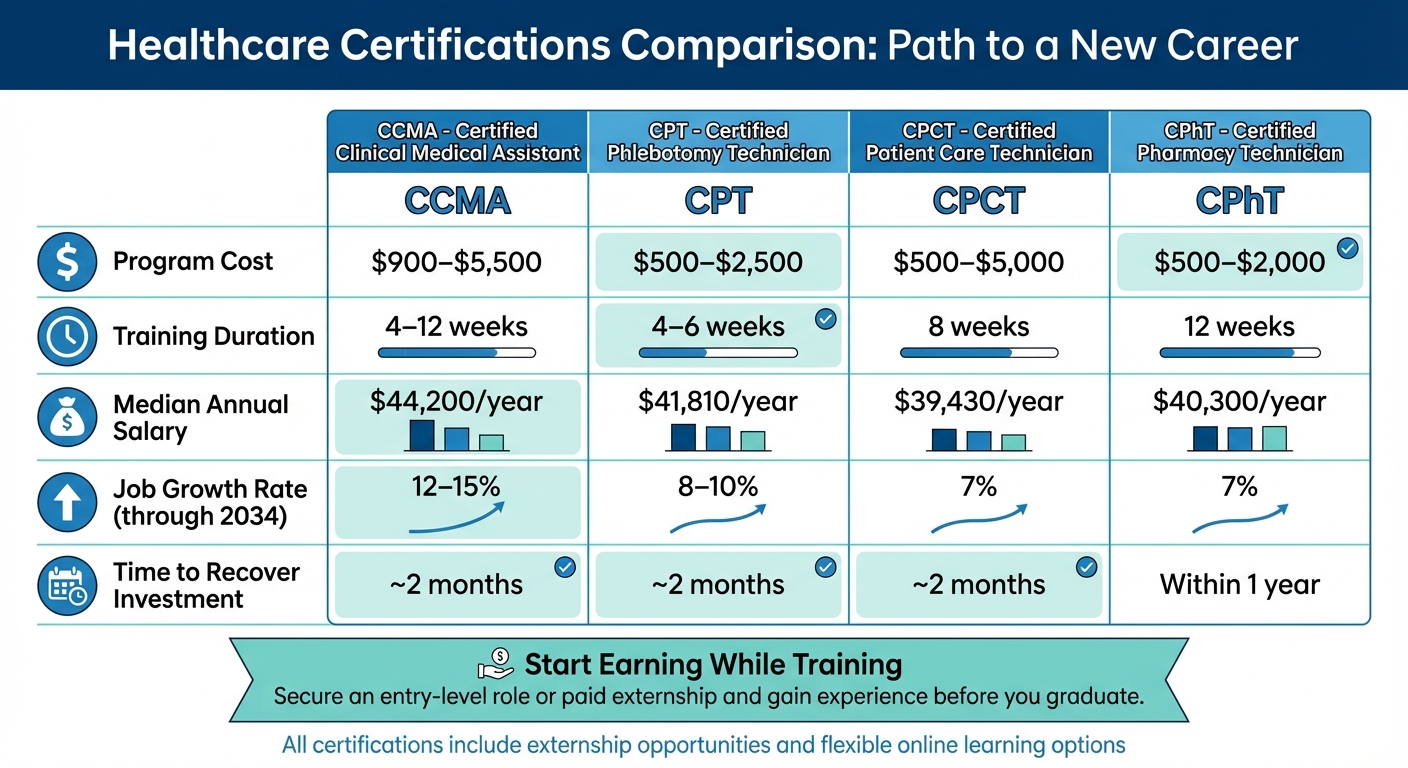
- Certified Clinical Medical Assistant (CCMA): Costs $900–$5,500, takes 4–12 weeks, and offers a median salary of $44,200/year.
- Certified Phlebotomy Technician (CPT): Costs $500–$2,500, takes 4–6 weeks, and provides a median salary of $41,810/year.
- Certified Patient Care Technician (CPCT): Costs $500–$5,000, takes 8 weeks, and offers a median salary of $39,430/year.
- Certified Pharmacy Technician (CPhT): Costs $500–$2,000, takes 12 weeks, and provides a median salary of $40,300/year.
These certifications are in high demand, with job growth rates ranging from 7% to 15% through 2034. Programs often include externships, flexible schedules, and tuition refund guarantees, making it easier to recover your investment quickly. Whether you’re looking for a stepping stone into advanced healthcare roles or a stable job, these certifications offer a practical starting point.
Healthcare Certification Comparison: Cost, Time, and Salary Guide
1. Certified Clinical Medical Assistant (CCMA)
Program Cost and Affordability
Online CCMA programs typically range from $900 to $5,500. HealthCareer Certs offers a package that includes exam fees (around $160), study materials, and externship placement, along with interest-free payment plans. The renewal fee of $179 every two years is relatively low, especially when compared to the earning potential in this field.
Average Completion Time
Online CCMA programs can be completed in as little as 2 to 4 months, while in-person courses often take 6 to 12 months. HealthCareer Certs provides a self-paced option, allowing students to finish in as little as 4 weeks or take up to 12 weeks, depending on their schedule. This flexibility is ideal for pre-med and pre-health students who need clinical hours without interrupting their undergraduate studies. The NHA exam, required for certification, has a national passing rate of 77%. Additionally, externships included in the training offer early hands-on experience, seamlessly blending education with practical application.
Earning Potential During Training
Many CCMA programs include externships, which provide valuable clinical experience. While these externships are usually unpaid, some students manage to secure part-time medical assistant jobs during their training. With a median salary of $44,200 as of May 2024, graduates of accelerated programs can often recoup their training costs quickly. For instance, a Detroit-based apprenticeship program recently offered tuition-free training paired with paid, part-time clinical work, helping apprentices transition into full-time roles. These opportunities highlight how students can minimize expenses while gaining essential experience.
Career Opportunities Post-Certification
Once certified, CCMA professionals can access a variety of rewarding roles, including:
- Phlebotomist: Median salary of $41,810
- EKG Technician: Median salary of $66,170
- Medical Administrative Assistant: Median salary of $43,380
- Medical Claims Examiner: Median salary of $75,020
The demand for certified medical assistants is strong, with approximately 112,300 annual job openings expected through 2034 and a projected growth rate of 12% to 15% between 2032 and 2034. Employers value certification highly – 85% of allied health employers prefer candidates with recognized certifications, and 72% require it. One training provider even reported that 95% of its graduates found jobs immediately after completing the program. HealthCareer Certs further boosts confidence by offering a tuition refund guarantee if graduates fail to secure a healthcare job, underscoring the strong career prospects and financial return of CCMA certification.
sbb-itb-7a67ffa
How To Become a Certified Medical Assistant
2. Certified Phlebotomy Technician (CPT)
The Certified Phlebotomy Technician program is a streamlined path into healthcare, designed to provide a quick return on your investment.
Program Cost and Affordability
Phlebotomy certification offers an affordable entry into the healthcare field. Costs depend on the program format: online courses typically range from $500 to $1,000, while community college programs can cost between $600 and $2,500 [24,25].
The NHA CPT exam fee is $117, and many programs include this in their tuition. Certification renewal every two years costs $179. Financial aid options, such as Federal Pell Grants for college students, state-funded programs like the Texas Public Educational Grant (TPEG), or employer-sponsored tuition reimbursement, can help offset these costs [24,27].
Average Completion Time
Phlebotomy programs are designed for quick completion. Online courses typically last 4–6 weeks, while community college programs take 15 weeks to 6 months. To meet clinical requirements, students must complete 30 venipunctures and 10 capillary sticks on live subjects [24,26,27,29,31]. HealthCareer Certs offers a self-paced online program with flexible schedules, including 24/7 virtual learning and evening options, making it ideal for working adults. These accelerated timelines allow students to earn credentials and enter the workforce swiftly.
Earning Potential During Training
Some hospitals offer on-the-job training, enabling students to earn while they learn. Entry-level technicians typically start around $30,000 annually, with a median salary of $41,810 (or $20.10 per hour) [30,33]. For instance, a student who completes a $1,500 program in 12 weeks and secures a full-time job at the median salary can recover their training costs within just two months.
Career Opportunities Post-Certification
Certified Phlebotomy Technicians are highly sought after across various healthcare settings. Approximately 96% of employers either require or strongly prefer certification, and the field is expected to grow by 8% to 10% between 2023 and 2033 [26,30,32]. CPTs can work in hospitals, diagnostic labs, blood donation centers, private clinics, urgent care facilities, and even mobile phlebotomy services [26,32,33].
Certification also opens doors to specialized roles like Laboratory Specimen Processor, with salaries ranging from $22,000 to $36,000, and Laboratory Assistant, earning between $26,000 and $49,000 annually. Geographic location significantly impacts earning potential. For example, phlebotomists in California earn between $45,000 and $55,000, while those in Alabama typically earn $30,000 to $40,000. Experienced professionals with over five years in the field can earn between $43,000 and $55,000.
"I love knowing that my work is contributing to a bigger cause. With my NHA Phlebotomy Technician Certification, my patients are reassured they are in good hands."
– Brea Rochon, CPT
HealthCareer Certs even offers a tuition refund guarantee if graduates do not secure a healthcare job. This certification is structured to start delivering benefits even before you finish your training.
3. Certified Patient Care Technician (CPCT)
The Certified Patient Care Technician (CPCT) certification offers a quick and cost-effective way to start earning while pursuing further education. It combines three roles – Patient Care Technician (PCT), Phlebotomist, and EKG Technician – into one credential, making it a versatile option with fast returns.
Program Cost and Affordability
The cost of CPCT training depends on the program format. Online programs range from $500 to $5,000, community college certificates cost between $1,000 and $6,000, and associate degree tracks can exceed $25,000. Additionally, the national certification exam costs between $110 and $165, depending on the provider:
- American Allied Health: $110
- National Center for Competency Testing: $119
- National Healthcareer Association (NHA): $165
To help manage expenses, HealthCareer Certs offers externship scholarships of up to $2,000. Many programs also provide interest-free payment plans, need-based grants, or employer sponsorships where healthcare facilities cover tuition in exchange for a work commitment. Make sure to confirm whether fees for lab supplies, background checks, immunizations, and uniforms are included.
Average Completion Time
Accelerated online CPCT programs can be completed in as little as 8 weeks, allowing students to transition to full-time work in just two months. Community college programs and associate degrees typically take longer to finish. For those with busy schedules, HealthCareer Certs offers a self-paced online option with 24/7 virtual learning, making it easier to balance training alongside work or school commitments.
Earning Potential During Training
While most externships are unpaid, many students secure entry-level roles as CNAs or aides during their training. Once certified, CPCTs earn a median annual salary of $39,430, or $18.96 per hour. For example, a student who invests $1,800 in a 12-week program and lands a full-time job at this median salary could recoup their training costs within two months. This quick return on investment highlights the practical benefits of CPCT certification.
Career Opportunities Post-Certification
A large majority of healthcare employers – 96% – either require or strongly prefer CPCT certification. Certified Patient Care Technicians find opportunities in hospitals, nursing homes, rehabilitation centers, dialysis centers, emergency departments, and home health agencies. Specialized roles include:
- Telemetry Technician: Monitoring heart waveforms
- Dialysis Technician
- Emergency Room Technician
Many students also use the CPCT credential as a stepping stone to further their careers. By working as PCTs, they gain clinical experience and earn income while completing prerequisites for advanced degrees in nursing, physician assistant programs, or medical school.
"This course was amazing. I was able to get it done on my own time, and pre-med prerequisites went right along with the course. I would recommend it to any student or future CPCT."
– Madison King, Patient Care Technician
This certification not only opens doors to immediate job opportunities but also sets the stage for long-term career growth.
4. Certified Pharmacy Technician (CPhT)
The Certified Pharmacy Technician (CPhT) certification offers a practical way to enter the healthcare field with multiple training options. This program allows you to start earning while training, making it an attractive choice for those looking to balance work and education. With this credential, you can explore roles in retail pharmacies, hospitals, and specialty facilities, gaining hands-on experience as you build your career.
Program Cost and Affordability
The cost of CPhT training varies widely, ranging from $500 to over $40,000, depending on the program. Most standard options fall between $0 and $1,500. Exams also come with fees: $129 for the PTCE and $117–$129 for the NHA exam. However, there are free programs available, such as those offered by the University of Arkansas Hope-Texarkana (16 weeks), JVS Boston (12 weeks), and CrossPurpose (6 months).
If you’re considering online training, expect to pay between $500 and $2,000, while community college certificate programs cost anywhere from $700 to $12,000. For financial support, applying for FAFSA could make you eligible for federal Pell Grants, which provide up to $7,395 annually to help cover community college expenses. Additionally, many retail pharmacies offer employer-sponsored training, covering tuition and exam fees in return for a work commitment.
Average Completion Time
The time it takes to complete CPhT training depends on the pathway you choose. Online diploma programs typically take 4 months to 1 year, while the work experience pathway requires 3 to 8 months to log the necessary 500 to 1,200 supervised hours. For those seeking more in-depth education, associate degree programs take about 2 years and can open doors to advanced roles or further academic pursuits.
Some major retailers, like Walgreens and CVS, offer on-the-job paid training for pharmacy technician trainees, allowing you to earn while gaining experience. Flexible timelines like these make it easier to begin earning early in your career.
Earning Potential During Training
If you opt for the work experience pathway, you can start earning right away while completing the required 500 hours before taking the certification exam. Entry-level technician trainees typically earn at or slightly above minimum wage, with the average pay for those with less than a year of experience sitting at $16.11 per hour.
Once certified, pharmacy technicians earn a median annual salary of about $40,300 (around $19.38 per hour). Those working in hospital settings can earn even more, with a median salary of $47,940 per year (approximately $23.05 per hour). Many technicians recover their training costs within the first year of employment, setting the stage for further career growth and specialization.
Career Opportunities Post-Certification
After certification, around 51% of pharmacy technicians work in retail settings like CVS and Walgreens, while 17% find roles in hospitals. Other opportunities include mail-order centers, specialty pharmacies, university medical centers, and long-term care facilities. The profession is expected to grow by about 7% from 2023 to 2033, outpacing many other career fields.
"With the CPhT credential, technicians demonstrate their knowledge and commitment in medication safety and effective patient care across pharmacy settings. Employers prefer, and many require, their pharmacy technicians to be PTCB CPhTs."
– Pharmacy Technician Certification Board (PTCB)
Certified technicians can move into specialized roles like Lead Technician, Prior Authorization Specialist, or Pharmacy Informatics. Additional specialty certifications in areas such as Sterile Compounding (CSPT), Hazardous Drug Management, or Medication History can further increase earning potential. The top 10% of pharmacy technicians earn up to $28.58 per hour, or roughly $59,450 annually. For many, the CPhT certification also serves as a stepping stone toward pharmacy school or other advanced healthcare careers.
Certification Comparison
Here’s a side-by-side comparison of key metrics for popular healthcare certifications:
| Certification | Traditional Program Length | Accelerated Length | Estimated Cost | Median Annual Salary | Primary Job Options |
|---|---|---|---|---|---|
| CCMA | 9 Months | 8 Weeks | $2,000 – $15,000 | $42,000 – $44,200 | Physician offices, outpatient clinics, hospitals |
| CPT | 4 Months | 4–6 Months | $500 – $4,000 | $40,700 – $43,660 | Diagnostic/clinical labs, blood centers, hospitals |
| CPCT | 3 Months | 8 Weeks | $1,000 – $4,000 | $38,500 – $40,000 | Nursing homes, rehab centers, hospitals |
| CPhT | 12 Months | 12 Weeks | $500 – $2,000 | $40,300 – $43,460 | Retail, hospital, and mail-order pharmacies |
These numbers highlight the benefits of each certification, particularly in terms of time, cost, and earning potential.
For those seeking quick results, the CCMA and CPCT certifications stand out with accelerated programs as short as 8 weeks. These options not only save time but also align with strong demand in the job market. For instance, a Medical Assistant certification could lead to net earnings of approximately $913,000 over 20 years. This demonstrates how these fast-track programs can pay for themselves quickly – even before many graduates complete their training.
HealthCareer Certs takes this a step further by offering a $2,000 externship scholarship and guaranteed clinical placements. These benefits, combined with accelerated training, make it easier to recover your investment while gaining practical experience.
"The math favors fast and cheap over slow and expensive: Certificate programs cost $1,000–$15,000 and get you earning within 2–15 months." – HealthJob Editorial Team
These certifications also serve as stepping stones for career growth. For example, CPCTs often transition into roles as Registered Nurses, phlebotomists can move into medical lab science, and pharmacy technicians have pathways to becoming pharmacists. With healthcare support roles expected to grow by 11% through 2032 – adding over 706,000 new jobs – these certifications open doors to immediate employment and long-term advancement. This comparison highlights how these programs combine speed, affordability, and career potential to help you start your healthcare journey.
Conclusion
Healthcare certifications like CCMA, CPT, CPCT, and CPhT offer a fast track to career growth, combining affordability with quick turnaround times. These programs, which range from 8 weeks to 12 months and cost between $1,000 and $15,000, allow you to start earning in as little as two months – while others might just be beginning their degree journeys.
The flexibility of online training means you can study from anywhere, often at an accelerated pace. Many students also take advantage of employer tuition reimbursement programs, using these certifications as a launchpad for advanced roles, such as Registered Nurse or Medical Laboratory Scientist.
The numbers back it up: the healthcare sector is projected to create 1.9 million job openings annually through 2034. Meanwhile, jobs like Medical Assistant are expected to grow by 14.8% to 15%. For example, a $3,000 phlebotomy certificate can deliver a staggering 14,433% ROI over a decade – that’s real financial impact, not just theoretical benefits.
HealthCareer Certs enhances this journey by offering guaranteed externship placements and a $2,000 externship scholarship, providing hands-on experience while helping you recover your investment even faster. Whether you’re passionate about direct patient care or prefer working behind the scenes, there’s a certification tailored to your aspirations.
With short training periods, reasonable costs, and immediate earning potential, these certifications pave a clear and efficient path to a rewarding healthcare career.
FAQs
Which certification is best for my career goal?
The right certification for you will depend on your career aspirations, personal interests, and the resources – both time and money – you’re ready to put in. If you’re looking to jump into healthcare quickly, the Certified Clinical Medical Assistant (CCMA) is a solid choice. It’s budget-friendly, can be completed in just 8–12 weeks, and equips you with versatile clinical skills like patient care and phlebotomy. If you’re aiming for roles with higher earning potential and a more specialized focus, certifications like EKG/ECG technician might be worth exploring.
Can I work in healthcare before I’m certified?
Yes, certain entry-level roles in healthcare let you work while working toward certification. Jobs like Certified Nursing Assistant (CNA) or Emergency Medical Technician (EMT) often allow individuals to gain hands-on experience and earn a paycheck even before completing their certification.
What additional costs are not included in tuition?
Additional expenses beyond tuition can include fees for certification exams, study materials, supplies, and sometimes program-specific items like equipment or uniforms. It’s important to carefully review your program’s requirements so you can budget for these costs.