Medical assistants do more than handle clinical tasks – they shape patient experiences. While technical skills like taking vitals are important, soft skills are what truly make a difference. Here are five must-have abilities for every medical assistant:
- Communication: Clear, patient-friendly explanations and active listening prevent errors and build trust.
- Empathy: Understanding patients’ emotions improves care and boosts satisfaction.
- Flexibility: Handling shifting responsibilities ensures smooth operations in unpredictable environments.
- Attention to Detail: Precision in tasks like documentation and medication administration safeguards patient safety.
- Teamwork: Strong collaboration with healthcare teams enhances efficiency and care quality.
Mastering these skills can improve patient outcomes, reduce errors, and open doors to career growth. With medical assistant roles growing by 14% through 2032, honing these abilities is a smart investment.
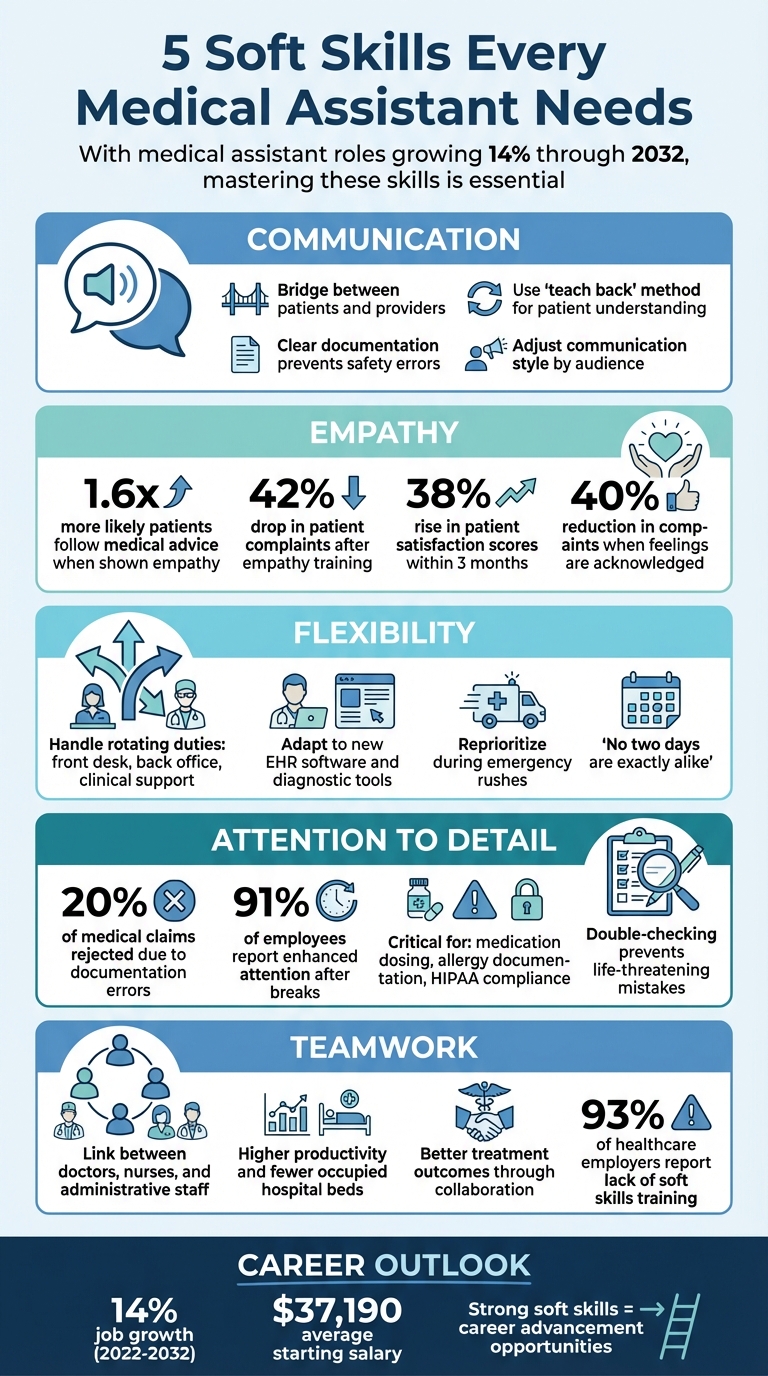
5 Essential Soft Skills for Medical Assistants with Impact Statistics
The Importance of Soft Skills in Healthcare
sbb-itb-7a67ffa
1. Communication
Effective communication is at the core of a Certified Clinical Medical Assistant’s responsibilities. Whether you’re calming a nervous patient during a blood draw, passing critical information to a physician, or navigating insurance processes, how you communicate directly impacts patient care and workplace efficiency.
Medical assistants must adjust their communication style depending on the audience. For patients and families, ditch the medical jargon. For instance, instead of saying, "We need to perform phlebotomy", you might say, "We’ll be drawing some blood today." This small change can ease anxiety and foster trust. A helpful strategy is the "teach back" method: after explaining care instructions, ask patients to repeat them in their own words to confirm understanding.
Active listening is just as crucial as speaking clearly. It means fully focusing on the person in front of you, asking thoughtful questions, and noticing subtle details. For example, if a patient says they feel "off", that vague comment could point to something significant. By asking follow-up questions and documenting their responses, you might uncover a key detail for the provider. Nonverbal cues matter, too – maintaining eye contact, using open body language, and showing empathy through your expressions can make patients feel heard and respected. Watch for their body language as well; signs like grimacing or fidgeting may reveal discomfort they haven’t voiced.
Written communication is equally important. Accurate and clear documentation isn’t just administrative – it’s essential for patient safety. A single error in spelling or grammar could lead to serious consequences.
When interacting with the healthcare team, concise and precise communication keeps everything running smoothly. As a medical assistant, you’re often the bridge between patients and providers, ensuring clinical handoffs are clear and complete. Handling phone triage also requires sharp communication skills to prioritize urgent cases appropriately. And don’t overlook the importance of cultural awareness – adjusting your approach based on a patient’s background or age. For example, using formal titles with older patients can demonstrate respect and strengthen rapport.
This attention to detail in communication not only builds trust but also lays the groundwork for the compassionate care and teamwork that are essential in healthcare settings.
2. Empathy
Clear communication lays a foundation, but empathy takes patient care to the next level by addressing emotional needs. It transforms routine visits into meaningful interactions by focusing on patients’ feelings, not just their medical charts. When you genuinely understand a patient’s fears and concerns, you create a space where they feel safe sharing symptoms and more confident in following treatment plans.
Studies highlight the impact of clinical empathy: Patients are 1.6 times more likely to follow medical advice when healthcare professionals show empathy. A 2023 case study at a suburban clinic revealed a 42% drop in complaints from elderly patients after medical assistants were trained to speak more slowly and maintain eye-level posture. In another instance, a clinic managing chronic care saw a 38% rise in patient satisfaction scores within three months of implementing empathy-focused training.
"I try to be understanding. Everyone is going through something…I try to be compassionate and consider that we’re all struggling and just trying to do our best." – Tracy May, Medical Assistant
Incorporating small yet sincere acts of empathy can make a big difference. A quick check-in or reassuring phrase like, "We’re here to help you through this" or "I understand where the confusion came from" can ease tensions. For example, if a patient voices frustration over wait times or billing issues, acknowledging their feelings before diving into solutions can reduce complaints by up to 40%.
Pay attention to nonverbal cues like grimacing or fidgeting, which may indicate emotional distress. If a patient seems anxious, slowing your speech and movements can help create a calmer environment, showing that you’re fully present and invested in their well-being.
This empathetic approach not only fosters trust but also equips you to handle the ever-changing demands of clinical care with greater ease.
3. Flexibility
In healthcare, where unpredictability is the norm, flexibility is what keeps the wheels turning smoothly. One moment you might be updating patient charts at the front desk, and the next, you’re stepping into the back office to assist with a procedure. This constant shift in responsibilities makes flexibility one of the most important soft skills for medical assistants.
"No two days in healthcare are exactly alike. Medical assistants may rotate between front desk duties, back-office procedures, and clinical support depending on the needs of the facility." – The College of Health Care Professions
Being flexible means you can handle both routine tasks and unexpected challenges with ease. Whether you’re learning to use new electronic health record software, figuring out unfamiliar diagnostic tools, or keeping up with changing regulations, staying open to learning is key. Instead of striving for perfection, focus on being teachable. This approach allows you to adapt without the stress of having to master everything immediately.
"An adaptable MA sees challenges as problems to solve." – Kino College
When the unexpected happens – like a sudden rush of emergency cases or a scheduling conflict – your ability to reprioritize calmly can make all the difference. It not only ensures the clinic runs efficiently but also helps protect your own mental and emotional well-being, reducing the risk of burnout.
To strengthen this skill, participate in simulated clinical scenarios and maintain a positive outlook as you transition between administrative and clinical roles. These practices prepare you to handle the surprises each workday may bring.
4. Attention to Detail
In healthcare, precision isn’t just a skill – it’s a necessity. Paying close attention to detail is what ensures patient safety at every step. Whether you’re recording vitals, updating electronic health records, or administering medication, even the smallest mistake can have serious consequences. For example, a misplaced decimal in a medication dosage or an error in documenting a patient’s allergies could lead to life-threatening situations.
"Attention to detail is required constantly, whether taking vitals, updating patient records, or administering medications." – Georgia Schumacher, Healthcare Writer
While flexibility helps you handle unexpected challenges, attention to detail guarantees that each task meets the highest standards of care. Consider this: around 20% of medical claims are rejected due to documentation or coding errors. Accurate records not only help avoid these issues but also ensure compliance with HIPAA regulations and protect patient confidentiality. This skill also ties directly to effective communication and empathy. Clear documentation makes handoffs between caregivers seamless, and precise record-keeping shows respect for patient trust.
The good news? You can strengthen this skill with practice. Start by focusing on one task at a time instead of multitasking, which can lead to oversights. Implementing standard operating procedures (SOPs) for routine tasks can also help ensure no steps are missed during busy shifts. Taking regular breaks can improve focus too – 91% of employees report enhanced attention to detail, with 88% feeling more refreshed after stepping away briefly.
"Having an SOP (standard operating procedure) for tasks that you do regularly can help you make sure that you’re always paying attention to the important details." – Linda Shaffer, Chief People Operations Officer, Checkr
Finally, always double-check your work. Whether it’s verifying medication dosages or reviewing notes, this habit can prevent errors that might compromise safety or trust. By consistently prioritizing attention to detail, you’re not only protecting patients but also contributing to the overall efficiency and reliability of clinical care.
5. Teamwork
In healthcare, collaboration isn’t just beneficial – it’s essential. Medical assistants often find themselves at the heart of the action, acting as the link between doctors, nurses, administrative staff, and scribes. This pivotal role keeps operations running smoothly and ensures patients receive the care they need efficiently.
Teamwork plays a critical role in patient safety. Whether it’s accurately passing along key information or stepping in during high-pressure moments – like helping at the front desk or assisting a nurse during a procedure – your ability to work well with others can directly impact the quality of care. As the ScribeAmerica Talent Acquisition Team explains, "The better they work with physicians, scribes, nurses, and administrative workers, the quicker the processes are. This results in higher productivity, fewer occupied hospital beds, and even better treatment".
Interestingly, many employers emphasize the need for better teamwork training among healthcare staff. By actively listening to your colleagues, staying open to feedback, and consistently being dependable, you can stand out as an essential member of the team.
"Collaborative teamwork in healthcare enhances patient safety and promotes a holistic approach to healthcare delivery".
For those looking to sharpen their teamwork and other critical soft skills, online certification programs – such as those available through HealthCareer Certs – can be an excellent resource. Building strong teamwork skills not only improves daily operations but also lays the foundation for delivering high-quality, comprehensive care.
Conclusion
Developing strong communication, empathy, adaptability, attention to detail, and teamwork skills significantly improves patient care while strengthening the overall healthcare team. When patients feel genuinely heard and understood, they are more likely to provide accurate health histories and follow treatment plans effectively. Skills like active listening can help you identify subtle changes in a patient’s condition that might indicate emerging health concerns. Similarly, a sharp focus on detail is crucial for avoiding errors, such as medication mistakes.
These interpersonal abilities do more than enhance patient care – they also fuel professional growth. With medical assistant roles expected to grow by 14% between 2022 and 2032, far outpacing the average for other jobs, those who combine technical expertise with interpersonal skills are better positioned for job security and career advancement. As Denise Pufall, National Coordinator for Medical Assisting at Rasmussen University, explains:
"The more knowledge you have, the more valuable you are to a clinic".
Despite this, over 93% of healthcare employers report a lack of adequate soft skills training among health professionals. Addressing this gap requires focused training programs that use tools like role-playing, simulated clinical scenarios, and real-time feedback to turn natural compassion into professional-level competency.
For example, HealthCareer Certs’ Certified Clinical Medical Assistant (CCMA) program offers a comprehensive, self-paced online curriculum that blends technical training with soft skills development. Features like interactive 3D demos, over 1,400 practice questions, and one-on-one instructor sessions ensure a well-rounded learning experience. The program’s guaranteed externship placement provides invaluable hands-on practice in real-world clinical settings, allowing you to apply these skills under pressure and build confidence.
Whether you’re just starting out or looking to advance your career, investing in training that strengthens both technical and interpersonal skills is key to improving patient outcomes and expanding your professional opportunities. With an average starting salary of $37,190 for certified Medical Assistants, mastering these essential soft skills can open doors to leadership roles, career growth, and the deeply rewarding experience of making a meaningful impact on patients’ lives.
FAQs
How can I improve my communication with anxious patients?
To connect with anxious patients, it’s important to focus on creating a peaceful and supportive atmosphere. Speak in a calm, gentle tone, and use positive body language to put them at ease. Make sure to actively listen to their concerns and validate their feelings without dismissing them. Skip the complicated medical jargon – clear, simple explanations go a long way in reducing stress. Including them in decisions about their care can also help build trust and make them feel more in control. You can even suggest easy relaxation techniques, like deep breathing or imagining a calming scene, to help ease their nerves and make the experience smoother for them.
What are quick ways to practice empathy during busy shifts?
To bring empathy into busy shifts, concentrate on active listening, paying attention to non-verbal cues, and demonstrating real understanding. Show you’re engaged with attentive body language, keep communication respectful, and make sure patients feel truly heard. Recognizing and responding to patients’ emotions – an aspect of emotional intelligence – can help make interactions feel more personal, even when time is tight. Small actions, like practicing good bedside manners, can leave a lasting, positive impact on patient care.
How can I stay detail-oriented when juggling tasks?
To stay focused and precise as a medical assistant, try incorporating checklists into your routine. They can help you stay organized and ensure nothing gets overlooked. Breaking larger tasks into smaller, manageable steps can also make your workload feel less overwhelming. Always take time to review your work – double-checking can catch errors before they become issues.
It’s equally important to minimize distractions. A clutter-free workspace and limiting interruptions can significantly improve your concentration. Lastly, effective time management is key. Avoid rushing by prioritizing tasks and allocating enough time to complete them thoroughly. These habits not only boost accuracy but also play a critical role in maintaining patient safety, even when juggling multiple responsibilities.