Choosing between online and in-person certification comes down to your lifestyle, learning style, and career needs. Here’s a quick breakdown to help you decide:
- Online Certification: Offers flexibility, lower costs, and accessibility from anywhere. Great for theoretical knowledge but requires self-discipline. Hands-on skills are often supplemented with externships or simulations.
- In-Person Certification: Provides direct access to instructors, labs, and equipment. Best for hands-on training and immediate feedback but comes with higher costs and less schedule flexibility.
Key Takeaways:
- Online programs save on commuting and housing but may still involve technology fees.
- In-person programs excel at teaching clinical skills but demand physical attendance.
- Hybrid models blend online coursework with in-person clinical training, offering a balance of flexibility and practical experience.
Quick Comparison:
| Feature | Online Certification | In-Person Certification |
|---|---|---|
| Flexibility | Study anytime, anywhere | Fixed schedules and locations |
| Cost | Lower overall costs | Higher due to commuting and facilities |
| Accessibility | No geographic limits | Requires consistent transportation |
| Learning Style | Best for self-paced, theory-focused | Ideal for hands-on, interactive learning |
Ultimately, both formats can lead to success, but your choice should align with your personal schedule, budget, and career goals.
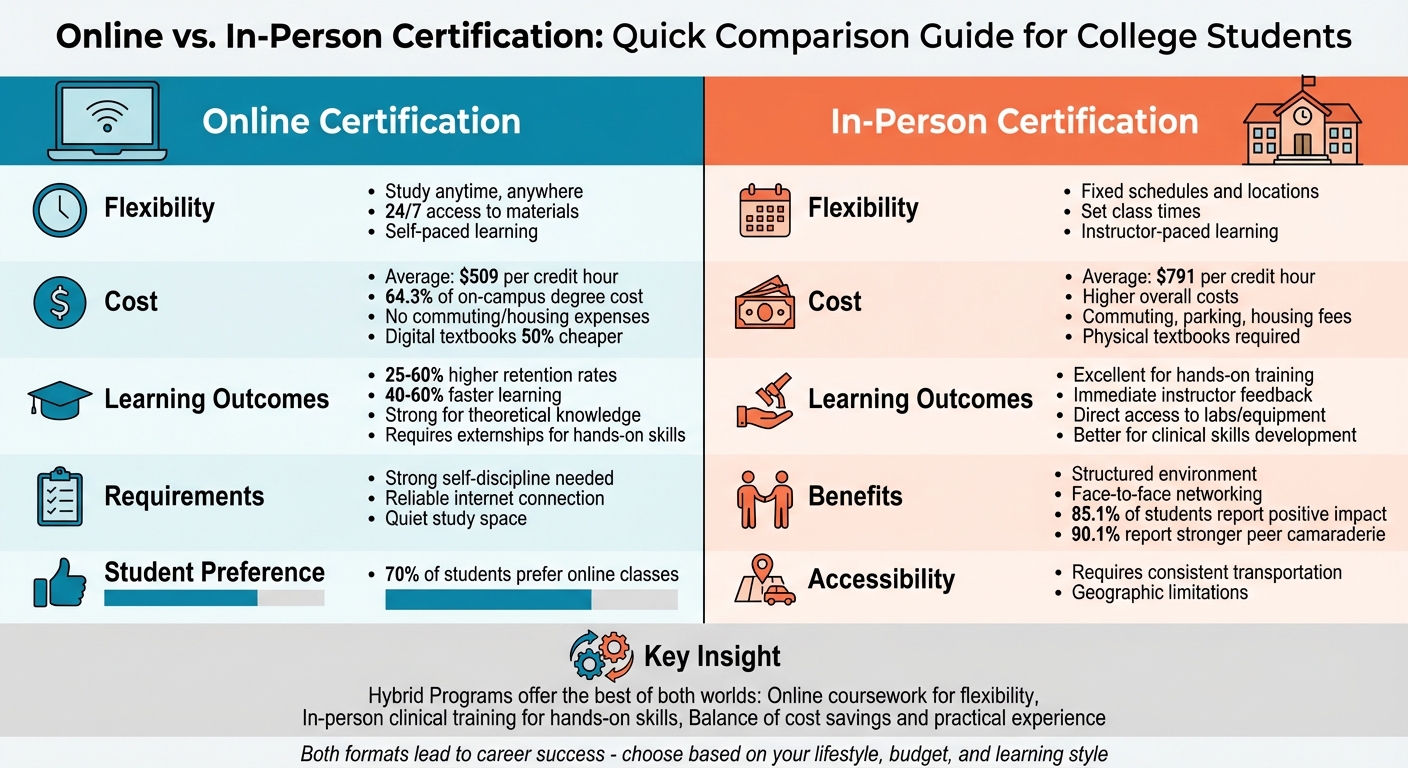
Online vs In-Person Certification Comparison for College Students
The TRUTH About Online vs On-campus Sterile Processing Education!
sbb-itb-7a67ffa
What to Consider When Choosing Between Online and In-Person Certification
Choosing between online and in-person certification isn’t just about what you like better – it’s about finding the right fit for your lifestyle, budget, and learning preferences. Four main factors can help guide your decision: flexibility, cost, accessibility, and learning outcomes. Each plays a unique role, especially if you’re juggling work, family, or other commitments.
Flexibility
Online programs shine when it comes to flexibility. They let you study whenever it works for you, with 24/7 access to lectures and the ability to move at your own pace. This can be a huge win if your schedule is packed. On the flip side, in-person programs stick to set schedules, which might clash with work shifts or family time. Many healthcare certifications, like CCMA (Certified Clinical Medical Assistant) or CPT (Certified Phlebotomy Technician), combine both formats – offering online coursework alongside in-person clinical labs or externships.
But here’s the catch: online learning requires serious self-discipline. While 70% of students say they prefer online classes, the freedom they offer means you’ll need plenty of motivation to stay on track. Before enrolling, check if the program has any in-person requirements like clinical rotations or short-term residencies. Once you’ve nailed down the flexibility factor, it’s time to look at the financial side.
Cost
At first glance, online programs might seem like the cheaper option, but the reality can be more nuanced. Although many advertise lower tuition, about 39.5% of colleges actually charge more for online credits because of technology and course design costs. For example, during the 2025–26 academic year, the average cost per online credit hour was $509, compared to $791 for in-person classes.
That said, online education can save you money in other ways. No commuting, no on-campus housing, and no meal plans mean fewer extra expenses. Plus, digital textbooks often cost about 50% less than physical ones. Overall, an online degree might cost around 64.3% of what you’d pay for an on-campus degree. Another bonus? Online courses often let you keep working while studying, unlike fixed in-person schedules that can limit job opportunities.
Accessibility
One of the biggest perks of online programs is that they eliminate geographical barriers. You can enroll in top-notch programs without the hassle of relocating or dealing with long commutes, which is a game-changer for students with mobility challenges. Online learning is also more eco-friendly, using 87% less energy and producing 85% fewer CO₂ emissions per student compared to traditional classrooms.
However, in-person programs have their own advantages. They provide direct access to professional-grade medical equipment, labs, and libraries. You get to practice clinical skills with real tools and receive immediate feedback from instructors. Online students, on the other hand, often rely on virtual simulations, digital resources, or external arrangements for hands-on training. If you’re leaning toward online learning, make sure you have a quiet study space at home, a reliable internet connection, and a good understanding of how to use the required technology. Also, check if occasional travel for workshops or clinical internships is part of the deal.
Learning Outcomes
Both formats can lead to great results, but it depends on your learning style. A 12-year study by the U.S. Department of Education found that students in online programs often perform as well as – or even better than – those in traditional settings. In fact, online learners tend to absorb information faster and more effectively.
For certifications that require hands-on skills, like CCMA or CPT, online programs usually include clinical externships to meet employer and regulatory requirements. While online courses are great for delivering theoretical knowledge, in-person labs are often necessary for practicing with real equipment and getting immediate feedback from instructors.
Your choice ultimately boils down to what works best for you. If you thrive on structure and face-to-face interaction, in-person programs might suit you better. But if you’re self-motivated and need the freedom to juggle other responsibilities, online learning could be your best bet.
Online Certification: Advantages and Disadvantages
Advantages of Online Certification
Online certifications provide unmatched flexibility, allowing you to study whenever it fits your schedule. With 24/7 access, you can revisit tough topics or breeze through the ones you already know. Plus, skipping the costs of commuting, parking, and textbooks can save you a significant amount – sometimes over $10,000. For certifications like Basic Life Support (BLS) at $65 or Advanced Cardiac Life Support (ACLS) at $129, the online format not only keeps costs manageable but also eliminates the hassle of traveling.
E-learning also delivers impressive academic results. Studies show that students in online programs retain 25% to 60% more information and learn 40% to 60% faster compared to traditional classroom settings. Academic leaders are taking note, with three out of four now rating online education as equal to or better than in-person learning. Employers are on board too – 87.4% of them reported hiring graduates with online degrees in 2024. Beyond certifications, online courses help you build essential digital skills like virtual communication and time management, which are highly valued in today’s job market. These advantages make online certifications a compelling option compared to their in-person counterparts.
Disadvantages of Online Certification
That said, online certification isn’t without its hurdles. Developing hands-on skills, especially in fields like healthcare, can be tricky in a virtual environment. While some advanced programs use virtual reality simulations, they can’t fully replace the tactile experience needed for tasks like performing CPR, where chest compressions must meet specific depth requirements of 1.5–2 inches. Practical skills often demand real-world practice to meet professional standards.
Another challenge is the self-discipline required for online learning. Without the structure of a physical classroom, staying motivated and managing deadlines is entirely up to you. Technical glitches can also derail your progress. Additionally, the lack of immediate feedback may delay corrections in technique, and spending long hours in front of a screen can lead to fatigue and feelings of isolation.
Before enrolling, ensure the certification is recognized by employers and check for any mandatory in-person components like rotations or externships. These steps can help you avoid surprises and make the most of your online learning experience.
In-Person Certification: Advantages and Disadvantages
Advantages of In-Person Certification
For college students juggling demanding coursework and hands-on skill development, in-person certification offers some clear perks. These programs are particularly effective for teaching the physical skills that healthcare roles require. You’ll gain practical experience in tasks like drawing blood, administering injections, recording vital signs, and using specialized equipment such as X-ray or ultrasound machines – things that can’t be fully replicated in an online setting. Take CPR training, for instance: mastering chest compressions at the correct depth of 1.5–2 inches is best learned through hands-on practice with mannequins.
One of the standout benefits is the immediate feedback from instructors. They can correct your technique on the spot, ensuring you’re learning effectively. Plus, these face-to-face interactions often lead to networking opportunities that could pave the way for internships or jobs. As MedQuest College highlights:
"Building strong relationships with those in your field can help you better navigate your career path".
Another advantage of in-person programs is the structured environment they provide. With set schedules and dedicated classroom spaces, it’s easier to stay focused without the distractions of home life. Additionally, being in a physical classroom helps develop soft skills like nonverbal communication, empathy, and teamwork through direct patient interaction – qualities that are crucial in healthcare but hard to cultivate in virtual settings. Supporting this, a March 2025 study conducted at Cooper Medical School of Rowan University revealed:
85.1% of students felt in-person learning had a more positive impact on their education, and 90.1% reported stronger camaraderie with peers during face-to-face training.
However, these benefits don’t come without challenges.
Disadvantages of In-Person Certification
While in-person certification offers many advantages, it also has its downsides. For one, rigid schedules and fixed locations can clash with personal commitments like work, family, or other academic responsibilities.
Cost is another concern. Tuition rates are often higher due to expenses like facility maintenance and instructor salaries. On top of that, you’ll need to budget for gas, parking, meal plans, and physical textbooks. The pace of the classroom, determined by the instructor, can also be a drawback. While some students may find it manageable, others might struggle to keep up or wish for more time to absorb complex material. Long commutes add another layer of difficulty, eating into study time and increasing stress levels – especially for those living far from campus or dealing with mobility challenges.
Weighing these pros and cons is key to determining whether in-person certification aligns with your goals and circumstances as you prepare for a healthcare career.
Online vs. In-Person Certification: Side-by-Side Comparison
When it comes to healthcare certification, comparing flexibility, cost, accessibility, learning outcomes, pacing, and accountability reveals the unique advantages of online and in-person formats.
| Feature | Online Certification | In-Person Certification |
|---|---|---|
| Flexibility | Extremely flexible – students can choose between synchronous or asynchronous formats and study from anywhere with internet access. | Limited flexibility – requires attending classes at specific times and locations. |
| Cost | Generally lower – no expenses for commuting, parking, or housing, and digital materials replace physical textbooks. | Higher overall costs due to facility expenses, transportation, and additional fees like meal plans. |
| Accessibility | Removes geographic barriers; students can access courses from anywhere with a reliable internet connection. | Restricted by location and reliant on consistent transportation options. |
| Learning Outcomes | Strong for theoretical knowledge, with retention rates 25%-60% higher than traditional methods, but lacks extensive hands-on experience. | Excels in hands-on training, clinical skills development, and real-time instructor feedback. |
| Pacing | Self-paced learning allows for faster progress – some studies show 40%-60% quicker learning compared to traditional settings. | Follows a fixed pace set by instructors, which may not suit all learners. |
| Structure & Accountability | Requires strong self-discipline and time management to stay on track. | Provides a structured environment with fixed schedules and attendance requirements. |
This side-by-side comparison highlights the trade-offs between the two formats. Notably, survey data shows that most students prefer online learning, with three out of four academic leaders rating it as equal to or better than traditional classroom methods. However, certifications like CCMA or CPT often require hands-on clinical training that can’t be completed entirely online. These programs typically include practicum or clinical rotations to build essential real-world skills.
As Study.com aptly summarizes:
"Online learning is typically stronger for flexibility and lower overall costs. In-person learning is stronger for hands-on labs, clinical training, and campus networking".
For many students, hybrid programs – offering online theoretical coursework alongside in-person clinical training – strike the perfect balance. This comparison sets the stage for understanding how HealthCareer Certs designs its programs to align with students’ professional goals and needs.
How HealthCareer Certs‘ Online Programs Work for College Students
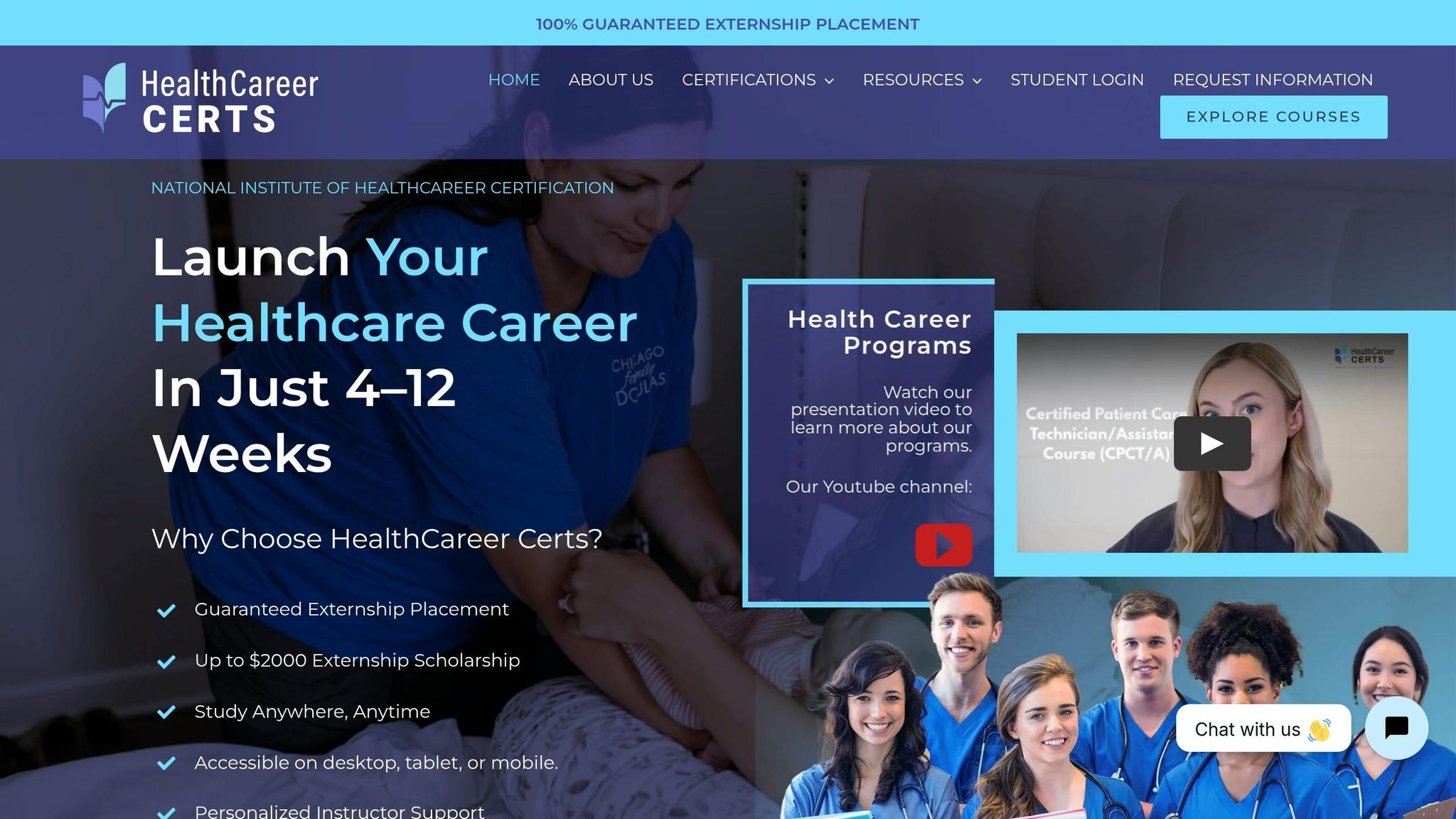
HealthCareer Certs creates online certification programs tailored to the hectic lives of college students. With 100% self-paced learning available 24/7, students can access their courses from any device – whether it’s a desktop, tablet, or smartphone. This setup makes it easy to fit studying into early mornings, lunch breaks, or late-night sessions, all while avoiding the hassle of commuting or travel expenses.
The platform blends interactive study tools with personalized support to enhance learning. Features include 3D demonstrations, interactive quizzes, digital flashcards, over 1,400 practice questions, and 700 self-checks – all designed to help students prepare for the National Healthcareer Association (NHA) exams. Additionally, one-on-one Zoom sessions with instructors provide students with direct guidance, especially for challenging medical topics. This combination of tech-driven tools and individualized help ensures students are ready for real-world healthcare environments.
Every program also guarantees a hands-on externship placement at a local hospital or clinic, addressing the practical experience often missing in online education.
To further ease concerns, HealthCareer Certs offers a 100% tuition refund if graduates don’t secure a healthcare job after certification. This policy not only builds trust in the program but also offers a more affordable alternative to traditional in-person training. Graduates can also earn American Council on Education (ACE) credits – up to 5 for CCMA, 2 for CPT, and 1 for CPCT – which are transferable to more than 2,000 colleges and universities.
With over 5,000 students served and a perfect 5.0/5 Google rating, the program has proven its value. As student Olivia shared:
"I was able to get certified and pass the NHA exam on the first try in only 6 weeks, and I appreciated the ease of the entire process/course and the other support/resources I received".
Conclusion: Choosing the Right Format for Your Needs
Picking the right certification format depends on your lifestyle, learning preferences, and career goals. Factors like your work schedule, comfort with technology, and personal commitments all play a role. For those balancing a job or family, online programs offer the flexibility to learn whenever it’s convenient. On the other hand, if structured and interactive learning works better for you, in-person classes might be the way to go.
Online programs can save you money by cutting out commuting costs, parking fees, and travel time. However, they do require a dependable internet connection and a quiet, dedicated study space. In contrast, in-person programs provide direct access to instructors and lab equipment but require physical attendance, which might be tricky if you have work or childcare responsibilities. Take a moment to weigh these logistical and technical factors alongside your personal preferences.
Regardless of the format, employers care most about accreditation and the skills you bring to the table. For healthcare certifications like CCMA or CPT, hands-on clinical experience is non-negotiable. Even if you complete the coursework online, you’ll still need to fulfill externship hours to meet the requirements.
Keep in mind that online learning calls for self-discipline and a well-organized study setup. If you’re unsure whether you can stay on track with deadlines, consider starting with a free online course to test the waters. Also, check whether your certification requires access to specialized equipment or labs that might only be available through in-person programs – or explore hybrid models that combine the best of both approaches.
FAQs
How do I know if an online certification includes the required hands-on training?
To determine if an online certification program includes essential hands-on training, carefully review the program details. Look for mentions of in-person components such as labs or skills demonstrations. Many programs offer hybrid formats that combine online learning with practical training. If the details are unclear, reach out to the provider directly for clarification. This step ensures you’ll meet the certification requirements and acquire the practical skills needed for your career.
Will employers accept an online healthcare certification the same as an in-person one?
Employers are increasingly open to accepting online healthcare certifications, but their acceptance often hinges on the program’s reputation and how familiar the employer is with online credentials. Certifications from accredited programs, such as CCMA (Certified Clinical Medical Assistant) or CPT (Certified Phlebotomy Technician), are generally viewed as credible and reliable. That said, some employers might still favor in-person certifications, particularly for roles requiring hands-on skills. As online learning continues to gain traction in healthcare, reputable online programs are becoming more widely trusted.
Should I choose online, in-person, or a hybrid program for CCMA or CPT?
Deciding between online, in-person, or hybrid programs for CCMA or CPT certification comes down to your personal learning style, availability, and career goals.
- Online programs are perfect if you need flexibility. They let you learn at your own pace and are accessible from anywhere, making them ideal for independent learners.
- In-person training is best for those who value hands-on practice and direct interaction with instructors. This format is especially helpful for mastering clinical skills.
- Hybrid programs offer a mix of both, combining the convenience of online learning with in-person labs or clinical sessions for practical experience.
Think about how you learn best and how much hands-on practice you’ll need before making your decision.