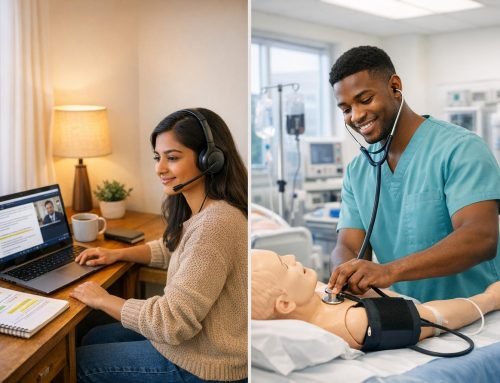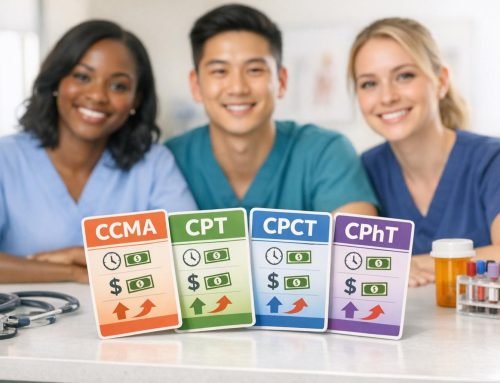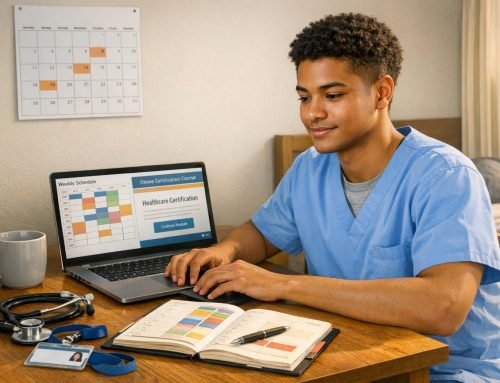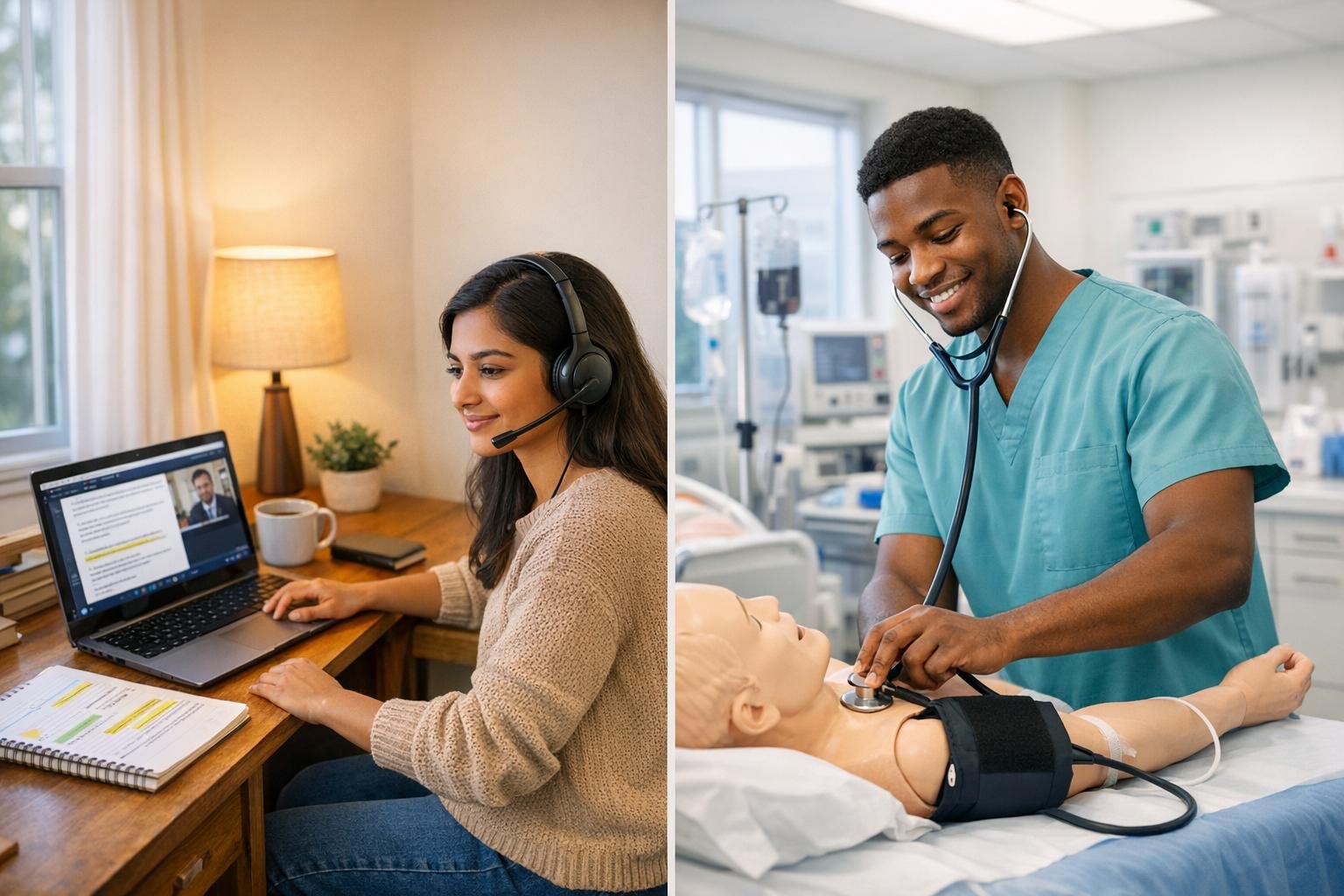
CCMA externships give you hands-on experience in healthcare settings, helping you apply classroom knowledge to real patient care. Here’s what you’ll learn:
- Taking Vital Signs: Measure and document critical health data like blood pressure and heart rate.
- Patient Exam Preparation: Assist in positioning patients and maintaining sterile environments.
- Performing EKGs: Practice electrode placement and ensure accurate readings.
- Phlebotomy: Gain confidence in drawing blood and handling specimens.
- Electronic Health Records (EHR) Management: Learn to document and manage patient data efficiently.
- Appointment Scheduling: Handle scheduling, insurance verification, and administrative tasks.
- Patient Communication: Build trust through active listening and clear explanations.
Externships not only refine your skills but also connect you with potential employers, giving you an edge in a growing field with thousands of job openings annually.
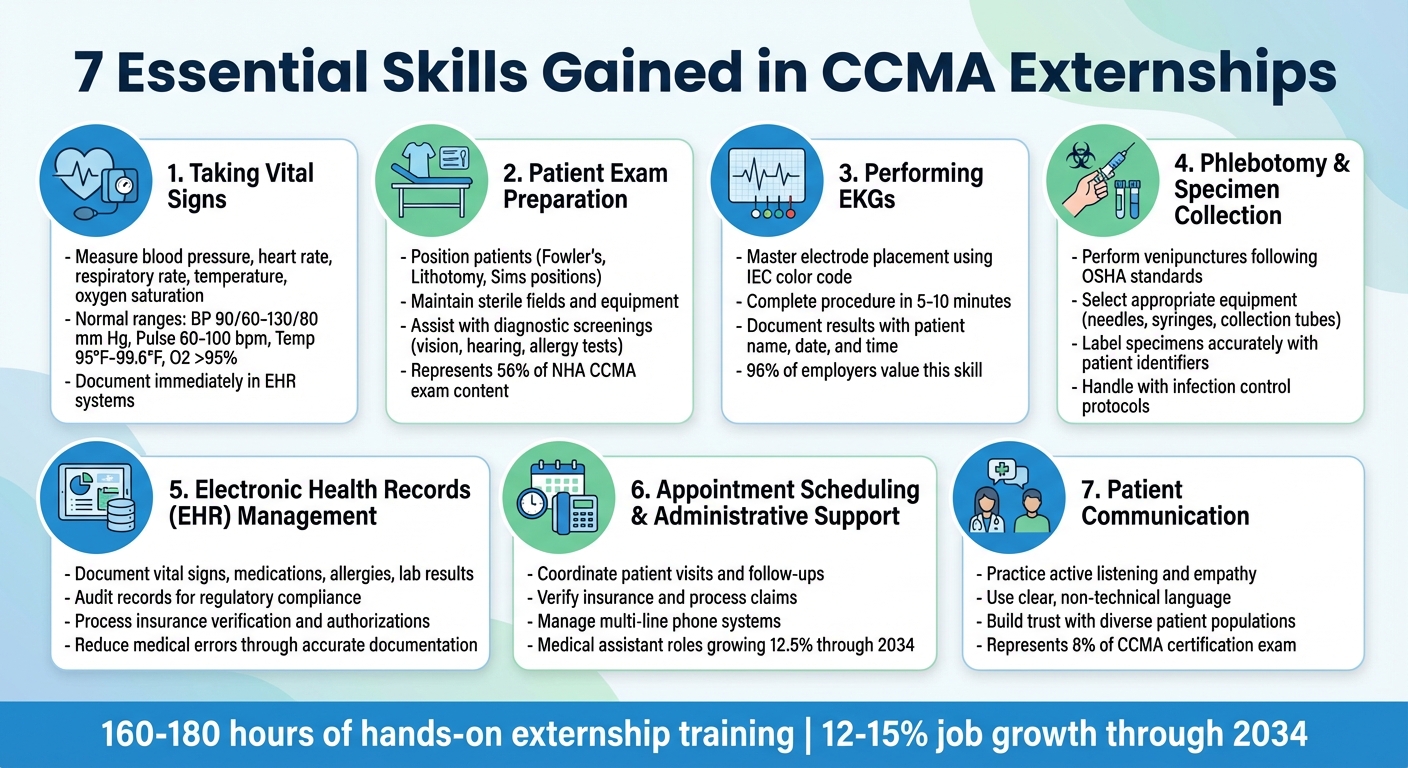
7 Essential Skills Gained in CCMA Externships
1. Taking Vital Signs
Hands-on clinical expertise
Taking vital signs is often the first clinical skill you’ll get to practice during your externship. This involves measuring blood pressure, heart rate, respiratory rate, temperature, and oxygen saturation using both manual methods and clinical-grade equipment.
Although automated machines are widely used in clinics, manual techniques are still considered the most accurate. As noted by Sapra, A, et al. from the National Library of Medicine, measuring and assessing vital signs is a "critical first step for any clinical evaluation". You’ll need to identify abnormal readings, such as blood pressure outside the 90/60 to 130/80 mm Hg range, pulse rates below 60 or above 100 beats per minute, temperatures outside 95°F to 99.6°F, and oxygen levels under 95%.
Once you’ve taken these measurements, it’s essential to record them promptly.
Administrative proficiency
Recording vital signs isn’t just about gathering data – it’s about accurate and immediate documentation. Vital signs should be entered into the Electronic Health Records (EHR) system right away to minimize transcription errors and keep the workflow smooth.
Each facility has its own charting protocols, which you’ll learn during your externship. It’s also important to remember professional boundaries: don’t interpret or discuss results with patients. If you notice abnormal readings, notify a nurse or physician immediately.
Patient interaction and communication skills
Collecting vital signs is a great chance to develop your communication skills. A calm, reassuring approach and open-ended questions can help reduce patient anxiety and improve the accuracy of your measurements. As the First Institute explains, "by seeking to understand, medical assistants help the rest of the medical team, and the patients, as well".
2. Patient Exam Preparation and Assistance
Hands-on Clinical Expertise
Preparing patients for exams means more than just guiding them into a room. It involves positioning them correctly based on the type of examination – whether it’s the Fowler’s position, Lithotomy position, or Sims position. Each has a distinct purpose, and knowing when to use each ensures the physician can perform their job effectively and without delay.
You’ll also handle sterile procedures, which include prepping sterile fields for tasks like suture removal, cryosurgery, and wound care. This requires mastering sterile techniques, such as handling sterile packs, wearing gloves properly, and preparing tools for autoclaving. Additionally, you’ll assist with various diagnostic screenings, from vision tests using Snellen charts to hearing exams and allergy scratch tests. Considering that Clinical Patient Care makes up 56% of the NHA CCMA exam, honing these skills is essential for both your role and exam success.
Beyond patient care, clinical preparation often overlaps with administrative responsibilities to keep everything running efficiently.
Administrative Proficiency
Accurate documentation in the EHR is just as important as clinical tasks. Using formats like SOAP or CHEDDAR, you’ll ensure patient records are thorough and reliable.
You’ll also stay on top of inventory management, keeping track of supplies like gauze, gloves, and sterilized instruments. Running low on these essentials can disrupt the clinic’s workflow, so your attention to restocking and documenting equipment maintenance plays a crucial role in maintaining quality care. These behind-the-scenes efforts are just as critical as the hands-on work you perform.
Patient Interaction and Communication Skills
Technical skills are important, but they’re only part of the equation. Patient interaction is where you can truly make an impact. Preparing a patient for an exam is a chance to build trust, especially with those feeling nervous or uncertain. During intake interviews, you’ll rely on therapeutic communication techniques – such as reflection, restatement, and clarification – to gather accurate health histories. Open-ended questions are particularly effective for encouraging patients to share detailed information.
"Medical assistants are a critical part of the patient experience and management of the medical practice. They are instrumental in helping patients feel at ease in the physician’s office and often explain the physician’s instructions." – American Association of Medical Assistants (AAMA)
You’ll also take on a coaching role, whether it’s explaining how to use a peak flow meter, discussing dietary recommendations, or walking patients through post-procedure care. Many patients feel more comfortable asking questions to a medical assistant than to the physician, which makes your ability to communicate clearly a key factor in helping them follow treatment plans effectively.
3. Performing EKGs
Hands-on Clinical Expertise
Performing an EKG might only take five to ten minutes, but perfecting the process takes practice – especially during an externship where you work with real patients. This transition from classroom simulations to actual clinical settings allows you to refine your skills under professional supervision. One key aspect is mastering electrode placement, which varies across different body types. For instance, the International Electrotechnical Commission’s "traffic light" color code – right arm (red), left arm (yellow), left leg (green), and right leg (black) – serves as a helpful guide to ensure correct placement.
The procedure begins with explaining the test to the patient and disinfecting the electrode sites with alcohol. Then, you’ll place electrodes on the thorax, wrists, and ankles. Positioning precordial electrodes involves identifying the fourth intercostal space near the sternum, a critical step in obtaining accurate readings. After ensuring the tracing is free from artifacts, you’ll complete the process by documenting the patient’s full name, date, and time on the printout. This attention to detail not only ensures accurate results but also integrates seamlessly with the administrative side of the role.
Administrative Proficiency
Once you’ve mastered the technical aspects, managing the data becomes equally important. Externships provide hands-on experience with Electronic Health Records (EHR) systems, teaching you how to update patient charts with EKG results efficiently. You’ll also learn to maintain and clean the EKG machine according to facility protocols, ensuring it’s always ready for use. These skills tie together the technical and administrative components of the job.
Patient Interaction and Communication Skills
Technical skills and administrative efficiency are only part of the equation – communication is just as critical. Many patients feel nervous about heart monitoring, and your ability to explain the process clearly can make a significant difference. Through active listening and addressing concerns, you’ll help patients stay calm, which is essential for obtaining accurate readings. Observing seasoned professionals during your training will also demonstrate how to balance precision with empathy – a combination that 96% of employers highly value.
4. Phlebotomy and Specimen Collection
Adding phlebotomy to your skill set enhances both your technical abilities and your capacity to communicate effectively with patients.
Hands-on Clinical Expertise
Drawing blood is a task that demands precision and builds confidence through direct practice. During your externship, you’ll move from practicing on simulated arms to performing venipunctures on real patients. This experience helps you learn to choose the right equipment – such as needles, syringes, lancets, and collection tubes – while adhering to OSHA and infection control standards to prevent cross-contamination. You’ll also master proper specimen handling, including accurate labeling with patient identifiers and collection times. These steps are crucial for ensuring samples are ready for diagnostic testing. Phlebotomy isn’t just about technical skill; it’s an essential part of delivering accurate diagnostics and supporting excellent patient care.
"Never perform procedures you haven’t been trained on – patient safety comes first" – Jessica Wheeler, CMA
Administrative Proficiency
Phlebotomy isn’t just about drawing blood; administrative accuracy is just as important. Updating Electronic Health Records (EHR) with collection details and ordering the correct laboratory studies are key responsibilities. Since each healthcare facility has its own protocols for labeling and transferring specimens, keeping a procedure notebook during your externship can help you stay organized. This personalized documentation ensures you follow site-specific requirements, maintaining diagnostic accuracy and reducing the risk of errors.
Patient Interaction and Communication Skills
Blood draws can make many patients nervous, which is why clear and empathetic communication is critical. During your externship, you’ll practice explaining the procedure in a way that reassures patients while actively listening to their concerns. As one source highlights, "A CCMA is often the first and last person a patient interacts with". Balancing technical skill with compassion helps you ease patient anxiety and build trust. Asking your mentor to observe your initial blood draws and provide feedback on techniques like needle angles and tube inversions can also speed up your learning process.
sbb-itb-7a67ffa
5. Electronic Health Records Management
Knowing how to navigate Electronic Health Records (EHR) systems plays a key role in connecting clinical care with administrative tasks. During your externship, you’ll work with the same digital tools that healthcare teams rely on daily, giving you practical experience. This skill set supports both operational efficiency and quality patient care.
Administrative Proficiency
Your clinical data collection skills will serve as a foundation for developing administrative expertise in healthcare. You’ll learn to audit patient records to ensure they comply with government regulations and insurance guidelines, making sure every entry meets legal requirements. You’ll also handle Release of Information (ROI) requests, balancing patient privacy with the need for data sharing. Other responsibilities include verifying insurance details, managing authorizations directly in the EHR system, performing basic medical coding for reimbursement, and gathering demographic data for reporting purposes. Precision is critical here – mistakes can lead to delays in care or financial setbacks for the facility.
"Clinical medical assistants need to use Electronic Health Records (EHR) systems as the central information repositories for patient care." – TAMIU Office of Continuing & Professional Education
Hands-on Clinical Expertise
On the clinical side, you’ll be responsible for documenting key patient information, including vital signs, chief complaints, medication lists, and allergy details. You’ll also record clinical data like EKG results, lab findings, and immunization histories to assist physicians in making accurate diagnoses. The National Healthcareer Association highlights that medical assistants handling EHR tasks "help doctors see and treat patients more efficiently and may help reduce errors in medical procedures and their documentation". To track your progress, you’ll maintain a skills checklist, allowing supervisors to confirm your ability to document vitals and manage prescription refills effectively.
Patient Interaction and Communication Skills
EHR expertise also improves how you engage with patients. Instant access to patient histories allows you to explain physician instructions more clearly. Using the EHR to manage prescription refills and coordinate follow-up care positions you as a critical link between patients and healthcare providers. Additionally, since EHR systems are often managed online, this skill can lead to opportunities in roles like EHR Specialist, including remote positions.
6. Appointment Scheduling and Administrative Support
At the front desk, you see firsthand how crucial administrative skills are to keeping a healthcare facility running smoothly. During your externship, you’ll step out of the classroom and into real-world scenarios, managing patient interactions, handling multi-line phone systems, and using scheduling software to coordinate everything from routine check-ups to specialist referrals. This role is a key part of the CCMA training, which blends clinical know-how with administrative expertise. The hands-on experience you gain here connects the dots between what you’ve learned in class and what employers expect in the workplace.
Administrative Proficiency
In this role, you’ll take charge of coordinating patient visits, follow-ups, and procedures while ensuring the clinic operates efficiently. Responsibilities often include verifying insurance, processing claims, and keeping track of medical supply inventories. Staying on top of cancellations and promptly updating appointments is especially critical in busy practices with multiple providers. Mistakes in these areas can disrupt patient care and lead to financial issues. With medical assistant roles expected to grow by 12.5% through 2034, mastering these administrative tasks will set you up for a strong start in your career.
Patient Interaction and Communication Skills
As the first point of contact for many patients, each scheduling interaction becomes a chance to make a positive impression. During your externship, you’ll refine skills like active listening at check-ins, addressing patient concerns over the phone, and managing prescription refill requests. Approaching each interaction with a calm and friendly demeanor helps patients feel comfortable and builds trust. Learning clinic protocols and shortcuts in electronic health records (EHR) systems can also boost your efficiency. Volunteering for additional tasks not only demonstrates initiative but also highlights your reliability to potential employers. This externship acts as an extended job interview, showcasing your administrative capabilities alongside your clinical training and preparing you for a competitive healthcare career.
Programs such as HealthCareer Certs provide online CCMA training with guaranteed externship placements, ensuring you gain these essential skills.
7. Patient Communication Skills
Patient Interaction and Communication Skills
As a CCMA, your ability to communicate effectively plays a key role in shaping the patient experience. During your externship, you’ll gain hands-on practice interacting with patients who come from different walks of life, each with unique needs, concerns, and personalities.
Michelle Keim, Medical Assisting Program Director at Indian River State College, highlights the importance of real-world learning:
"Honestly, that’s kind of hard to do independently. You don’t really learn that until you’re actually doing it, working face to face with patients."
One of the most important skills you’ll develop is active listening. This involves fully focusing on what the patient is saying and asking follow-up questions like “Can you tell me more about…?” to gather essential health details. Equally important is being mindful of nonverbal communication – your tone, body language, and facial expressions all contribute to creating a calm, approachable environment. These skills are crucial not only for building rapport but also for explaining medical information in a way that patients can easily understand.
Clear communication can directly impact patient outcomes. When patients understand their treatment plans, they’re more likely to follow through, reducing confusion and improving compliance. The American Association of Medical Assistants underscores this role:
"are instrumental in helping patients feel at ease in the physician’s office and often explain the physician’s instructions."
You’ll also learn the importance of empathy and respect when working with patients from diverse backgrounds. This helps build trust and ensures a positive experience for everyone, regardless of their situation. Conflict resolution is another key area, as you’ll need to handle misunderstandings or tense situations calmly, especially in high-pressure environments like urgent care clinics. Together, these skills form a critical part of the CCMA certification exam, with 8% of the test focused on communication and another 8% on patient care coordination and education.
With medical assistant jobs expected to grow by 12% through 2034, mastering patient communication – alongside your technical and administrative training – sets you up for long-term success in healthcare. At HealthCareer Certs (https://healthcareercerts.org), our online CCMA program ensures you develop these essential skills through guaranteed externship placements and personalized support.
Conclusion
CCMA externships bridge the gap between classroom learning and hands-on healthcare experience, equipping you with the clinical and administrative skills necessary for today’s fast-paced medical environments. With at least 160 to 180 hours of practical training, you’ll gain expertise in essential tasks like taking vital signs, performing EKGs, managing Electronic Health Records, and handling patient scheduling – skills you’ll rely on daily in your career.
Michelle Keim, Medical Assisting Program Director at Indian River State College, highlights the structured approach of quality externships:
"The biggest thing that we try to stress to the students is that we’re not just going to send you out to your site and say good luck… It’s a very, very involved process."
This thorough guidance ensures you’re not only learning but also building confidence in your abilities, preparing you to excel in a competitive job market.
Externships also serve as a stepping stone into employment. Many healthcare facilities use these programs to identify and recruit top talent, giving you an edge when applying for jobs. With medical assistant roles expected to grow by 12.5% to 15% through 2033–2034 – outpacing many other professions – your combination of clinical expertise and administrative know-how sets the stage for long-term career success.
HealthCareer Certs (https://healthcareercerts.org) makes starting your journey even easier. Their online CCMA program guarantees externship placements through a vast network of clinical partners, sparing you the hassle of finding one independently. Paired with self-paced learning, personalized instructor support, and a 100% tuition refund guarantee if you don’t land a healthcare job, they provide everything you need to confidently launch your medical assisting career.
FAQs
How long is a typical CCMA externship?
A standard CCMA externship usually spans around three weeks, during which students complete 150 to 200 hours of hands-on clinical training. This setup provides an opportunity to apply essential skills while immersing themselves in the daily operations of a healthcare environment.
Will I get to do blood draws and EKGs during my externship?
During your externship, you’ll get hands-on practice with essential clinical skills such as performing blood draws (phlebotomy) and conducting EKGs. These tasks are a core part of medical assisting and will give you practical experience to help prepare for a career in healthcare.
What should I do if I get an abnormal vital sign reading?
If you notice a vital sign reading that seems out of the ordinary, make sure to document it precisely and report it to the healthcare provider right away. This allows them to evaluate the situation and decide on the necessary steps to address it.