
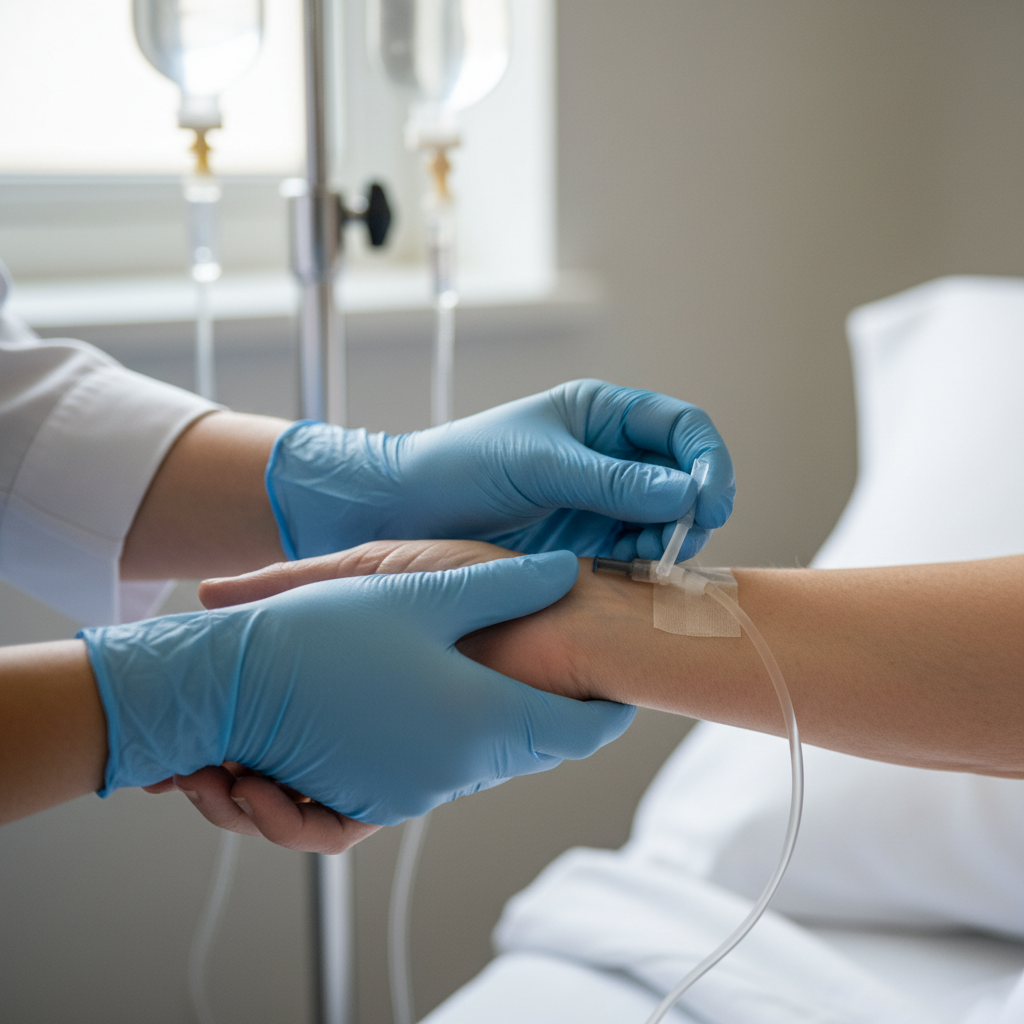
A patient care technician (PCT) is a certified healthcare worker who delivers direct, hands-on patient care under the supervision of nurses and physicians. PCTs take vital signs, perform EKGs, draw blood, assist with mobility, monitor patient conditions, and document care in the electronic health record. They work in hospitals, dialysis clinics, outpatient settings, and long-term care — and they’re one of the fastest-growing entry-level healthcare roles in the U.S., projected to grow about 4-5% per year through 2032. Whether you’re researching the what is a patient care technician for the first time or comparing programs, this guide pulls together what matters.
The role sits one level above a CNA in clinical scope: a PCT is trained to do everything a CNA does, plus phlebotomy, EKG, and broader procedural assist. That’s why patient care technician pay typically runs $1-$3/hour higher than CNA pay, and why the role has become the standard entry path for hospital systems hiring direct-care staff.
Want a faster path to your CPCT?
Earn your NHA CPCT in 8 weeks online — patient care, EKG, phlebotomy, and EHR. NHA exam fee, externship, and 6 practice tests included. MyCAA-eligible for military spouses.
For students researching what is a patient care technician options, the practical reality is that the right choice depends on your timeline, budget, and target employer. Many candidates start their what is a patient care technician research with general questions and narrow down as they understand which credentials each setting accepts. Treat what is a patient care technician reviews as a comparison exercise, not a single decision.
This post walks through exactly what a patient care technician does day-to-day, what training and certification looks like, the realistic career path, and how PCT differs from related roles you’ve probably also seen (CNA, MA, ER tech).
What a Patient Care Technician Does — What Is A Patient Care Technician
A typical hospital-floor PCT shift covers patient care across an 8-12 patient assignment. The core duties:
| Duty area | What it looks like |
|---|---|
| Vital signs | Blood pressure, pulse, temperature, respiratory rate, pulse oximetry — typically every 4 hours, more often for unstable patients |
| Phlebotomy | Routine blood draws via venipuncture, often the morning lab cart |
| EKG | 12-lead EKGs on telemetry and step-down units |
| ADL support | Assisting with bathing, toileting, eating, repositioning, ambulation |
| Specimen collection | Urine, stool, sputum collection for lab |
| Glucose monitoring | Bedside fingerstick blood glucose checks |
| Documentation | Real-time charting in the EHR — vitals, intake/output, observations |
| Patient prep | Setting up rooms, prepping for procedures, transporting to imaging |
| Communication | Reporting changes in patient condition to the RN immediately |
PCTs do not administer medications (except in narrow protocols like glucose), do not diagnose, do not perform sterile procedures unassisted, and do not supervise other staff. The scope is intentionally broad on patient observation and clinical procedures, narrow on medication administration and decision-making.
Where PCTs Work
The five most common settings:
- Hospital inpatient floors (med-surg, telemetry, step-down). The largest employer category. PCTs assigned to 8-12 patients on a floor.
- Hospital ICU and ER. Higher-acuity assignments, more procedures, more shift differentials. Usually requires 1-2 years of floor PCT experience first.
- Dialysis clinics. Specialized PCT role (often titled CHT or CCHT) with dialysis-machine training. Higher pay, narrower scope, usually no overnight.
- Outpatient clinics and physician offices. Smaller patient loads, often Monday-Friday daytime, sometimes hybrid PCT/MA duties.
- Long-term care and skilled nursing. Lower-acuity, more ADL-focused, lowest-paying setting nationally.
How to Become a Patient Care Technician
The standard path:
Step 1 — Complete a PCT training program
Most accredited PCT programs run 8 weeks online with hands-on clinical components. Coursework covers:
- Anatomy and physiology basics
- Vital signs measurement and documentation
- Phlebotomy technique (typically 30+ supervised venipunctures)
- 12-lead EKG placement and interpretation basics
- Infection control and standard precautions
- Patient communication and HIPAA
- Medical terminology
Step 2 — Complete an externship
Most PCT programs include a clinical externship (typically 80-160 hours) at a partner hospital or clinic. The externship is where you log the supervised hours required for certification eligibility — and often where you get your first job offer.
Step 3 — Pass the NHA CPCT/A exam
The Certified Patient Care Technician/Assistant (CPCT/A) exam is administered by the National Healthcareer Association (NHA). The exam:
- 100 questions, 2 hours
- Passing score: 390 (scaled scoring 200-500)
- Cost: $155
- Pass rate: ~75% nationally
Other recognized PCT credentials include CCHT (dialysis-specific) and CHT (BONENT).
Step 4 — Apply
Most hospital systems (HCA, Tenet, Ascension, AdventHealth, regional health systems) hire CPCT-certified PCTs directly through their applicant tracking systems. Major dialysis chains (Fresenius, DaVita) also hire PCTs out of training programs into their dialysis-tech tracks.
What PCTs Earn
National median PCT pay is $40,500/year ($19.50/hour) in 2026, with significant variation by setting and state. Dialysis PCTs and hospital ICU/ER PCTs earn the most; long-term care PCTs earn the least. See our full breakdown of patient care technician salary by state and setting.
PCT vs CNA vs Medical Assistant
These three roles overlap enough that hiring managers sometimes use the titles interchangeably — but the scope is meaningfully different.
| Role | Key scope | Typical setting | Median pay |
|---|---|---|---|
| PCT (CPCT/A) | Vitals, phlebotomy, EKG, ADL, glucose, specimen collection | Hospital, dialysis, clinic | $40,500 |
| CNA | Vitals, ADL, mobility, communication, documentation | Hospital, LTC, home health | $35,800 |
| MA (CCMA) | Vitals, phlebotomy, EKG, injections, EHR, scheduling, billing prep | Outpatient clinic, physician office | $42,000 |
The cleanest mental model:
- CNA = ADL-focused, primarily long-term care
- PCT = ADL + clinical procedures, primarily hospital
- MA = clinical + administrative, primarily outpatient clinic
A PCT can move into MA work with additional certification; an MA can move into PCT work with hospital orientation. CNAs typically need additional clinical training to move up.
Career Path After PCT
PCT is intentionally a stepping-stone role for healthcare workers building toward:
- LPN/LVN — 12-15 month nursing program, ~$50-55k median
- RN (associate’s) — 2-year program, $75-85k median entry
- Surgical Tech (CST) — 12-18 month program, $52-62k median
- Respiratory Therapist — 2-year program, $70-80k median
- PA school (with additional bachelor’s degree) — $115-130k median for graduates
- Specialized PCT — dialysis (CHT) — $45-55k median, narrower clinical scope
The PCT role gives you both the patient-care experience hours and clinical exposure to figure out which advanced path fits — without committing to a 4-year nursing program first.
Skills That Make a PCT Successful
Beyond the technical skills covered in training, hospital PCT supervisors consistently list these as the differentiators between PCTs who get promoted vs. those who plateau:
- Communication with the RN. Reporting changes in patient condition clearly and quickly is the single highest-leverage skill. PCTs who do this well move into ICU/ER and charge-PCT roles.
- Time management on a 12-patient assignment. Vitals, glucose checks, phlebotomy, ADL — sequenced so nothing slips.
- Clinical judgment about when to escalate. Knowing when a vital signs trend is “monitor closely” vs “page rapid response.”
- Documentation discipline. Real-time charting accurately is non-negotiable for HIPAA, billing, and patient safety.
- Physical stamina. A 12-hour shift with patient transfers and constant motion — PCTs report this is the hardest part of the job to prepare for.
Ready to stop studying alone? HealthCerts’ Certified Patient Care Technician (CPCT) program is built around a 8 weeks online course with a guaranteed externship at a named partner clinic — so you walk out with both the credential and the clinical hours employers want.
The bottom line on what is a patient care technician: choose the path that matches your real-world constraints — schedule, financial aid eligibility, and target employer — rather than the cheapest or fastest option in isolation. what is a patient care technician outcomes vary meaningfully by program quality, so verify accreditation and externship support before enrolling.
Frequently Asked Questions
What is a patient care technician?
A patient care technician (PCT) is a certified healthcare worker who delivers direct patient care under nurse or physician supervision. PCTs take vital signs, perform EKGs, draw blood, assist with daily living activities, and document care in the EHR. Most work in hospitals, dialysis clinics, or outpatient settings.
What does a patient care technician do?
PCTs measure and document vital signs, perform phlebotomy and 12-lead EKGs, assist patients with bathing, toileting, eating, and mobility, collect specimens, perform bedside glucose checks, and report patient condition changes to the supervising RN.
How long does PCT training take?
Most accredited PCT training programs take 8 weeks online plus a clinical externship (80-160 hours). Some community college programs run 12-16 weeks.
Do you need a license to be a PCT?
Most states do not require state licensure for PCTs (unlike LPNs or RNs), but employers typically require national certification — the NHA’s CPCT/A is the most-recognized credential.
What’s the difference between a PCT and a CNA?
A PCT has broader clinical scope than a CNA — including phlebotomy, EKG, and specimen collection. CNAs focus on activities of daily living. PCTs typically work in hospitals; CNAs are concentrated in long-term care.
Is being a PCT a good career?
Yes — for healthcare workers building toward nursing, PA, or specialized tech roles, PCT provides paid patient care experience, a recognized credential, and direct exposure to hospital workflows. National pay is $40,500 median with strong growth.
What do you need to become a patient care technician?
Most paths require: a high school diploma or GED, completion of an accredited PCT training program with clinical externship, and passing the NHA CPCT/A exam. Some employers also require BLS (Basic Life Support) certification.
Can you be a PCT without certification?
Some hospitals will hire and train uncertified PCTs (called “PCT Trainee” or “Patient Care Aide”), but pay is typically $2-$4/hour lower and certification is usually required within 6-12 months. Most accredited PCT roles require CPCT/A or equivalent certification at hire.
Start Your CPCT Journey with HealthCerts
Reading about what is a patient care technician is one thing — actually getting credentialed and into a clinical role is another. HealthCerts’ Certified Patient Care Technician (CPCT) program is the fastest, most-supported path: Earn your NHA CPCT in 8 weeks online — patient care, EKG, phlebotomy, and EHR. NHA exam fee, externship, and 6 practice tests included. MyCAA-eligible for military spouses.
See CPCT tuition, schedule, and what’s included →
Source: National Healthcareer Association (NHA) — CPCT/A
For people researching what is a patient care technician, the practical decision points usually come down to three things: cost, time, and credential acceptance. Use the what is a patient care technician framing in the sections above to make each decision in the right order, and remember that what is a patient care technician outcomes scale with the quality of the program you pick.