Medical school is expensive, with costs averaging $229,000 for tuition alone and leaving many graduates with $200,000+ in debt. Add to that the years of training – 4 years of undergrad, 4 years of medical school, and a residency – and it’s clear why many reconsider this path.
But there’s a faster, more affordable way to enter healthcare. Certifications like Certified Clinical Medical Assistant (CCMA) or Certified Phlebotomy Technician (CPT) can be completed in 1–4 months for as little as $500 to $5,000. These roles offer steady jobs, competitive salaries (around $44,000/year), and a growing job market, with 12% growth projected for medical assistants through 2034.
If you’re looking for a career in healthcare without the time or financial commitment of medical school, certifications provide a practical and accessible option. You can start working in months, avoid massive debt, and gain experience to grow your career further.
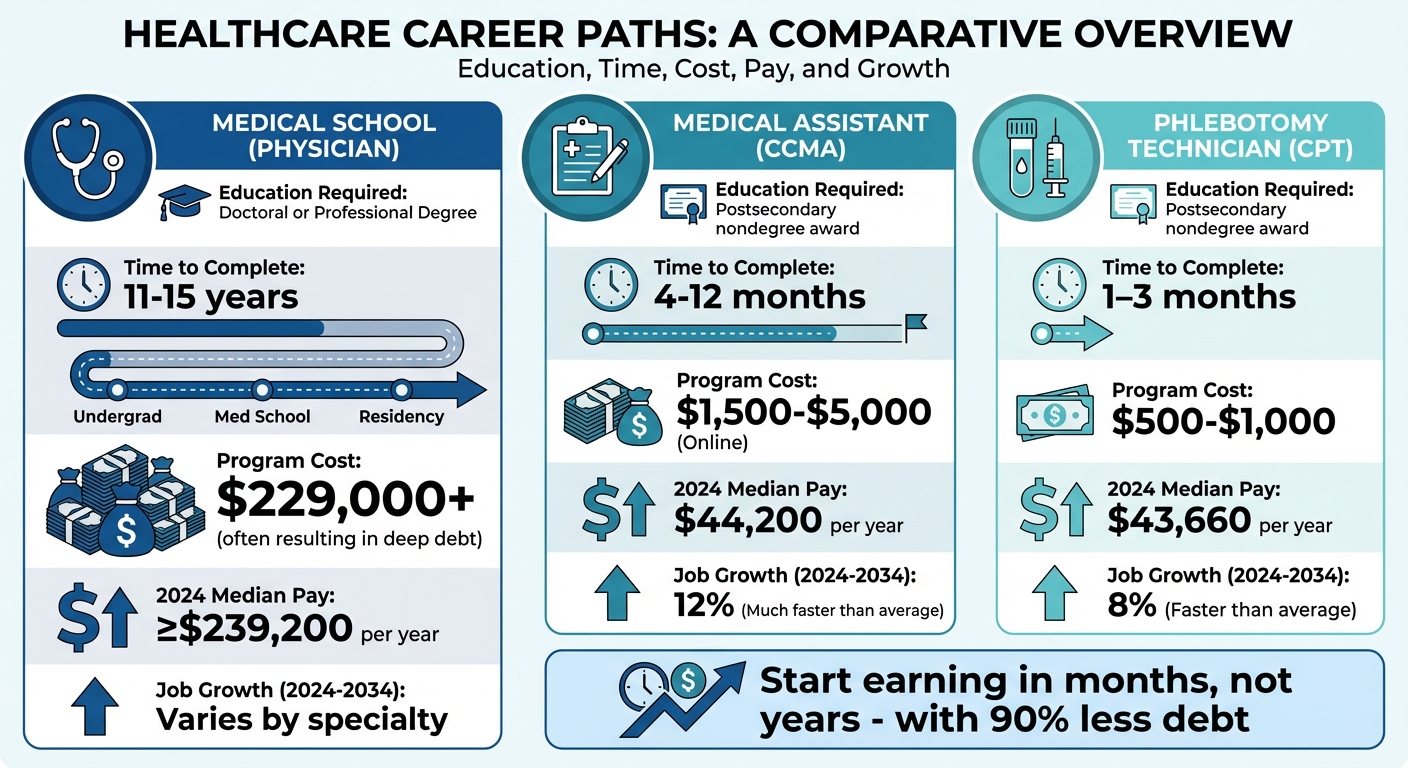
Medical School vs Healthcare Certifications: Cost, Time and Salary Comparison
sbb-itb-7a67ffa
Why Choose Healthcare Certifications Over Medical School
Healthcare certifications provide a quicker and more affordable path to patient care careers. For example, you can earn a Certified Clinical Medical Assistant (CCMA) certification in just 4–16 weeks or become a Certified Phlebotomy Technician (CPT) in as little as 1–3 months. This means you could start earning a paycheck while medical students are still years away from completing their residencies.
The cost difference is also significant. Certification programs typically range from $500 to $5,000, far less than the steep expenses of medical school. Plus, these programs skip the grueling entrance exams and lengthy academic commitments. Instead, they focus on equipping you with hands-on skills like drawing blood, recording vital signs, and managing electronic health records – skills that are in demand right now.
This affordability and efficiency lead to faster entry into a growing job market. For instance, Medical Assistant positions are projected to grow by 12% between 2024 and 2034, with around 112,300 job openings each year. Similarly, demand for phlebotomy technicians is expected to rise by 8% through 2033. Both roles offer meaningful patient interaction in settings like hospitals and physicians’ offices, providing valuable clinical experience. Additionally, stacking certifications – such as adding EKG technician skills to a CCMA qualification – can boost your earning potential and broaden your career options.
Another advantage of certifications is flexibility. Many programs are offered online or in hybrid formats, making it easier to balance training with work or family commitments. This fast-track option not only gets you into the workforce quickly but also allows you to gain experience and even consider pursuing advanced degrees later – all while earning a steady income.
Here’s a side-by-side comparison of the time, cost, and earning potential for these career paths:
Cost and Time Comparison Table
| Feature | Medical School (Physician) | Medical Assistant (CCMA) | Phlebotomy Technician (CPT) |
|---|---|---|---|
| Education Required | Doctoral or Professional Degree | Postsecondary nondegree award | Postsecondary nondegree award |
| Time to Complete | 11–15 years (Undergrad + Med School + Residency) | 4–12 months | 1–3 months |
| Program Cost | $229,000+ (often resulting in deep debt) | $1,500–$5,000 (Online) | $500–$1,000 |
| 2024 Median Pay | ≥ $239,200 per year | $44,200 per year | $43,660 per year |
| Job Growth (2024–2034) | Varies by specialty | 12% | 8% |
These cost-effective, streamlined programs offer a gateway to fulfilling careers in healthcare without the financial and time-intensive demands of medical school.
Affordable Healthcare Certification Programs
Medical school might feel out of reach financially, but there are plenty of affordable certification programs that can kickstart your healthcare career in just a few months. These programs often require only a high school diploma or GED, making them accessible to a wide range of people ready to step into the field. Plus, they’re designed with flexibility in mind, so you can balance studies with work or family responsibilities. With 89% of healthcare organizations now requiring or recommending certifications for roles like medical assistants, having the right credentials can open doors to better job opportunities. Below, we’ll dive into some key certifications that can help you get started quickly and without breaking the bank.
Certified Clinical Medical Assistant (CCMA)
The CCMA certification is perfect for those looking to enter one of the fastest-growing areas in healthcare. Training typically lasts 4–12 months and costs between $1,200 and $4,000. During the program, you’ll learn a mix of clinical and administrative skills, like taking vital signs, giving injections, performing EKGs, managing electronic health records, and scheduling appointments.
To sit for the NHA certification exam, which costs $165, you need to either finish an accredited training program within the last five years or have 1–2 years of supervised work experience. Once certified, you can earn a median annual salary of $44,200, and the job market is expected to grow by 12% through 2034.
"My NHA certification has helped me financially advance my career. Most importantly it has given me opportunity to get a job that allows me to be a better mom by being home in the evenings and on the weekends." – Jessica Aponte, CCMA
Certified Phlebotomy Technician (CPT)
If you’re looking for a quick way to break into healthcare, phlebotomy might be your answer. Training programs last just 1 to 3 months and cost between $500 and $1,000. The NHA exam fee for CPT certification is $129. As a phlebotomy technician, you’ll learn how to draw blood for tests or donations, verify patient identities, and maintain sterile equipment.
Phlebotomists are in demand, with 36% working in hospitals and another 32% employed by medical and diagnostic labs. The median annual wage is $43,660, and the field is expected to see 8% growth through 2033. Many facilities operate 24/7, so you may have the chance to work flexible hours, including evenings or weekends. Keep in mind, some states require additional licensing or completion of an accredited program, so be sure to check your state’s specific rules.
Other Healthcare Certifications
Beyond CCMA and CPT, there are several other certification options to explore, each offering specialized entry points into healthcare:
- Certified Nursing Assistant (CNA): Programs take 4–12 weeks and cost between $1,300 and $2,000. CNAs provide hands-on patient care in hospitals, nursing homes, and outpatient facilities. They earn an average of $39,430 annually, though most states require a background check.
- Pharmacy Technician: Training lasts 3–12 months, with online programs averaging around $69 per month in tuition. Pharmacy technicians assist pharmacists with preparing prescriptions and managing inventory. The median salary is $43,460, with a projected 7% job growth. State requirements can vary, so double-check what’s needed where you live.
- Medical Billing and Coding Specialist: These programs run 3–15 months and cost between $1,000 and $4,000. Specialists in this field handle insurance claims and patient records, earning a median salary of $50,250 with 9% projected growth. Certification exams cost between $299 and $499, and many roles allow for remote work.
No matter which certification you choose, it’s crucial to verify that the program is accredited by recognized organizations like CAAHEP or ABHES. This ensures you’ll be eligible for national certification exams. Additionally, many healthcare employers offer tuition assistance or reimbursement to help their staff pursue further credentials.
Benefits of Online Certification Programs with HealthCareer Certs
HealthCareer Certs offers a flexible way to kickstart your healthcare career with fully online training that works around your schedule. Their programs give you 24/7 access from any device, making it easy to learn whenever and wherever it suits you. You can complete the coursework in as little as 4 to 12 weeks or take up to 6 months if needed. This flexibility is perfect for anyone balancing work, family, or an unpredictable routine.
One of the program’s standout features is the one-on-one Zoom sessions with experienced instructors. These sessions provide personalized guidance, breaking down complex medical topics into easier-to-understand concepts. The curriculum also includes engaging tools like 3D demos, flashcards, and over 1,400 practice questions designed to mimic the certification exam. These resources cater to different learning styles and help you feel fully prepared when it’s time to take the test. Plus, the guaranteed externship placement ensures you gain practical, hands-on experience at local clinics or hospitals – without the stress of finding a placement on your own. Together, these features create a well-rounded and interactive learning experience.
"I was able to get certified and pass the NHA exam on the first try, and I appreciated the ease of the entire process." – Olivia
Another major perk? The 100% tuition refund guarantee. If you pass your exam, complete your externship, and still don’t land a healthcare job within six months, HealthCareer Certs will refund your tuition in full. With over 5,000 students enrolled and a perfect 5.0/5 Google rating as of early 2026, this program significantly reduces the financial risk of entering the healthcare field. These benefits pave the way for promising career opportunities, which will be explored in the next section.
Key Features
| Feature | What It Includes | How It Helps You |
|---|---|---|
| Self-Paced Learning | 24/7 access to modules; complete in 4–12 weeks or up to 6 months | Lets you balance your education with work, family, or travel |
| One-on-One Zoom Sessions | Personalized meetings with experienced instructors | Offers tailored support and simplifies challenging concepts |
| Interactive Tools | 3D demos, flashcards, and 1,400+ practice questions | Supports different learning styles and builds confidence for the certification exam |
| Guaranteed Externships | Placement at local clinics or hospitals arranged for you | Provides essential clinical experience without the hassle of finding a placement |
| Tuition Refund Guarantee | Full refund if no healthcare job is secured within six months | Reduces financial risk and supports your career transition into healthcare |
Career Opportunities and Salaries
Healthcare certifications open doors to steady, well-paying roles across various settings. Certified Clinical Medical Assistants (CCMAs), for instance, often work in physicians’ offices (57% of positions), hospitals (17%), and outpatient centers (10%). Their duties blend clinical tasks like taking vital signs and drawing blood with administrative responsibilities such as scheduling and billing. Meanwhile, Certified Phlebotomy Technicians (CPTs) focus on venipuncture and are typically employed in hospitals (36%), diagnostic labs (32%), and ambulatory services (17%).
The financial outlook for these roles is promising. As of May 2024, medical assistants earned a median annual salary of $44,200, while phlebotomists brought in $43,660. These figures are competitive compared to many other entry-level jobs, especially given the relatively short training period required. On a broader scale, healthcare support occupations had a median wage of $37,180, with the industry expected to generate around 1.9 million job openings annually through 2034.
Experience and additional certifications can significantly boost earning potential. For example, entry-level phlebotomists earn an average of $14.66 per hour, but those with over 20 years of experience see hourly wages rise to $20.86 – a 42% increase. Location also plays a role; in California, phlebotomists average $52,370 annually. Combining multiple certifications can further enhance pay. Outpatient care centers consistently offer higher wages, with medical assistants earning $47,560 and phlebotomists $48,450 in these settings compared to physicians’ offices.
Opportunities for career growth extend beyond patient-facing roles. Many healthcare organizations now provide "career laddering" programs for medical assistants, enabling them to transition into roles such as patient navigators, health coaches, or care coordinators. These positions come with increased responsibilities and higher salaries, offering a clear path for advancement without the need for a medical degree.
Salary Comparison Table
Here’s a breakdown of salaries, job growth, and typical work environments for various healthcare certification roles:
| Occupation | 2024 Median Annual Salary | Job Growth Projection (2024–2034) | Typical Work Settings |
|---|---|---|---|
| Certified Clinical Medical Assistant (CCMA) | $44,200 | 12% (Much faster than average) | Physicians’ offices (57%), Hospitals (17%), Outpatient centers (10%) |
| Certified Phlebotomy Technician (CPT) | $43,660 | 6% (Faster than average) | Hospitals (36%), Diagnostic labs (32%), Ambulatory services (17%) |
| Certified Nursing Assistant (CNA) | $39,430 | 3% (Average) | Nursing care facilities, Hospitals, Assisted living |
| Pharmacy Technician | $43,460 | 3% (Average) | Pharmacies, Drug stores, Hospitals |
| Medical Billing/Records Specialist | $50,250 | 3% (Average) | Physicians’ offices, Hospitals, Management companies |
This snapshot highlights the earning potential and career growth tied to healthcare certifications. Up next, explore how HealthCareer Certs programs can help you take the first step.
Getting Started with HealthCareer Certs Programs
If you’re aiming for a quick and affordable way to step into the healthcare field, HealthCareer Certs is a great place to start. The first step is choosing a certification that matches your career goals and work style. Whether you’re interested in direct patient care through CCMA (Certified Clinical Medical Assistant) or CPT (Certified Phlebotomy Technician), or prefer an administrative role, there’s an option for you. Many pre-health students lean towards phlebotomy to quickly rack up the clinical hours needed for medical or PA school, while CCMA certification offers a mix of clinical and administrative skills for added flexibility.
Enrollment is straightforward. As long as you have a high school diploma or GED, you’re eligible to sign up. You can pay upfront – $2,700 for CCMA or $1,700 for CPT – or opt for installment payments. Once enrolled, you’ll get an email from the support team to schedule an onboarding meeting. This session will guide you through the Canvas platform and help clarify your goals. For the best experience, it’s recommended to access the program on a computer, which is available 24/7.
After enrollment, you’ll have access to a variety of study tools designed to help you succeed. These include over 1,400 practice questions, 700 self-checks, personalized Zoom sessions, and mobile flashcards. Both the CCMA and CPT programs are flexible and self-paced, allowing you to complete them in as little as four weeks. Need more time? Extensions are available if necessary.
"I was able to get certified and pass the NHA exam on the first try in only 6 weeks, and I appreciated the ease of the entire process." – Olivia, Student
The program goes beyond just coursework by offering comprehensive career support. You’ll get guaranteed externship placement to gain hands-on experience, along with resume templates, interview tips, and access to a nationwide job database. Plus, there’s a safety net: HealthCareer Certs promises a 100% tuition refund if you can’t secure a job within six months of passing your certification exam and completing your externship – as long as you’re actively job hunting. Many students successfully pass their national certification exams on the first try, and the platform boasts a perfect 5.0 Google rating as of early 2026.
Conclusion
Pursuing a healthcare career doesn’t have to mean years of medical school. Healthcare certifications provide a practical and cost-effective way to enter the field in as little as 4–6 months. With program costs ranging from $100 to $6,000, this route allows you to start working without the financial burden of student debt.
This shorter, more affordable path aligns with the demands of a growing industry. The healthcare sector is expected to generate 1.8 million job openings annually through 2032, making it one of the fastest-growing fields. These certifications not only open doors to a variety of roles but also offer competitive salaries and long-term career opportunities.
HealthCareer Certs makes the process straightforward. Their 100% online, self-paced programs come with comprehensive study materials, guaranteed externship placements, and dedicated career support. They even offer a tuition refund guarantee – if you don’t land a healthcare job after completing your certification, you’ll get your money back. This streamlined approach ensures you’re ready to step directly into the workforce.
You don’t need years of schooling or massive debt to make an impact in healthcare. Choose a certification, enroll, and begin your journey toward a rewarding career today. With healthcare professionals in high demand, now is the perfect time to take the first step.
FAQs
What are the advantages of pursuing healthcare certifications instead of medical school?
Opting for healthcare certifications instead of medical school comes with some clear perks. For starters, certifications are usually much faster and easier on your wallet. Many can be completed in under a year, which means you can jump into the workforce and start earning sooner – without the massive debt or years of schooling that come with medical school.
On top of that, healthcare certifications can lead to jobs that are both stable and in high demand. Careers like medical assistant, phlebotomist, or dental assistant are growing quickly as the healthcare sector continues to expand. These roles not only let you genuinely make a difference in patient care but also offer financial security and a fulfilling career path.
How soon can I start working in healthcare after getting certified?
With a variety of healthcare certifications available, you can begin working in the field in a relatively short amount of time. For instance, programs such as medical assisting or phlebotomy typically take only 4 to 6 months to complete. This means you could be ready to join the workforce in under a year.
In some cases, certain certifications might let you start even sooner, depending on the specific program and your availability. These paths offer a quick and cost-effective way to kickstart a rewarding career in healthcare – without the long-term commitment that medical school requires.
What are the costs and earning potentials for certified healthcare careers?
Certified healthcare careers, like medical assistants or phlebotomy technicians, provide a cost-effective way to step into the healthcare industry. Training programs for these roles usually range from $500 to $5,000, depending on the certification and location. Plus, they’re quick – most can be completed in just 4 to 6 months, making them a much faster and more affordable option compared to medical school.
When it comes to salaries, these positions offer solid earning potential. Medical assistants have a median annual wage of about $38,000, with experienced workers earning upwards of $50,000. Phlebotomy technicians typically make between $35,000 and $45,000 per year, and there’s room for advancement and specialization, which can boost earnings even further.
For those looking to start a reliable and fulfilling career in healthcare without the hefty cost of medical school, these certifications are a smart choice.